CDC Expands Ebola Screening: New Measures at Major U.S. Airports to Safeguard Public Health
May 26, 2026
In a significant move to bolster public health safety amid growing concerns over Ebola outbreaks in Africa, the Centers for Disease Control and Prevention (CDC) is expanding its screening protocols at major U.S.
airports.
Effective May 26, travelers entering the U.S.
from regions heavily impacted by the virus, specifically the Democratic Republic of Congo, Uganda, and South Sudan, will now face heightened health assessments upon arrival at Hartsfield-Jackson Atlanta International Airport in Georgia and George Bush Intercontinental Airport in Texas.
This article delves into the details of these new measures, their implications for travelers, and the overall impact on public health in the United States.
Key Takeaways
- The CDC has added two major airports for Ebola screening in response to an outbreak in Africa.
- Travelers from affected countries will undergo health assessments upon arrival to ensure public safety.
- Non-U.S. passport and green card holders with recent travel to affected areas are temporarily barred from entering the U.S.
Overview of New CDC Screening Measures
In a proactive move to curb the potential spread of Ebola in the United States, the Centers for Disease Control and Prevention (CDC) has expanded screening measures for travelers arriving from regions affected by the recent outbreak.
Effective May 26, Hartsfield-Jackson Atlanta International Airport in Georgia and George Bush Intercontinental Airport in Texas have been added to the list of entry points where enhanced health assessments will take place.
This decision comes amid escalating concerns over the Ebola virus, particularly in the Democratic Republic of the Congo, Uganda, and South Sudan.
Previously, travelers from these high-risk areas were funneled exclusively through Washington Dulles International Airport for similar screenings.
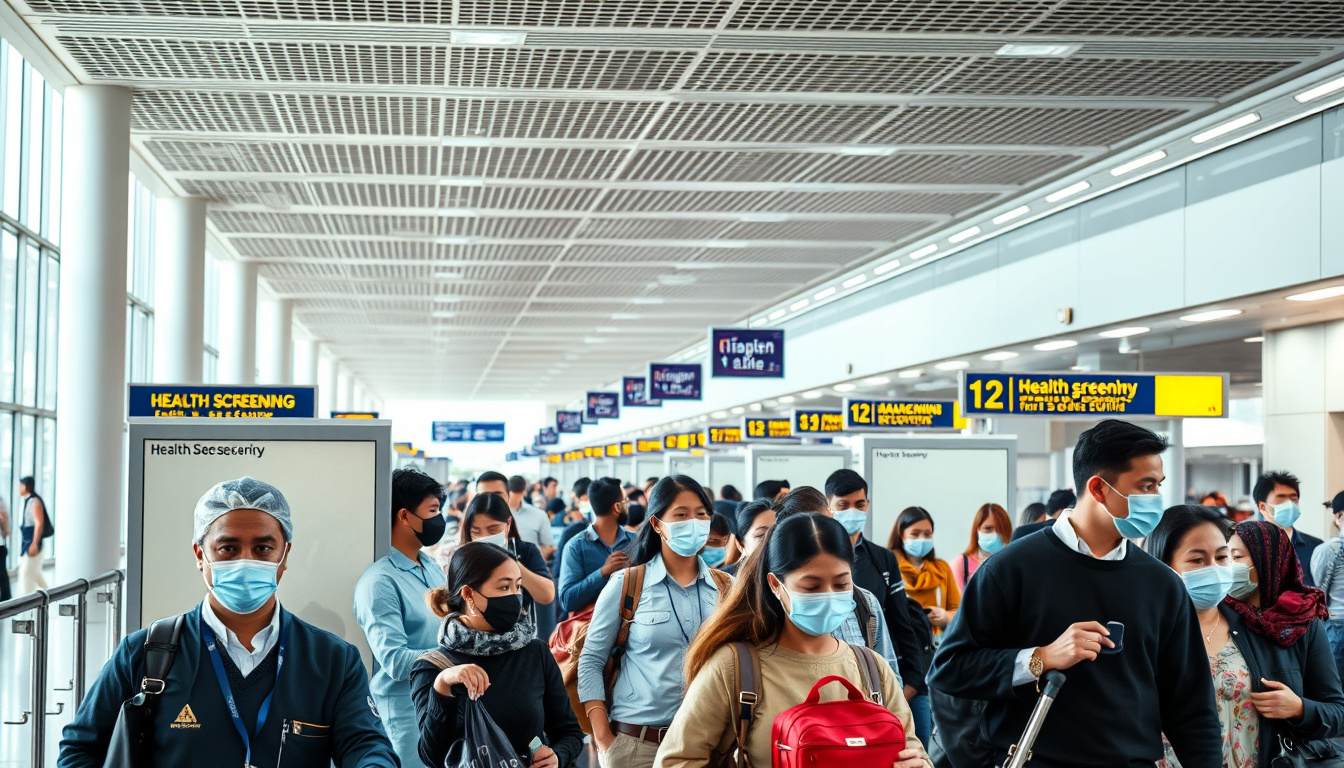
Upon arrival at the newly designated airports, individuals will be directed to specific areas to undergo thorough health evaluations, including completing a detailed questionnaire and having their temperatures checked.
Those showing no symptoms will be permitted to continue to their final destinations, while symptomatic travelers will be referred for further evaluation by CDC health officials.
Although there are currently no linked cases of this outbreak reported in the United States, the situation remains delicate, especially with one American doctor having contracted the virus while working in Congo and now receiving treatment in Germany.
In conjunction with these measures, the CDC has also enacted a temporary ban on entry for non-U.S.
passport holders who have traveled to these affected African countries within the past 21 days, extending this restriction to green card holders as well.
This decisive action reflects the CDC's dedication to thoroughly assessing the ongoing risk and determining future travel policies related to Ebola.
Impact and Implications of Ebola Screening Expansion
The expansion of Ebola screening measures not only underscores the CDC's commitment to public health but also highlights the importance of vigilance in international travel.
With the addition of Hartsfield-Jackson Atlanta International Airport and George Bush Intercontinental Airport to the list of approved screening locations, travelers from affected regions now have more options for entering the United States while still ensuring their health and safety.
At these airports, the screening process is designed to identify potential health risks early, which is crucial in preventing the spread of infections.
Additionally, the protocol for dealing with asymptomatic and symptomatic individuals is meticulously outlined.
Asymptomatic travelers are allowed to proceed, which alleviates travel disruptions, while symptomatic individuals receive immediate attention from health officials, thereby minimizing the chance of transmission.
The strategic approach taken by the CDC, including the recent restrictions on non-U.S.
passport holders and green card holders, is a temporary but necessary measure to consolidate efforts in combatting the Ebola threat.
This comprehensive screening initiative aims to safeguard public health while laying a framework for future decisions regarding travel and health safety during outbreaks.