Debating Free Speech and Anti-Semitism: The Arrest of Mahmoud Khalil and Its Impact on Protests at Columbia University
March 11, 2025
In recent months, the debate surrounding free speech and anti-Semitism in academic settings has reached a boiling point, exemplified by the arrest of Mahmoud Khalil at Columbia University.
A former political affairs officer with the United Nations Relief and Works Agency (UNRWA), Khalil has been labeled a ringleader of protests that overtook Hamilton Hall, raising questions about the intersection of activism, civil rights, and national security.
His arrest by Department of Homeland Security agents, based on claims of involvement with Hamas—a group designated as a terrorist organization—has intensified discussions around the legality of such protests and their implications for free speech on college campuses.
As opinions diverge on whether Khalil's actions were protected under the First Amendment or a threat to national security, the incident serves as a crucial touchpoint for understanding the complex dynamics of protest culture, governmental response, and the rising tensions surrounding anti-Semitic sentiments in today’s society.
This article evaluates the context of Khalil's arrest, the legal implications of his activities, and the divided public response to the ongoing civil rights debate.
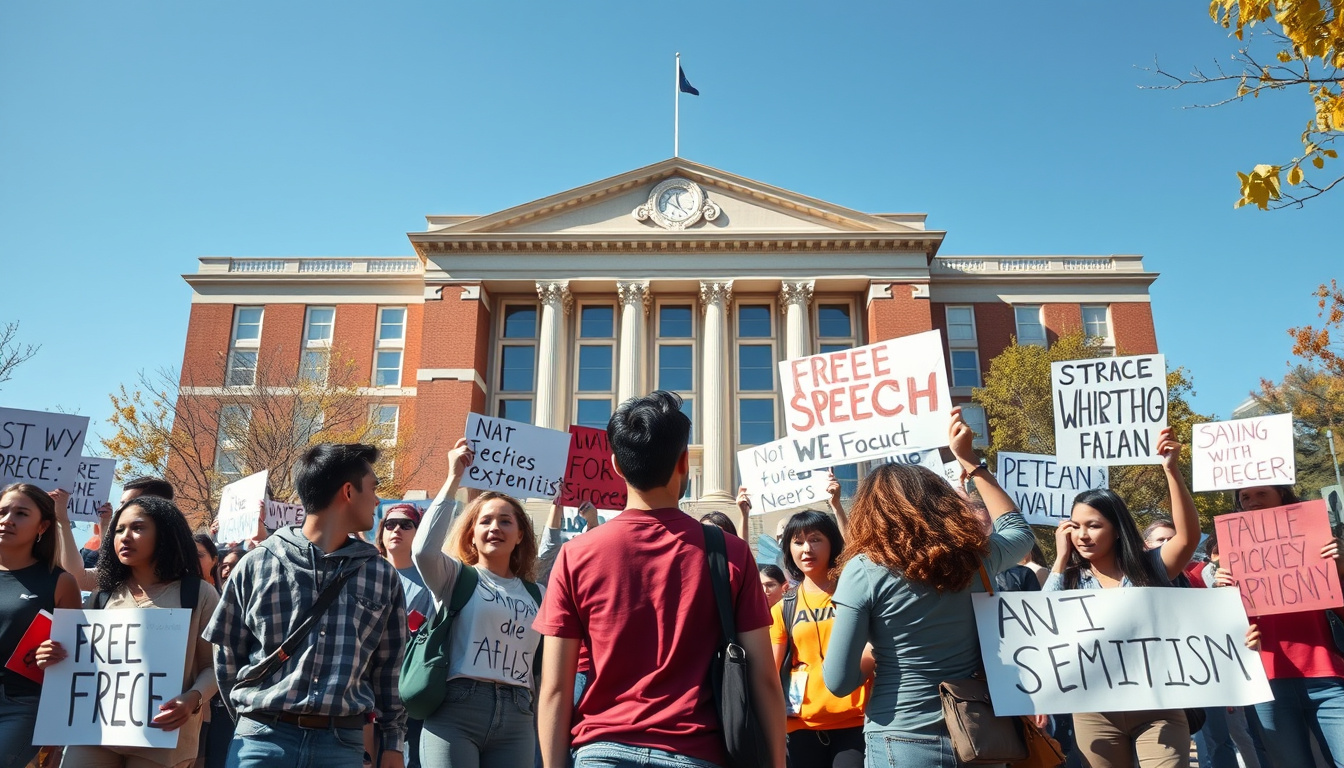
Key Takeaways
- The arrest of Mahmoud Khalil at Columbia University highlights ongoing tensions between free speech rights and concerns about anti-Semitism.
- Responses to Khalil's arrest reveal a divided public perspective on the legitimacy of protests against perceived injustices.
- The incident raises critical questions regarding the legal boundaries of protests and their implications for national security.
The Context of Khalil's Arrest and Its Legal Implications
The recent arrest of Mahmoud Khalil, a Columbia University graduate and alleged ringleader of last year’s Hamilton Hall protest, has sparked a pivotal civil rights debate that intertwines free speech rights with issues of anti-Semitism and national security.
Detained by Department of Homeland Security (DHS) agents, Khalil, who previously served as a political affairs officer with the United Nations Relief and Works Agency (UNRWA), faces accusations of involvement with Hamas—an organization designated as a terrorist entity by the Trump administration.
This incident is set against a backdrop of heightened scrutiny over anti-Semitic protests and a significant withdrawal of funding from Columbia by the administration, citing the university's inaction against anti-Semitism as a key concern.
The reactions to Khalil’s arrest have been polarized.
Some progressive lawmakers, including Congresswomen Ilhan Omar and Rashida Tlaib, have condemned the arrest, labeling it 'un-American' and drawing parallels to authoritarian tactics, while legal analysts assert that the occupation of university property does not fall under the umbrella of protected speech.
This unfolding narrative not only raises questions about the boundaries of free speech but also examines the implications for university campuses as battlegrounds for political expression.
Moreover, it underscores the increasing tensions surrounding anti-Israel sentiments and the possible ties between student activism and larger geopolitical conflicts, calling into question the legal frameworks and definitions that govern such protests.
Responses to the Arrest: A Divided Public Perspective
As public opinion continues to diverge on the implications of Khalil's arrest, discussions regarding the balance between national security and civil liberties come to the forefront.
Critics of the arrest assert that targeting individuals based on their political beliefs sets a dangerous precedent, potentially stifling free expression on college campuses and beyond.
Conversely, proponents of the administration’s actions argue that certain forms of protest may cross the line into incitement or support for violent agendas.
This tension reflects broader societal conflicts surrounding issues of race, immigration, and religious freedom, making it essential for a thorough examination of legal definitions related to free speech and protest rights.
The implications of Khalil’s case extend into the realm of student activism, where the line between lawful demonstration and unlawful behavior becomes increasingly blurred, prompting a critical dialogue on how such actions are legislated and perceived in modern America.