Escalating Trade War: China's New Tariffs Hit Canadian Agriculture Hard
March 11, 2025
As the global economy grapples with increasing complexities, the recent escalation of trade tensions between China and Canada has entered a critical phase.
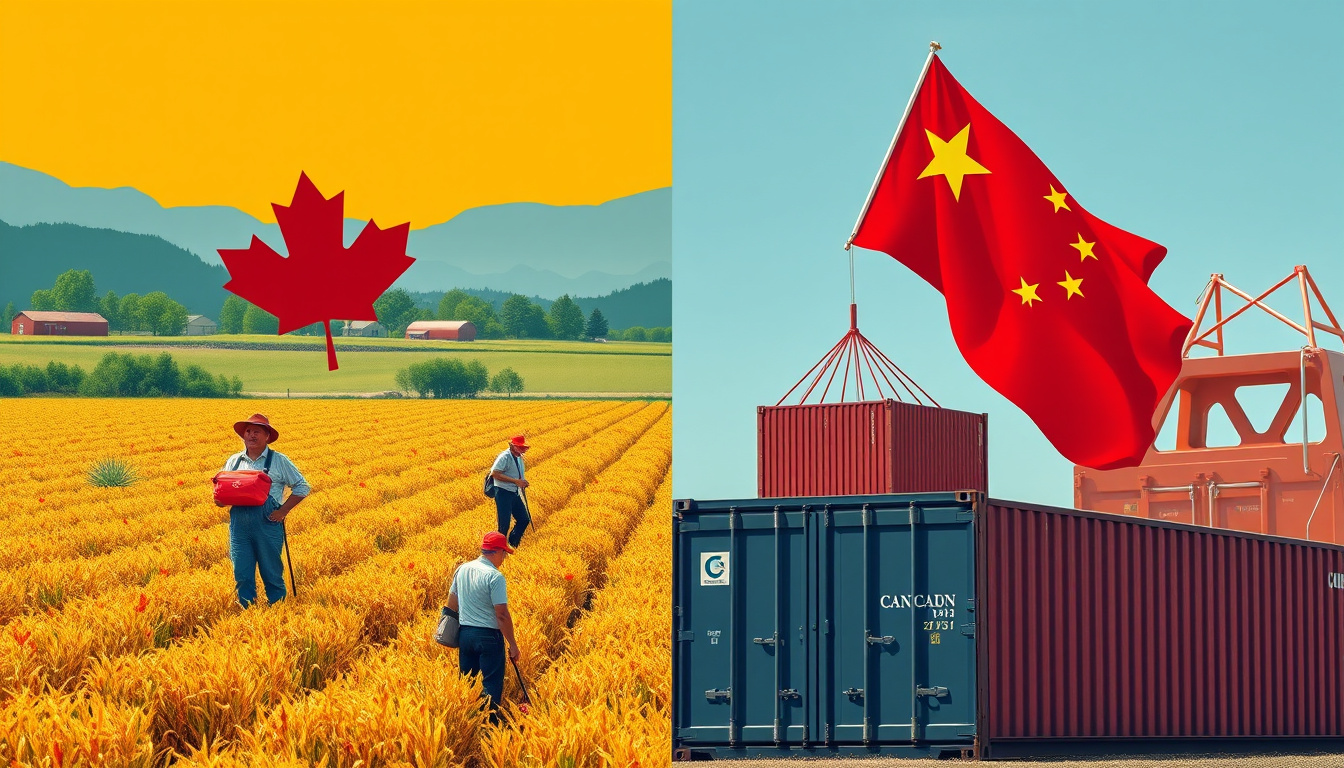
China's Ministry of Finance has launched a series of retaliatory tariffs that are poised to significantly affect Canadian agriculture, particularly targeting key exports such as rapeseed oil, pork, and seafood.
This article delves into the implications of these tariffs, the ongoing dynamics of the trade war, and the political landscape in Canada that may influence future trade relations.
Key Takeaways
- China's new tariffs impose severe restrictions on Canadian agricultural exports, particularly rapeseed oil and pork.
- The tariffs are a direct response to Canada's previous protectionist measures against Chinese imports, highlighting escalating trade tensions.
- Political changes in Canada could further complicate efforts to resolve these ongoing trade disputes.
Impact of China's Tariffs on Canadian Agriculture
The ongoing trade dispute between China and Canada has taken a new turn with China's Ministry of Finance imposing retaliatory tariffs that significantly impact Canadian agriculture.
Key exports such as rapeseed oil, pork, and seafood are now subjected to heightened tariffs, challenging the viability of these markets just as the planting season approaches.
Notably, a staggering 100% tax on rapeseed oil and related products, coupled with a 25% duty on pork and seafood, could jeopardize Canada’s position as one of the largest rapeseed producers globally.
This tariff escalation comes on the heels of Canadian tariffs on Chinese electric vehicles, steel, and aluminum, which China has condemned as “protectionist practices” violating World Trade Organization rules.
Following the announcement of these tariffs, canola futures in New York plummeted by the maximum limit of 6%, highlighting the immediate economic repercussions on Canadian farmers.
Rick White, the head of the Canadian Canola Growers Association, articulated deep concerns regarding the uncertainty that now looms over producers, especially given that China has alternative sources for rapeseed oil from countries like Russia and the EU.
Additionally, with the backdrop of political shifts in Canada, particularly the potential transition from Prime Minister Justin Trudeau to Mark Carney, the implications of these trade tensions extend beyond merely agricultural economics and into the broader political landscape.
Political Landscape and Its Influence on Trade Relations
As these trade tensions continue to escalate, the political landscape in Canada is undergoing significant changes, which may further influence trade relations with China.
The ascension of Mark Carney as a potential leader could herald a shift in Canada's approach to international trade policies.
His administration might pursue strategies that either seek to mend ties with China or reinforce protectionist measures, depending on the domestic political climate and public sentiment.
Compounding the challenges, Canadian industries, particularly agriculture, may find themselves at a crossroads, needing to adapt to not only the tariffs imposed but also to potential shifts in consumer preferences and global market dynamics.
Furthermore, analysts suggest that Canada's reliance on agricultural exports makes its economy particularly vulnerable to such geopolitical disturbances.
Thus, as Canada navigates its internal political transitions, the interplay between local governance and international trade relations will be pivotal in determining the future stability of its export markets.