Escalating U.S.-Iran Conflict: How Attacks on Qatar's LNG Facilities Could Disrupt Global Energy Markets
March 19, 2026
The recent escalation of conflict between the U.S.
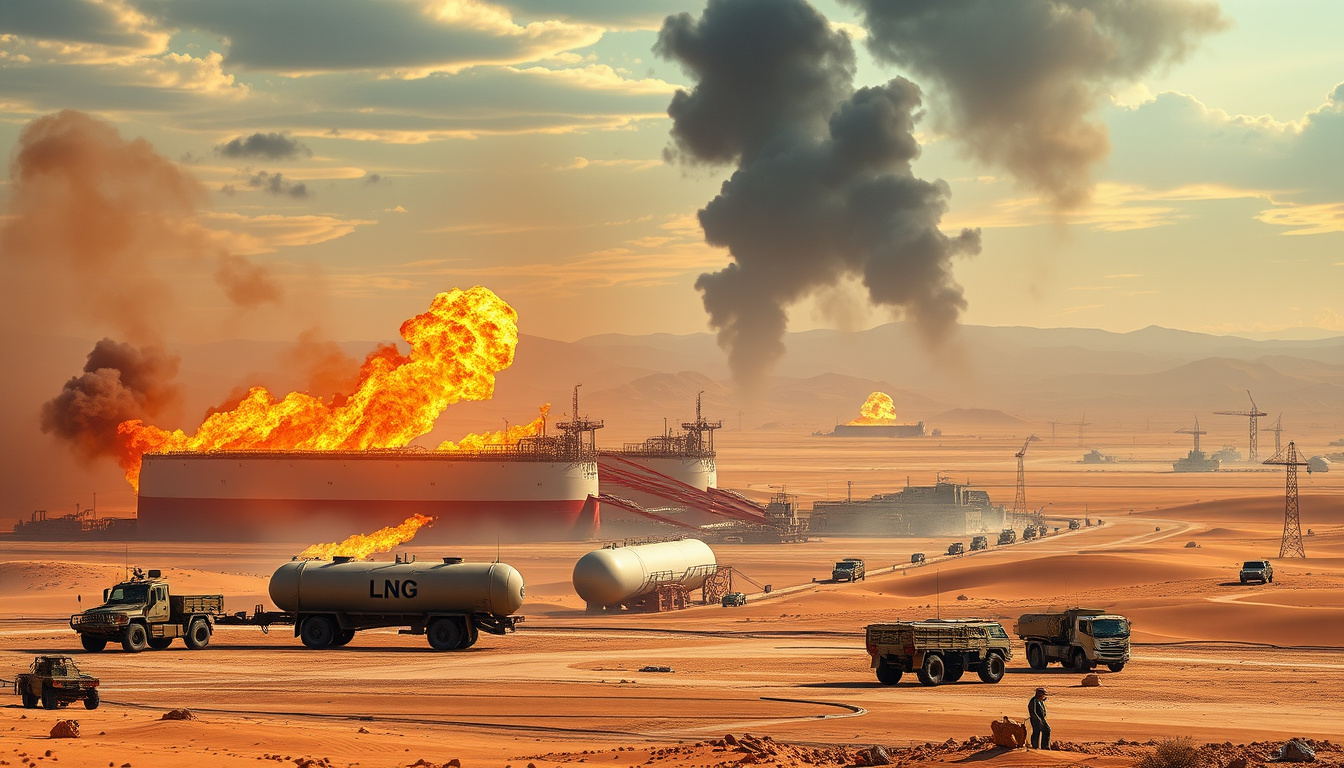
and Iran has unveiled a troubling scenario for the global energy market, particularly following a calculated attack on Qatar's liquefied natural gas (LNG) facilities in Ras Laffan Industrial City.
This location serves as a critical hub for LNG supply, and the ramifications of such hostilities extend far beyond the borders of the Gulf region.
With the stakes incredibly high—over 20% of the world's LNG exports at risk—the potential disruption to energy supplies has sent shockwaves through international markets.
As Brent crude prices rise sharply toward $120 per barrel and U.S.
markets grapple with potential impact, analysts are raising alarms about the long-term consequences of this volatile situation.
This article will explore the intricate connections between geopolitical tensions, the immediate market reaction, and the potential ripple effects on global energy supply chains.
Key Takeaways
- The attack on Qatar's LNG facilities threatens to disrupt global energy supplies and elevate fuel prices significantly.
- Brent crude oil prices have surged as markets react to increased geopolitical tensions and fears of prolonged LNG supply disruptions.
- Analysts predict that the scale of the current crisis could surpass previous incidents, fundamentally impacting the LNG industry and global economic stability.
Impact on Global Energy Supply Chains
The recent escalation of tensions between the U.S.
and Iran, particularly following an attack on Qatar's crucial liquefied natural gas (LNG) facilities at Ras Laffan Industrial City, has sent shockwaves through the global energy supply chains.
This facility is integral to the supply of LNG, a vital energy source that meets approximately 20% of the world's demand.
In the wake of the attack, which also extended its impact to gas facilities in Abu Dhabi, Kuwait, and Saudi Arabia, Brent crude oil prices have soared towards $120 per barrel, while West Texas Intermediate (WTI) crude has held around $96.
Such price surges highlight the precarious state of the global energy market as analysts predict prolonged disruptions in gas supplies that may last for months or even years.
With European natural gas futures doubling in price compared to levels before the conflict, the fallout from these attacks is being described as potentially more destructive to the LNG industry than even the Nord Stream incident.
As U.S.
President Trump threatens severe retaliation against Iran, the geopolitical landscape is increasingly fraught, generating fears of an export ban that could create a significant rift between domestic and global oil pricing.
As infrastructure continues to be damaged, the implications reach beyond just energy supply; they threaten overall economic stability, influencing fuel prices, shipping costs, industrial expenses, and household energy bills across nations.
Geopolitical Tensions and Market Reactions
The ramifications of the recent attack on Qatar's LNG facilities extend far beyond immediate price spikes in oil and gas.
This event has precipitated a dramatic shift in the geopolitical landscape, igniting fears among investors and policymakers alike regarding long-term energy security.
Analysts suggest that the ripple effects could lead to an acute energy crisis, particularly for European nations that heavily rely on LNG imports.
This escalation has also prompted discussions about diversifying energy sources, as countries scramble to mitigate potential supply shocks.
The urgency is palpable as governments assess their vulnerabilities in light of these developments, leading to strategic conversations regarding energy independence and cooperation with alternative suppliers.
With ongoing tensions expected to continue, stakeholders from both the public and private sectors must prepare for a potentially volatile market environment, transforming the way global energy is produced, traded, and consumed.