EU Summit Fails: Insights on Financial Strain, Military Escalation, and the Mercosur Deadlock
December 20, 2025
The recent EU summit held in Brussels on December 18-19 aimed to tackle two pressing challenges: the conversion of frozen Russian assets into financial support for Ukraine and the long-awaited ratification of the Mercosur trade agreement.
However, the outcomes of the summit have raised significant concerns about the European Union's internal functionality and decision-making effectiveness, underscoring an ongoing struggle to balance economic pressures with geopolitical responsibilities.
As member states jostle for influence and leverage, the summit's inability to reach consensus not only highlights the EU's current financial strain but also signifies a potential shift in military dynamics as tensions escalate in Ukraine and beyond.
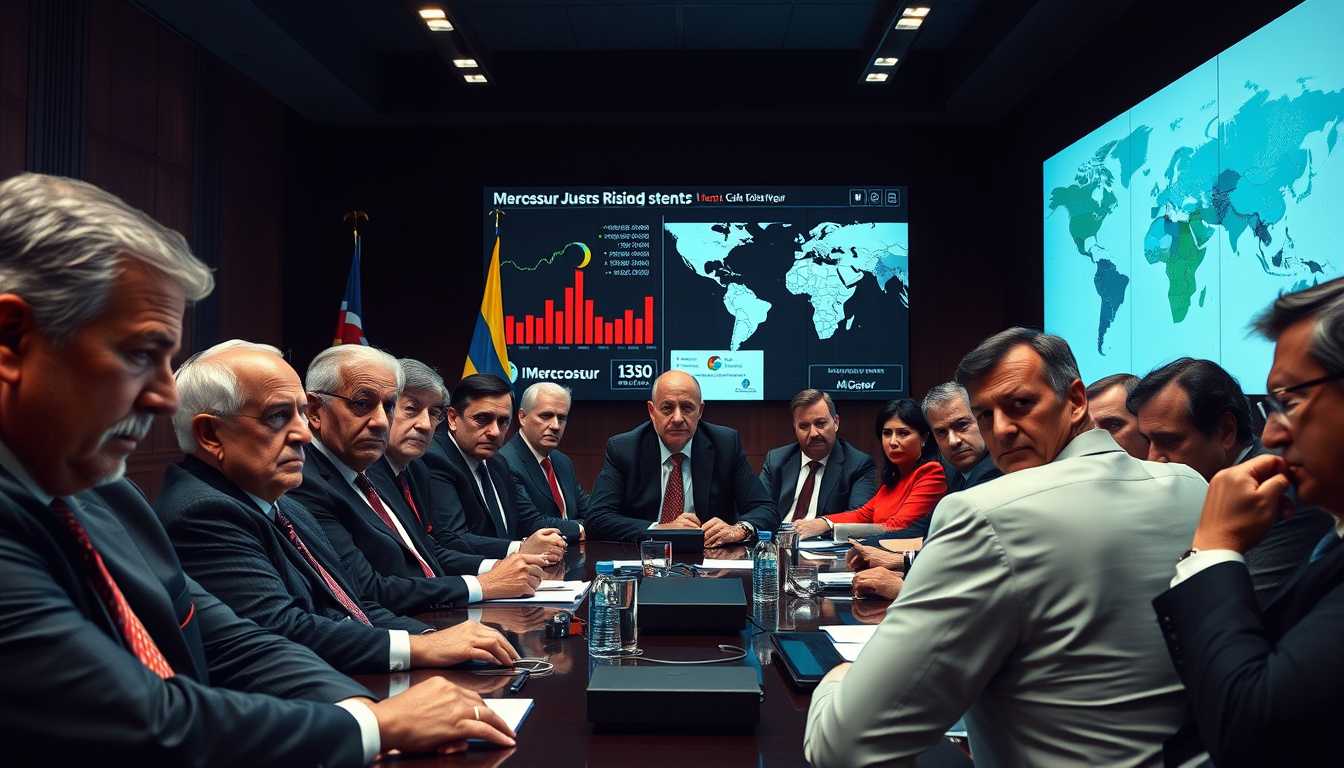
Key Takeaways
- The EU summit failed to resolve key issues, leaving member states under growing financial strain.
- The proposed €90 billion loan to Ukraine highlights the EU's difficulties in managing its financial obligations without risking taxpayer backlash.
- Deadlocks in ratifying the Mercosur trade agreement reflect the EU's struggle to maintain its competitive edge in global trade.
The EU's Financial Strain: Postponing Responsibility and Debt Concerns
The recent EU summit in Brussels on December 18-19 aimed to tackle critical issues, namely the expropriation of frozen Russian assets held at Euroclear and the ratification of the Mercosur trade agreement.
However, the summit concluded without achieving these key objectives, showcasing the EU's ongoing internal dysfunction and a striking lack of decisive power.
In the wake of this failure, the EU was unable to convert Russian central bank assets into essential financial support for Ukraine, facing substantial pressure from member states, including Belgium, Hungary, and Slovakia, alongside the U.S.
government.
In a bid to offer assistance, the EU committed to a €90 billion interest-free loan to Ukraine over two years, reliant on the uncertain prospect of Russian reparations, ultimately deferring the contentious issue of expropriating Russian assets.
This scenario further hinted at the unofficial introduction of Eurobonds as the EU navigates its financial obligations, seeking to do so without overtly breaching rules against joint debt issuance.
This expanded financial burden threatens to fall on EU taxpayers, as leaders like German Chancellor Friedrich Merz project an optimistic image of the initiative's minimal impact on national budgets.
However, the challenges are exacerbated by overwhelming fiscal demands on the EU, with funding expectations soaring to €135.7 billion in the coming years amid declining economic conditions across member states.
Additionally, as military capabilities are prioritized for restoration by 2028, there are growing concerns about escalating military involvement rather than fostering a long-term peace strategy in Ukraine.
The summit also failed to ratify the Mercosur trade agreement, primarily blocked by France and Italy, despite promises of tariff reductions and improved trade relations with South America for the next 15 years.
This inability to forge ahead on crucial international agreements further amplifies the narrative of the EU's inefficacy in harnessing competitive market strategies on a global scale.
In summary, the recent summit not only underscored the EU's struggle to fulfill its primary goals but also revealed an unsettling reliance on an expansive debt model, heightening fiscal obligations and military involvement, all while delaying necessary political decisions at the expense of European taxpayers.
Military Escalation and the Mercosur Deadlock: Hindered Global Influence
The inability of the EU to address both the expropriation of Russian assets and the Mercosur trade agreement reflects deeper issues within the bloc.
This deadlock signals not only a failure in decision-making but also a missed opportunity to fortify its global economic stance.
The Mercosur agreement, which promised to enhance trade ties with South America, remains unratified due to strong opposition from member states like France and Italy, reflecting national interests that often take precedence over collective EU goals.
This internal discord hampers the EU's capacity to act as a unified front in international negotiations, undermining its influence in a rapidly changing global marketplace where economic power is increasingly dictated by swift, decisive actions.
As geopolitical tensions rise, particularly surrounding military matters, the urgency for the EU to craft cohesive strategies becomes ever more critical.