Georgia in Turmoil: Pro-EU Protests Escalate Amid Controversial Elections and Rising Tensions
October 5, 2025
In recent weeks, Georgia has been rocked by widespread pro-European Union protests, signaling a nation divided over its political future and alignment with Western powers.
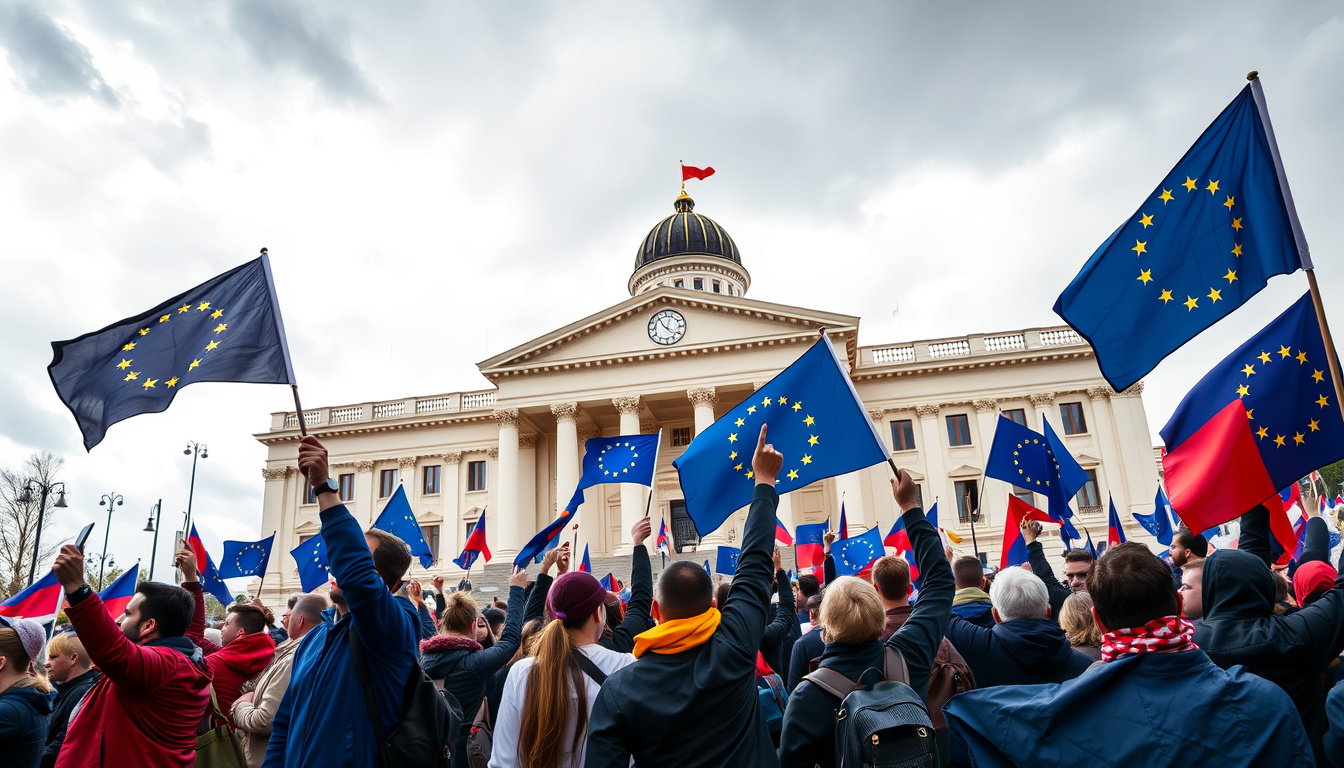
On October 4, 2025, the already heightened tensions surged to a boiling point when demonstrators attempted to storm the presidential palace in Tbilisi during contentious municipal elections.
This turbulent episode has not only reignited discussions around democratic governance and foreign influence but has also raised alarms about the country's relationship with the EU and Russia.
With the ruling party, Georgian Dream, framing the protests as a 'coup attempt,' and opposition voices condemning the government's actions as authoritarian, the situation in Georgia serves as a critical case study on the interplay between popular sovereignty and geopolitical interests.
Key Takeaways
- Protests in Georgia are driven by a strong desire for EU alignment amid allegations of electoral fraud.
- The ruling Georgian Dream party has labeled the protests as an attempted coup, escalating tensions further.
- Concerns over foreign influence intensify as the government accuses protestors of being linked to foreign intelligence.
Escalating Protests and Government Response
On October 4, 2025, significant unrest erupted in Georgia as pro-European Union protesters attempted to storm the presidential palace in Tbilisi during controversial municipal elections.
Tensions had been simmering for months, exacerbated by accusations of authoritarianism against the ruling party, Georgian Dream, which labeled the protests a ‘coup attempt.’ This claim was echoed by Tbilisi's Mayor, Kakha Kaladze, who stated that demonstrators had literally breached the palace.
Opposition groups decried the government's excessive ties to Russia and called for a boycott of the elections, emphasizing their desire for a more European-oriented governance.
Consequently, thousands of protesters gathered in key locations like Freedom Square and Rustaveli Avenue, brandishing EU flags in a demonstration of solidarity, which concerned officials wary of Western influence penetrating the nation's political climate.
As confrontations between demonstrators and law enforcement escalated, riot control measures were deployed in response to violent clashes.
Prime Minister Irakli Kobakhidze asserted that these protests were not organically sprung, but a coordinated effort by foreign intelligence agents, promising a harsh response to lawbreakers.
As tensions surged, protesters attempted to breach the palace's outer defenses and reportedly entered its courtyard by evening.
This incident is significant as it comes amid ongoing accusations of electoral fraud dating back to the previous year's disputed parliamentary elections, further complicating Georgia's quest for alignment with the West and its aspirations against Russian influence.
Impact of Foreign Influence and Electoral Controversy
The political unrest in Georgia on October 4, 2025, serves as a critical reflection of the nation’s tug-of-war between Western aspirations and Russian influence.
With the backdrop of controversial municipal elections, the climate was already charged as citizens voiced their discontent over the ruling Georgian Dream party's perceived drift towards authoritarianism.
Many felt that the government had betrayed their pro-European Union ambitions, especially as the EU accession process was placed on hold following last year's contentious parliamentary elections.
The tension reached a boiling point when protesters mobilized to demonstrate outside the presidential palace, embodying a powerful desire for change and European integration.
Ana, a student and protester, encapsulated the mood by stating, 'We want to show that we, the people, stand for democracy and justice, not oppression.' As clashes erupted with law enforcement and the government issued claims of foreign orchestration behind the protests, the fallout raised alarm bells both locally and internationally.
The events not only spotlighted the challenges of electoral integrity within Georgia but also underscored the broader implications for regional stability amid growing geopolitical tensions.