Germany Halts Arms Exports to Israel Amid Gaza Conflict: A Global Outcry for Human Rights and Ceasefire
August 9, 2025
In a decisive move reflecting growing international concern for human rights amidst escalating violence, Germany has paused all arms exports to Israel.
This announcement comes in light of the Israeli government's controversial plans for a military takeover of the Gaza Strip, which have drawn fierce criticism from numerous countries and human rights organizations.
With the conflict resulting in over 60,000 Palestinian deaths, German Chancellor Friedrich Merz articulated that the military equipment could be used in potential human rights violations and war crimes.
This decision marks a significant moment in Germany's typically supportive stance toward Israel's right to self-defense, highlighting the complexities of the ongoing conflict.
As global powers, including China, call for an immediate ceasefire and prioritize humanitarian considerations, the implications of Germany's stance on future arms exports are profound and warrant closer examination.
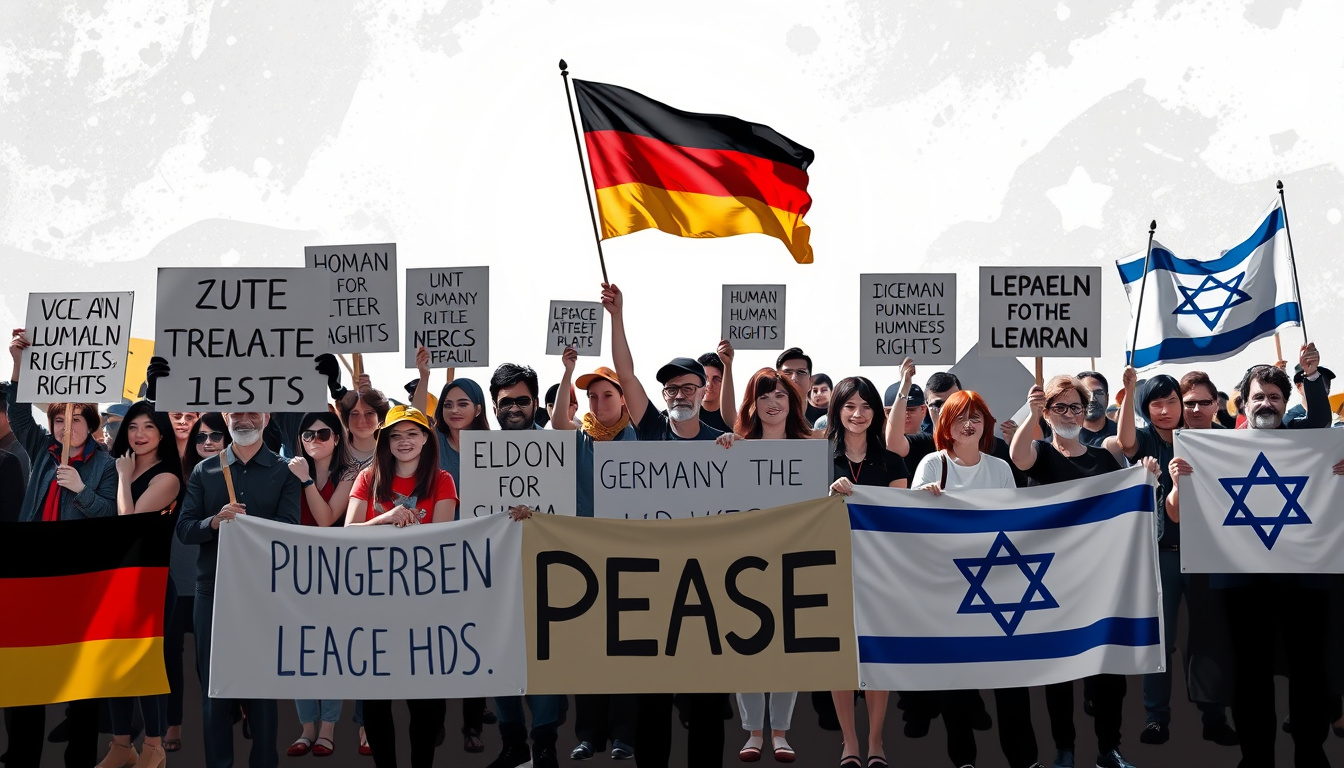
Key Takeaways
- Germany's suspension of arms exports to Israel aims to prevent potential human rights violations amid the Gaza conflict.
- International condemnation of Israeli military actions is rising, with concerns over ethnic cleansing and war crimes.
- Global powers, including China, are advocating for an immediate ceasefire and a humanitarian response to the crisis in Gaza.
Germany's Decision to Suspend Arms Exports: Human Rights Considerations
Germany's recent decision to suspend arms exports to Israel marks a significant turning point in international relations surrounding the Israeli-Palestinian conflict.
This move comes in response to escalating concerns about human rights violations amid the ongoing military operations in Gaza, which have reportedly led to over 60,000 Palestinian deaths.
Chancellor Friedrich Merz made it clear that the arms Germany provides could potentially be used in actions that violate human rights and could constitute war crimes, leading to the suspension of approvals for military exports to Israel until further notice.
Although Germany traditionally supports Israel's right to self-defense, Merz raised doubts about the current military operations' legitimacy, reflecting a shift in perspective as the humanitarian crisis in Gaza escalates.
The situation has drawn sharp criticism of Israeli Prime Minister Benjamin Netanyahu, who has faced allegations of promoting ethnic cleansing and annexation, even as he maintains that Israel does not intend to govern Gaza.
This stance has not only attracted ire from various human rights groups but has also raised alarms among global powers.
Countries like China have echoed these concerns, calling for an immediate ceasefire and advocating for a solution that addresses the dire humanitarian conditions in Gaza.
China’s offer to collaborate with the international community signals a broader push towards finding a peaceful resolution to the conflict, emphasizing that Gaza is a crucial component of Palestinian territory and calling for a unified effort to restore stability and protect human rights.
International Reactions and Calls for Ceasefire
As the humanitarian crisis in Gaza deepens, the international community's reactions are increasingly critical of the ongoing conflict.
Germany's suspension of arms exports to Israel highlights a growing sentiment among nations that the Israeli military strategies require scrutiny given the alarming death toll among Palestinians.
The Chancellor's remarks underscore the delicate balance between supporting Israel's defense and addressing the humanitarian implications of its actions.
In tandem, global powers such as China are stepping up their calls for a ceasefire, aiming to shift the focus towards humanitarian relief efforts.
This collective pressure illustrates a pivotal moment in the geopolitical landscape, where nations are urging for an end to hostilities and a reassessment of military engagements that disproportionately affect innocent civilians.