Global Crime Concerns: Insights from Recent Surveys in Latin America, Europe, and Beyond
August 30, 2025
When discussing global crime trends, it's essential to understand how perceptions of safety vary significantly across different regions.
Recent data from the Statista Consumer Insights survey sheds light on these disparities, revealing heightened concerns about crime among residents of Latin America, South Africa, Sweden, and Italy.
This article delves into these findings, exploring the geopolitical factors contributing to crime perceptions and the stark contrast in concerns observed in other parts of the world.
By examining these regional differences, we gain a nuanced understanding of global crime concerns and the implications for residents and policymakers alike.
Key Takeaways
- Crime concerns vary significantly across global regions, with Latin America and South Africa showing the highest levels of anxiety.
- European countries like Sweden and Italy face unique challenges related to organized and gang-related crime despite varying overall crime rates.
- Asian nations, particularly China and Japan, report much lower levels of concern about crime compared to their Western counterparts.
Overview of Crime Concerns in Different Regions
Understanding crime concerns across different regions is crucial for grasping how societal dynamics affect public safety perceptions.
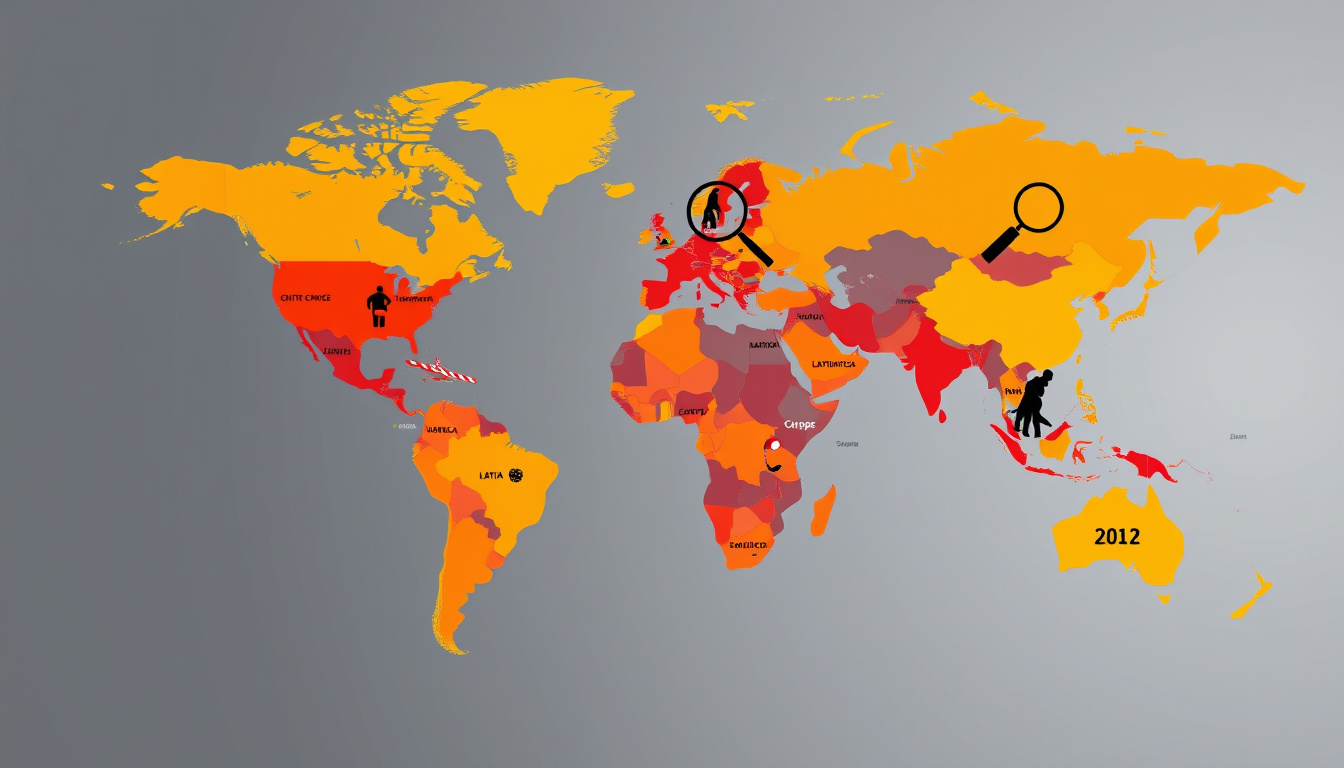
According to a recent survey conducted by Statista Consumer Insights, residents in Latin America, South Africa, Sweden, and Italy voice heightened alarm over crime rates.
In South Africa and numerous Latin American countries, violent crime levels are particularly alarming, contributing to a significant perception of danger.
Sweden, once celebrated for its low crime rates, faces challenges with increasing gang-related and organized crime, undermining its previously secure image.
Italy presents a more nuanced picture; while its overall crime rate is moderate, the enduring presence of organized crime has shaped public sentiment and instilled a degree of apprehension.
Among larger economies, the survey revealed that concerns about crime align closely with the global average of
40.5%.
Notably, Germany and France reported that 41% of respondents view crime as a pressing issue, whereas the United States and the United Kingdom noted a lower concern at 39%.
In stark contrast, certain Asian and European nations exhibit significantly less anxiety regarding crime.
In China, only 9% of people identified crime as a major issue, while South Korea and Japan had 27% of respondents perceiving it as a significant concern.
Meanwhile, Poland and Switzerland reported lower levels of alarm at 23%.
This data starkly illustrates a global disparity in the perception of crime, highlighting the importance of regional contexts in shaping public attitudes and concerns.
Comparative Analysis of Crime Perceptions Globally
The global landscape of crime perceptions illustrates a complex interplay between societal factors, historical context, and current events.
For instance, in countries like South Africa and parts of Latin America, the prevalence of violent crime directly informs residents' fears, as daily experiences and media coverage bolster a narrative of danger.
In contrast, nations such as Germany and France, grappling with their own crime challenges, still maintain a relative level of safety compared to their Latin American counterparts, which shapes a more pronounced sense of urgency among their populations.
Additionally, Sweden's recent struggles with gang violence serve as a poignant reminder that even nations with traditionally low crime rates can experience shifts that heighten public unease.
Therefore, while statistics offer a foundational understanding of crime instances, they must be interpreted through the lens of local experiences and historical narratives to truly grasp societal fears and response mechanisms.