Global Minimum Wage Rankings 2024: Germany Tops the Chart at $17.15—What About the U.S.?
October 18, 2025
In 2024, the landscape of global minimum wages presents a striking contrast among countries, with Germany emerging as a leader in the rankings.
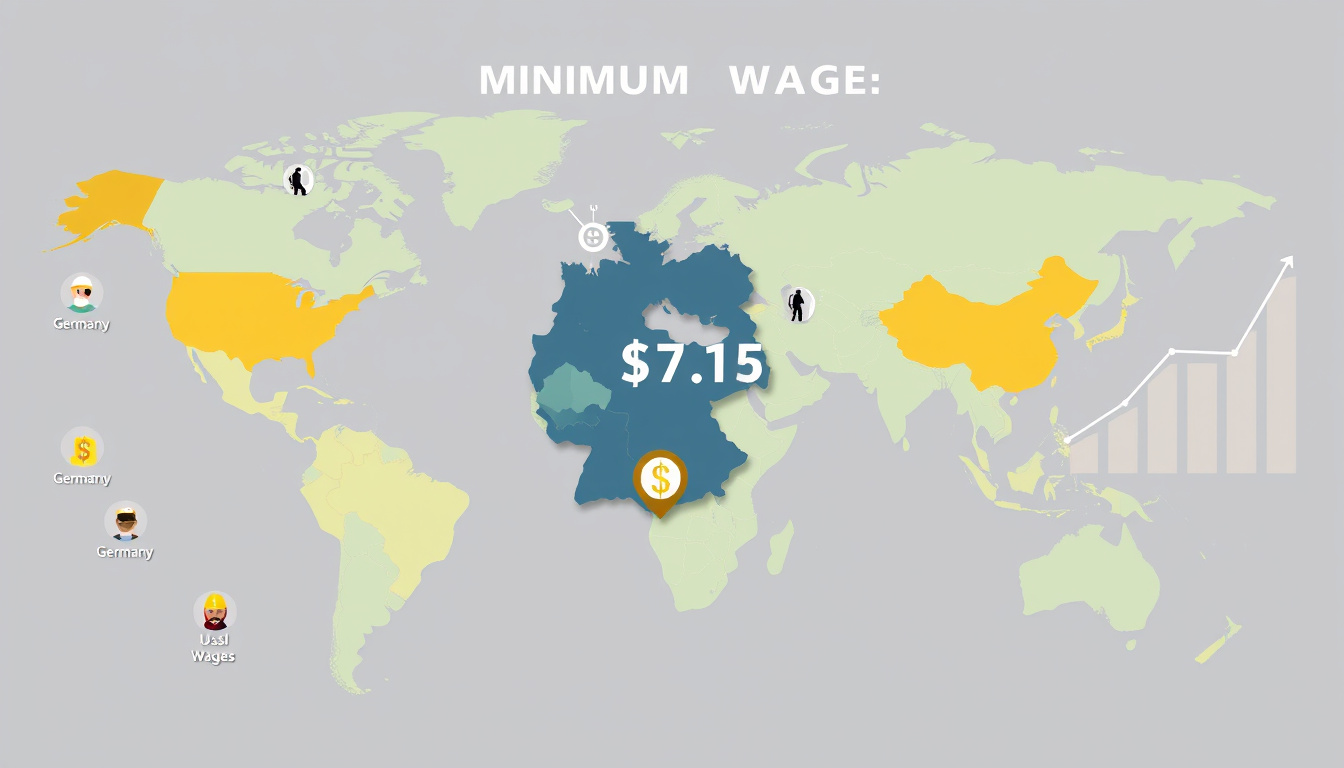
As workers worldwide engage in discussions about fair pay and economic security, Germany's minimum wage of $17.15 per hour, adjusted for purchasing power parity (PPP), sets a compelling benchmark.
This article delves into the minutiae of minimum wage comparisons across various nations, contextualizing the figures within the economic scenarios of 35 OECD countries and all 50 U.S.
states.
By examining these wages adjusted to 2021 U.S.
dollars, we aim to shed light on the real purchasing power of workers, particularly in the United States where substantial variations exist among states.
From Germany's impressive wage standard to the disparities within the U.S., discover the factors influencing these figures and their implications for workers globally.
Key Takeaways
- Germany has the highest adjusted minimum wage in 2024 at $17.15 per hour, outpacing other OECD countries.
- Many U.S. states have nominal minimum wages higher than their European counterparts, but adjusted for living costs, they often fall short.
- The disparities in minimum wages across U.S. states highlight significant economic inequalities influenced by regional policies.
Overview of Global Minimum Wage Rankings
In today's global economy, the comparison of minimum wage rates offers insight into labor standards, economic health, and the cost of living across different regions.
An extensive analysis of statutory minimum wages from 35 OECD countries and 50 U.S.
states provides a revealing look at these dynamics as of
2024.
This year, Germany stands out as the country with the highest minimum wage, set at $17.15 per hour when adjusted for purchasing power parity (PPP).
Following Germany are Luxembourg at $16.79, Australia at $16.49, the UK at $15.91, and France at $15.78.
Interestingly, while Washington D.C.
boasts a higher nominal minimum wage at $17.50, many states across the U.S.
lag behind when factoring in cost of living adjustments.
For example, in New Hampshire, the real minimum wage rests at a mere $5.60, starkly contrasting with Washington D.C.'s $12.43.
This disparity highlights the challenges posed by year-on-year inflation, significantly impacting the purchasing power of around 842,000 hourly workers in the U.S.
who still earn at or below the federal minimum wage.
Furthermore, state policies play a critical role, with 26 states reporting minimum wages below $10.
To visualize these disparities, the article includes a comprehensive table that details the varying minimum wages across nations and states, revealing how economic policies are reflected in the earnings of workers around the world.
A Comparative Analysis of U.S. State Minimum Wages
The analysis of minimum wage across the globe offers valuable insights into the socio-economic landscape, particularly highlighting the differences in living standards.
In the U.S., the topic of minimum wage has sparked intense debate, often revolving around the adequacy of pay against the rising cost of living.
While it’s evident that some states like Washington D.C.
have made strides with higher nominal wages, many areas still grapple with outdated figures that don't meet the increased demands of inflation and living expenses.
For example, if we delve deeper into the data, it becomes apparent that states such as Florida and Arizona, despite enjoying a warm climate and growing economies, still maintain minimum wages around $15.00.
However, when examined against the backdrop of inflation, these numbers diminish in their effectiveness, as workers in these regions face significant challenges in affording basic necessities.
Furthermore, this disparity underlines the crucial need for state-specific policies that consider both economic growth and the cost of living, ultimately shaping a more equitable wage system.