Global Price Disparities: How Much Labor You Need to Afford the iPhone 17 Worldwide
September 20, 2025
In today's global market, the price of consumer electronics like the newly launched iPhone 17 does not simply reflect the currency exchange rates; it is profoundly influenced by local taxes, wages, and economic conditions.
As people across the world look to upgrade their devices, understanding how much labor one must engage in to afford this smartphone can reveal stark economic realities.
For instance, in the United States, the base model of the iPhone 17 costs around $799, translating to roughly 21 hours of work at average hourly wages.
In stark contrast, the same device in India is priced at approximately $1,000, but would require an astonishing 967 hours of labor.
This article delves into the nuanced pricing structures of the iPhone 17 worldwide, examining how local economic factors dictate affordability and unveil broader labor disparities.
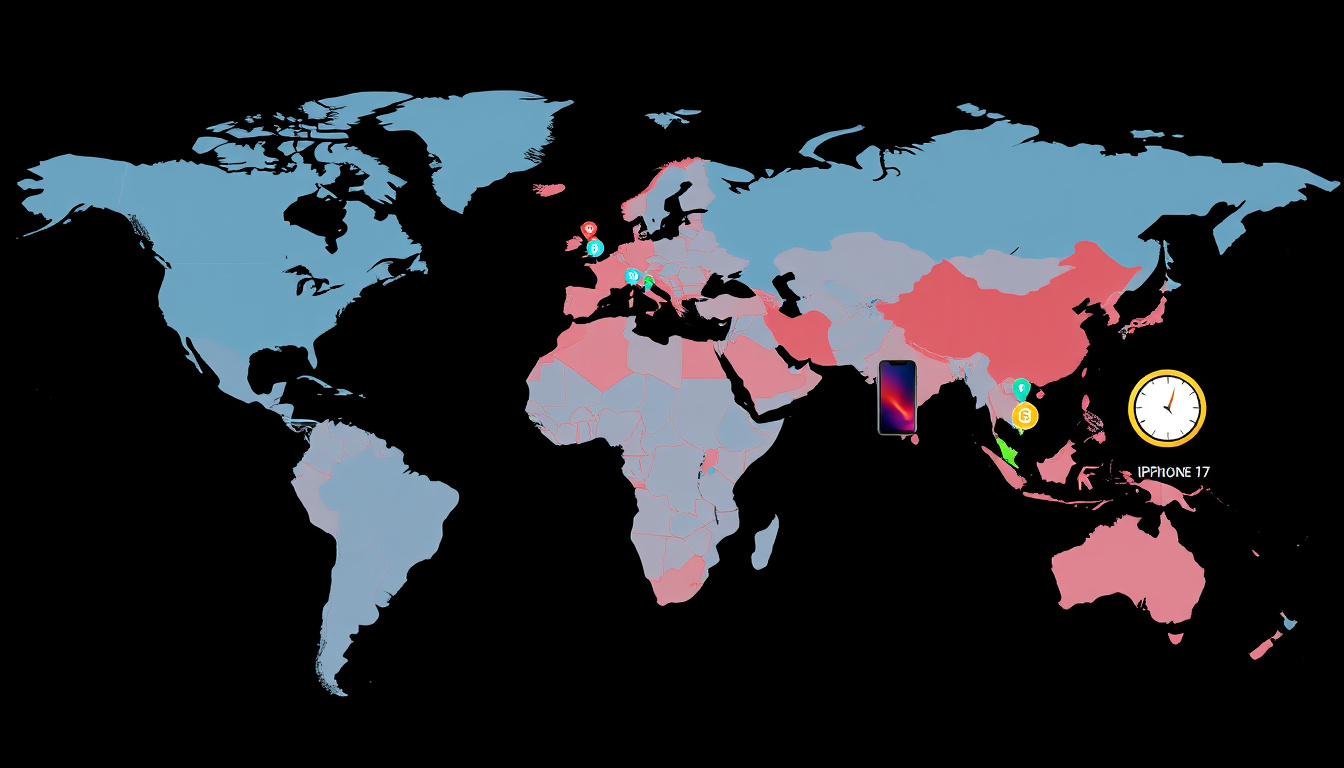
Key Takeaways
- The cost of the iPhone 17 varies worldwide due to local taxes and wage levels.
- Consumers in emerging markets like India face extreme labor disparities, needing significantly more hours to afford the device.
- Countries with higher wages, like Switzerland, offer better affordability for the iPhone compared to nations with lower average incomes.
Understanding Global Pricing Differences
Understanding Global Pricing Differences is essential in today’s interconnected marketplace, especially with the launch of Apple’s iPhone 17 model.
Prices for this highly anticipated device differ markedly across the globe, primarily driven by local taxes, import duties, and varying wage levels.
In the United States, the base model of the iPhone 17 is priced at around $799, which translates to approximately 21 hours of work based on the average wage.
In stark contrast, a similar device in India costs about $1,000 when converted from local currency.
However, given the average wage in India, a worker would need to labor for a staggering 967 hours to afford this smartphone, showcasing the significant wage gap.
Countries like Brazil and Turkey also experience inflated iPhone prices due to high import taxes and varying economic conditions, requiring potential buyers to spend anywhere from 409 to 709 hours of work, depending on the selected model.
The European landscape presents its own complexities; while some regions like Portugal and Hungary face higher costs relative to local supplements, countries like Germany and the UK may offer a more balanced pricing structure.
Interestingly, Switzerland stands out as the most favorable location for purchasing the iPhone, as the combination of high local wages and comparatively lower prices enhances affordability.
This analysis reinforces the notion that while the iPhone 17 may appear reasonably priced in specific markets, the reality of labor effort required to purchase one can diverge dramatically when comparing developed nations to emerging markets such as India and Vietnam, where average wages hover around $1 to $
1.60.
Ultimately, understanding these global pricing dynamics is crucial for consumers and industry stakeholders alike.
The Impact of Wages on iPhone Affordability
The pricing dynamics of the iPhone 17 across various regions reveal striking contrasts that are deeply intertwined with local economic conditions.
In nations with higher average wage levels, like Germany and the UK, the iPhone’s cost represents a smaller fraction of workers' income, translating into a more manageable purchasing experience.
For instance, in Germany, the average worker can buy an iPhone 17 after approximately only 27 hours of labor, contrasting sharply with the overwhelming hours required in lower-income countries.
This disparity not only demonstrates the influence of wages on consumer electronics affordability but also highlights broader economic factors affecting purchasing power and consumer behavior worldwide.
Moreover, as regional tax regulations and import duties vary significantly, these elements also play a crucial role in the overall pricing strategy from Apple, making it essential for consumers to understand the full context behind their purchasing decisions.