Honoring Heroes: How Two Veterans are Reviving Fallen Soldiers' Gravestones Across America
May 27, 2025
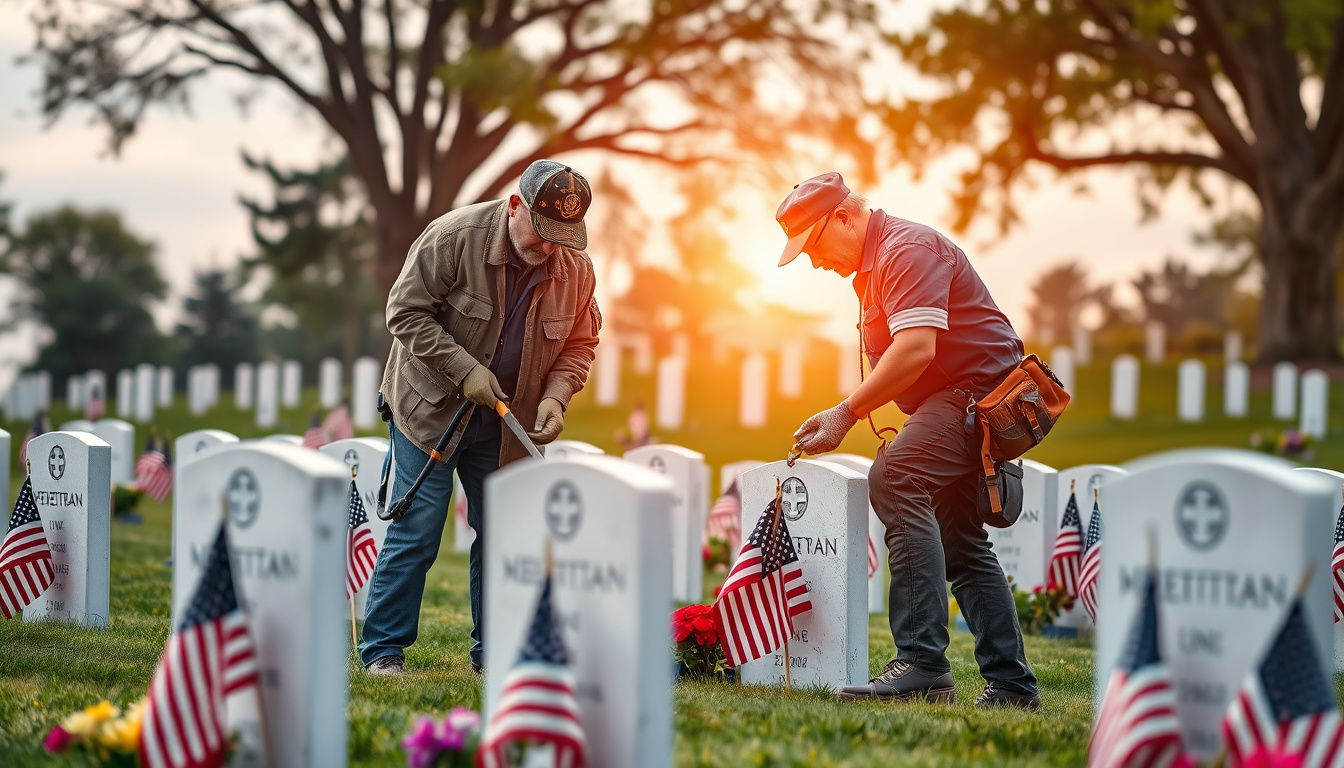
As the heart of America beats with gratitude for its heroes, two veterans are leading a passionate crusade to ensure that the memories of fallen soldiers are impeccably honored.
On Memorial Day and throughout the year, Tom Pawlak and Robert Trae Zipperer dedicate their time and resources to revive the gravestones and bronze plaques that commemorate U.S.
military members.
With a shared mission across 2,200 miles, they inspire communities nationwide to join in their efforts, reminding us all of the importance of preserving the legacies of those who served.
Key Takeaways
- Tom Pawlak and Robert Trae Zipperer are dedicated to restoring veterans' gravestones to honor fallen soldiers.
- Community involvement is crucial in maintaining the integrity of veterans' memorials across America.
- Advocacy for national guidelines is vital to overcome challenges in gravestone maintenance and ensure proper care.
The Impact of Community Engagement in Restoring Veterans' Gravestones
In recent years, the initiatives led by individuals like Tom Pawlak and Robert Trae Zipperer have significantly impacted the preservation of our veterans’ gravestones and memorials across the United States.
On Memorial Day, as Americans gather to reflect on the sacrifices made by service members, Pawlak and Zipperer remind us of the importance of community engagement in this noble cause.
Pawlak, a dedicated 73-year-old from Arizona, ignited his passion for gravestone restoration in 2014 after encountering neglected memorials in a Phoenix cemetery.
His encounter with the tarnished plaque of Pfc.
Oscar Palmer Austin, a Medal of Honor recipient, spurred him into action, leading to the creation of Mission Restore Bronze.
This initiative not only attracts thousands of volunteers nationwide but also disseminates essential resources such as instructional videos and special wax for maintaining bronze plaques.
Pawlak's efforts have encouraged community involvement, inspiring organizations like Eagle Scout projects to participate in the restoration of these vital memorials.
On the other side of the country, Zipperer, a Navy veteran from Florida, founded VeteranGraves.com in 2019, striving to clean and restore veterans' headstones.
Despite facing regulatory challenges, he tirelessly advocated for clearer national guidelines for gravestone maintenance, underscoring the critical relationship between the deterioration of these markers and broader funding issues.
Zipperer's personal investment of over $500,000 into this cause highlights the dedication required to ensure that the memories of fallen soldiers are honored appropriately.
Together, Pawlak and Zipperer exemplify how community engagement plays a pivotal role in maintaining the dignity and remembrance of our heroes, emphasizing a shared responsibility to uphold the legacies of those who served.
Challenges and Advocacy for Grave Marker Maintenance Across America
While the commitment of individuals like Tom Pawlak and Robert Trae Zipperer is commendable, the challenges they face in lieu of adequate funding and resources are significant.
For instance, many local governments lack the budgets necessary for regular maintenance of veterans' graves, leaving many markers vulnerable to neglect and decay.
Additionally, the regulatory environment can be complex, as Zipperer experienced while trying to establish guidelines for restoration projects.
This often leads to confusion among volunteers who may not know what they can legally do regarding gravestone cleaning and restoration.
To counteract these obstacles, advocates are calling for partnerships between local organizations, businesses, and municipal bodies to create a support system for maintaining these memorials.
Moreover, engaging younger generations through educational programs can instill a sense of responsibility and pride in caring for the resting places of those who served the nation.
Ultimately, sustaining such initiatives requires ongoing advocacy and collaboration, fostering a culture that values remembrance and respect for our military's sacrifices.