Hopeful Horizons: The U.S.-Iran Interim Deal Talks Amid Skepticism and Strategic Holdovers
June 12, 2026
In recent weeks, discussions surrounding a potential interim deal between the United States and Iran have gained traction, stirring a mix of hope and skepticism among analysts and stakeholders alike.
As both nations navigate a complex web of historical grievances and strategic interests, the prospect of an agreement is underscored by an increasingly heated atmosphere in the region.
This article delves into the nuances of the proposed negotiations, the implications of the strategic Strait of Hormuz, and the barriers that continue to hinder progress.
Despite the glimmers of optimism, the shadows of past failures in diplomacy loom large, raising critical questions about the feasibility and impact of any potential accord.
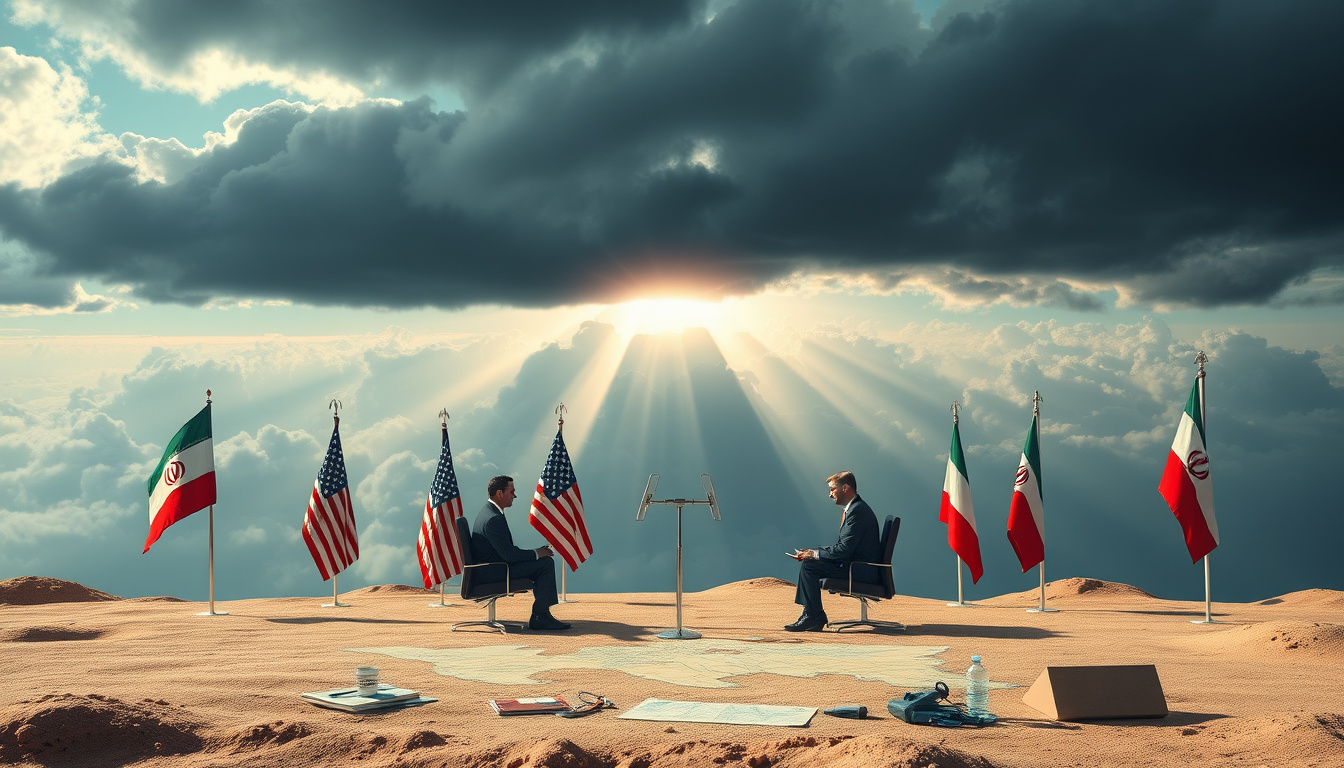
Key Takeaways
- Skepticism governs the potential for an interim U.S.-Iran deal due to past unfulfilled agreements.
- Iran's control over the Strait of Hormuz is a critical point of contention in negotiations.
- Despite discussions of a Memorandum of Understanding, substantial disagreements between the U.S. and Iran persist.
The Spectrum of Skepticism: Historical Context of U.S.-Iran Negotiations
The ongoing negotiations between the U.S.
and Iran represent a complex landscape of diplomacy marked by historical skepticism and geopolitical tensions.
Recent developments indicate a potential interim deal could be on the horizon; however, a cautious outlook prevails due to the legacy of previous unfulfilled agreements.
The Pakistani Ministry of Foreign Affairs has highlighted 'progress' in indirect dialogues, sparking optimism in mainstream media about the possibility of a new accord.
Yet, Iran's unwavering assertion of its military dominion over the Strait of Hormuz complicates matters, with Iranian officials firmly claiming their control, a position met with contention from the Pentagon.
Reports are circulating regarding a possible signing ceremony for a Memorandum of Understanding (MoU) in Geneva, a move that could signify a pivotal moment in the negotiation process.
President Trump has expressed hopeful sentiments about an impending settlement; however, Iranian representatives have refrained from confirming any such agreement, citing the contradictions in U.S.
positions as a major hurdle.
Additionally, Iranian media has suggested that a deal might entail the reopening of the Strait of Hormuz under Iranian terms alongside extensive reconstruction funds.
Crucially, Iran has made it clear that relinquishing control over the strait is non-negotiable.
This dynamic illustrates Iran's strategic aim to maintain leverage in exchange for any potential concessions, especially regarding military oversight and sanctions alleviation.
With both nations revealing significant disparities in their negotiating postures, coupled with recent upticks in military tensions, the road ahead remains fraught with challenges, indicating that any prospective agreement may only scratch the surface of the underlying issues.
The Strategic Significance of the Strait of Hormuz in Ongoing Discussions
Discussions surrounding the Strait of Hormuz, a critical maritime route for global oil shipments, are central to the negotiations between the U.S.
and Iran.
This strait, through which approximately 20% of the world's crude oil passes, holds immense strategic importance—not just for the nations directly involved, but for global energy security.
Iran's unwavering control over this strategic chokepoint has continuously shaped its geopolitical strategies and responses to external pressures.
The U.S.
has expressed intentions to counter Iranian influence in the region, leading to a tense military presence.
As talks advance and diplomatic engagements develop, navigating the complexities posed by the Strait of Hormuz will be essential for any meaningful agreement.
Additionally, the interdependencies of regional players and their divergent interests further complicate the path to diplomatic resolution, underscoring the multifaceted nature of these negotiations.
The outcome will not only affect U.S.-Iran relations but will also resonate across global energy markets, highlighting the significance of the Strait of Hormuz in the broader context of international relations.