Impending Crisis: Armstrong Predicts 100% Chance of Nuclear War and Rising Gold Prices Amid Geopolitical Tensions
August 4, 2025
In the ever-evolving landscape of international relations, the specter of conflict looms larger than ever, with notable voices in the finance and geopolitical analysis arenas ringing alarm bells.
Among them is Martin Armstrong, a well-respected analyst known for his predictive models and insights into market behaviors.
Recently, Armstrong made headlines with a stark prediction: there is a '100% chance of nuclear war' on the horizon, prompted by escalating tensions involving the United States and Russia.
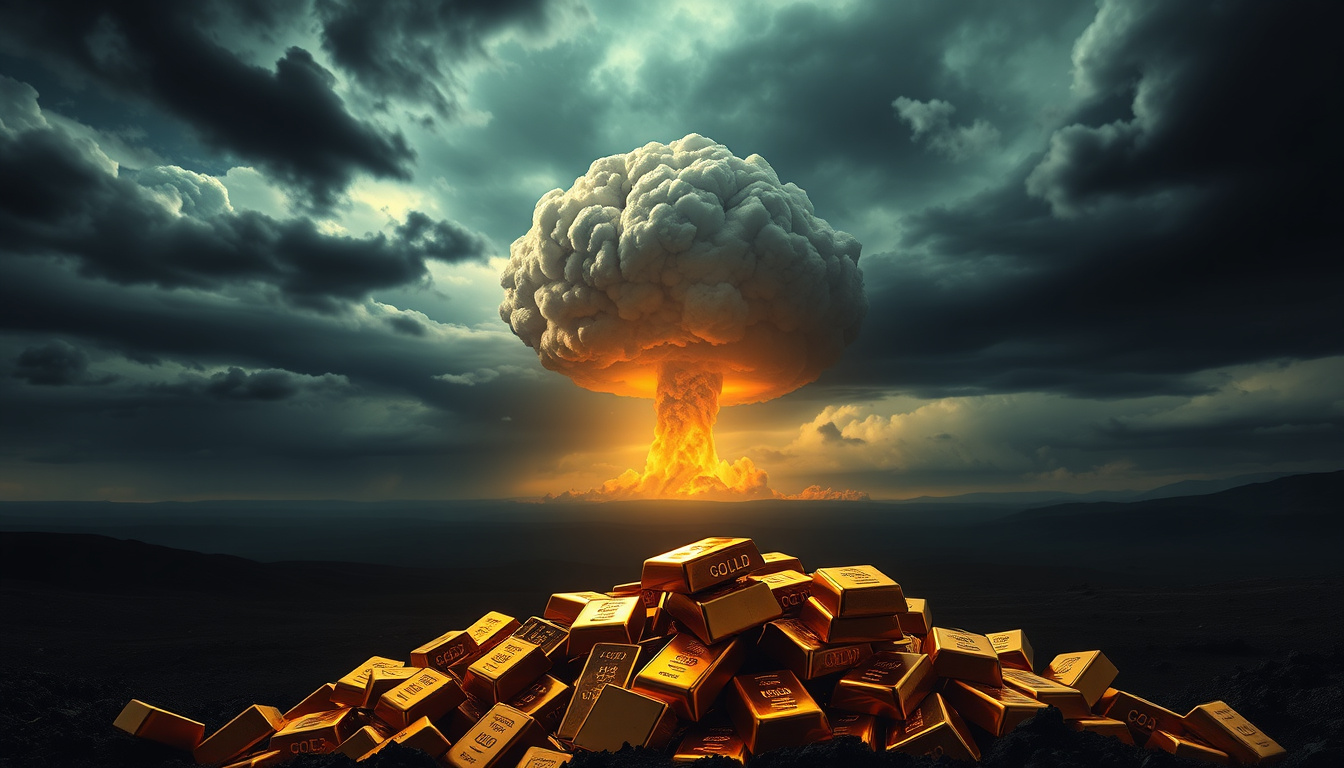
This solemn declaration sheds light on a growing unease that is not only reshaping geopolitical dynamics but is also influencing financial markets, particularly the gold sector.
Key Takeaways
- Martin Armstrong warns of a looming nuclear conflict with a 100% likelihood, driven by geopolitical tensions.
- Gold prices are rising sharply as investors react to perceived threats of war and instability in financial markets.
- Armstrong critiques the current US diplomatic strategies and highlights the potential for escalating economic warfare against Russia.
The Geopolitical Landscape: Rising Tensions and Nuclear Threats
### The Geopolitical Landscape: Rising Tensions and Nuclear Threats In light of escalating global tensions, a recent analysis by financial and geopolitical cycle analyst Martin Armstrong has raised urgent alarm bells regarding the potential for nuclear conflict.
Citing a '100% chance of nuclear war' predicted by his model, Armstrong's forewarnings are situated against a tumultuous backdrop, including intensified hostilities between the United States, under President Trump, and Russia.
This situation has been exacerbated by strategic military maneuvers, such as the repositioning of US nuclear submarines, and alarming rhetorical exchanges that have sent ripples of concern through the international community.
The immediate market reaction indicates that investors are acutely aware of these threats, with the price of gold experiencing a notable surge of more than 2% as demand for safe-haven assets surges during times of uncertainty.
Armstrong's analysis shines a light on what he deems an emerging 'panic cycle' in the gold market, suggesting that the effects of these geopolitical tensions could manifest as soon as August 18, 2025, with significant ramifications extending into
2026.
His insights posit that today’s interconnected financial markets are being profoundly influenced by these geopolitical strife, driving investors toward gold as a safeguard against impending turmoil.
Furthermore, Armstrong expresses serious concerns regarding the United States' diplomatic approach, highlighting a troubling trend of diminished negotiation avenues and increasing economic sanctions against Russia.
He criticizes the influence of certain political advisors surrounding Trump, asserting that they are dismissing alternative perspectives that advocate for de-escalation rather than a path towards nuclear confrontation.
As Armstrong's predictions unfold, they underscore a pervasive anxiety about the current geopolitical climate, prompting both investors and policymakers to carefully consider the implications of these tensions on both the global economy and peace efforts.
Gold Prices and Financial Markets: Predictive Patterns Amid Crisis
As geopolitical tensions continue to simmer, financial analysts emphasize the critical role of gold as both a safe-haven investment and a barometer of global unrest.
Martin Armstrong’s predictive insights suggest that not only is there a significant likelihood of a panic cycle emerging in the gold market, but investor behavior also reflects a strategic pivot towards secure assets amidst uncertainty.
Historical patterns indicate that during times of heightened conflict, commodities like gold not only retain their value but often appreciate substantially.
The intertwining relationship between gold prices and financial markets demonstrates that as fears of nuclear conflict loom, investor confidence in traditional equities wanes, making gold an attractive option.
This trend is underscored by shifting tactics in foreign policy and military posturing that can induce volatility in financial markets, leading investors to seek stability in precious metals.