Is the Admiral Kuznetsov Facing Decommissioning? The Future of Russia's Aging Aircraft Carrier Amid Modern Warfare Shifts
July 13, 2025
In the ever-evolving landscape of modern military capabilities, Russia's only aircraft carrier, the Admiral Kuznetsov, finds itself at a crossroads.
Launched in 1985, this leviathan has been a centerpiece of the Russian Navy, yet it has become emblematic of the challenges facing an aging fleet.
Since 2017, the Kuznetsov has been ensnared in a web of repairs, including a catastrophic fire in 2019 that resulted in tragic loss of life and further damage to the vessel.
As the costs of renovation have soared to nearly $260 million, questions loom large about its future.
Is the Admiral Kuznetsov on the brink of decommissioning?
In this article, we delve into the ship's tumultuous past, the implications on military strategy, and the potential future of naval warfare amidst shifting paradigms.
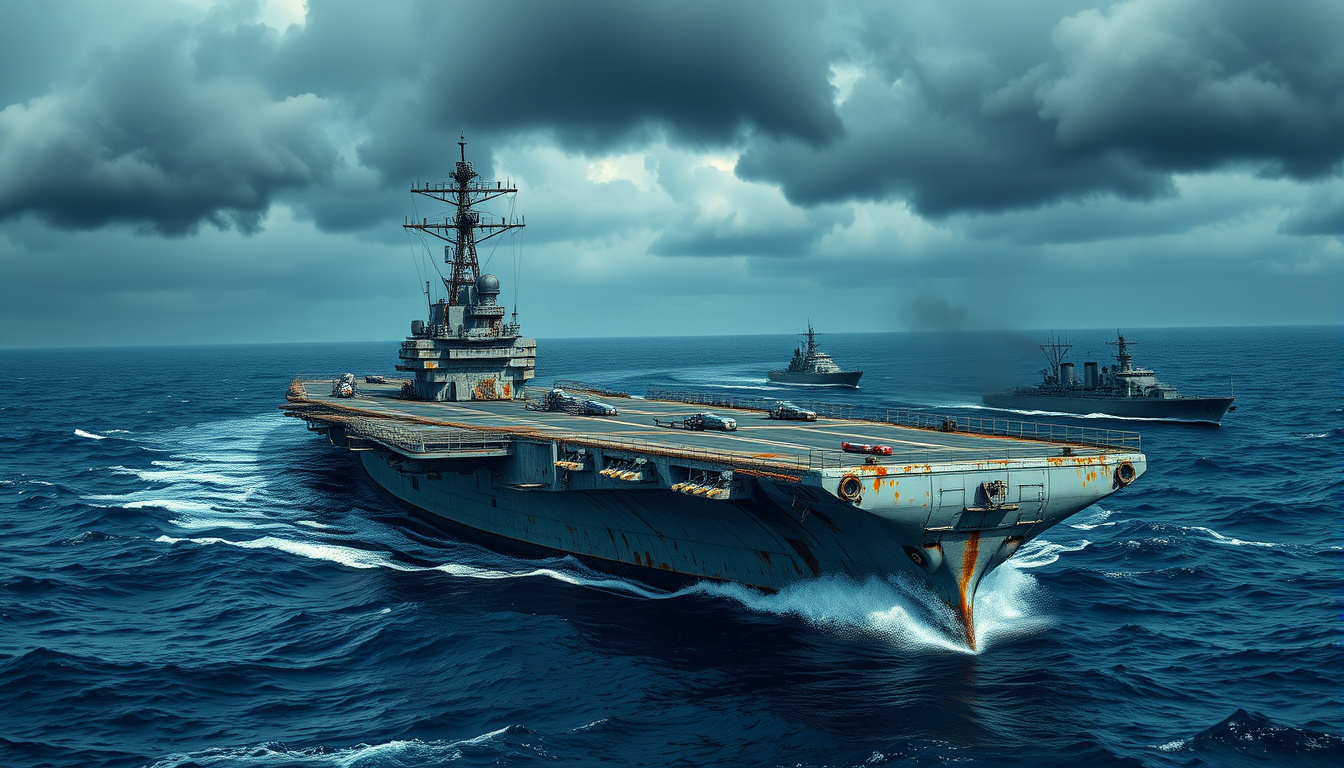
Key Takeaways
- The Admiral Kuznetsov has faced extensive repairs since 2017 but remains non-operational due to ongoing issues.
- Military analysts view the Kuznetsov as outdated and suggest a pivot towards modern unmanned systems instead.
- Russia's naval capabilities are currently insufficient compared to the robust fleets of the US and China.
The Current State of the Admiral Kuznetsov: Repairs and Challenges
The Admiral Kuznetsov, Russia's sole aircraft carrier, stands as a relic of the Soviet navy, facing a host of challenges that raise questions about its future.
Since undergoing extensive repairs beginning in 2017, the Kuznetsov has remained non-operational due to a series of mishaps, including a disastrous fire in 2019 that resulted in fatalities and severe damages to the ship's infrastructure.
With renovation costs climbing to approximately $260 million, updates have faced significant delays, prompting speculation about decommissioning.
Recent discussions within the Russian government reflect a shift in focus, as military planners evaluate the ship’s practicality amid the backdrop of an evolving naval strategy.
Experts argue that the Kuznetsov's age and technological shortcomings render it a liability, particularly with the current emphasis on developing unmanned systems for modern warfare, compounded by the resource diversion stemming from the war in Ukraine.
Launched in 1985, the Admiral Kuznetsov may soon signify the end of an era rather than a resurgence; the shift toward advanced drone and missile capabilities underscores a fundamental change in military doctrine.
In comparison to the formidable fleets of adversaries like the United States and China, Russia's naval strength appears increasingly inadequate, leading analysts to doubt the Kuznetsov's return to active duty is a realistic prospect.
The Strategic Shift in Naval Warfare: Implications for Future Investments
The strategic shift in naval warfare reflects a broader evolution driven by technological advancements and geopolitical changes.
As countries reevaluate their military strategies, the implications for future investments in naval capabilities become increasingly significant.
The case of the Admiral Kuznetsov highlights the pressing need for modernization in naval assets, as reliance on aging ships and traditional combat methods may no longer suffice in modern conflicts.
With formidable adversaries advancing their naval technologies—such as the United States' investment in next-generation carriers and China's rapid development of unmanned naval systems—Russia finds itself at a pivotal crossroads.
Analysts suggest that investing in advanced robotics, missile systems, and cyber warfare capabilities is crucial for maintaining strategic deterrence and operational effectiveness.
Leveraging newer technologies not only enhances maritime security but also aligns military expenditures with contemporary operational demands, ensuring that nations remain competitive in a rapidly shifting global defense landscape.