LNG Supply Surge: What Goldman Sachs Predicts for European Gas Prices by 2029
February 7, 2026
As the world continues to navigate the complexities of energy markets, liquefied natural gas (LNG) has emerged as a pivotal element in shaping global energy dynamics.
The anticipated surge in LNG supply is drawing significant attention, particularly as Goldman Sachs projects a substantial decrease in European gas prices by
2029.
In this article, we delve into the key trends in LNG supply, explore the implications for European gas prices, and examine the broader market dynamics at play.
Key Takeaways
- Goldman Sachs predicts a significant drop in European gas prices, averaging below $5/mmBtu by
2029. - The global LNG supply surge is expected to continue until 2032, greatly affecting market dynamics and European gas storage.
- U.S. LNG production is leading the growth in global supply, despite some regional disruptions.
Current LNG Supply Trends and Projections
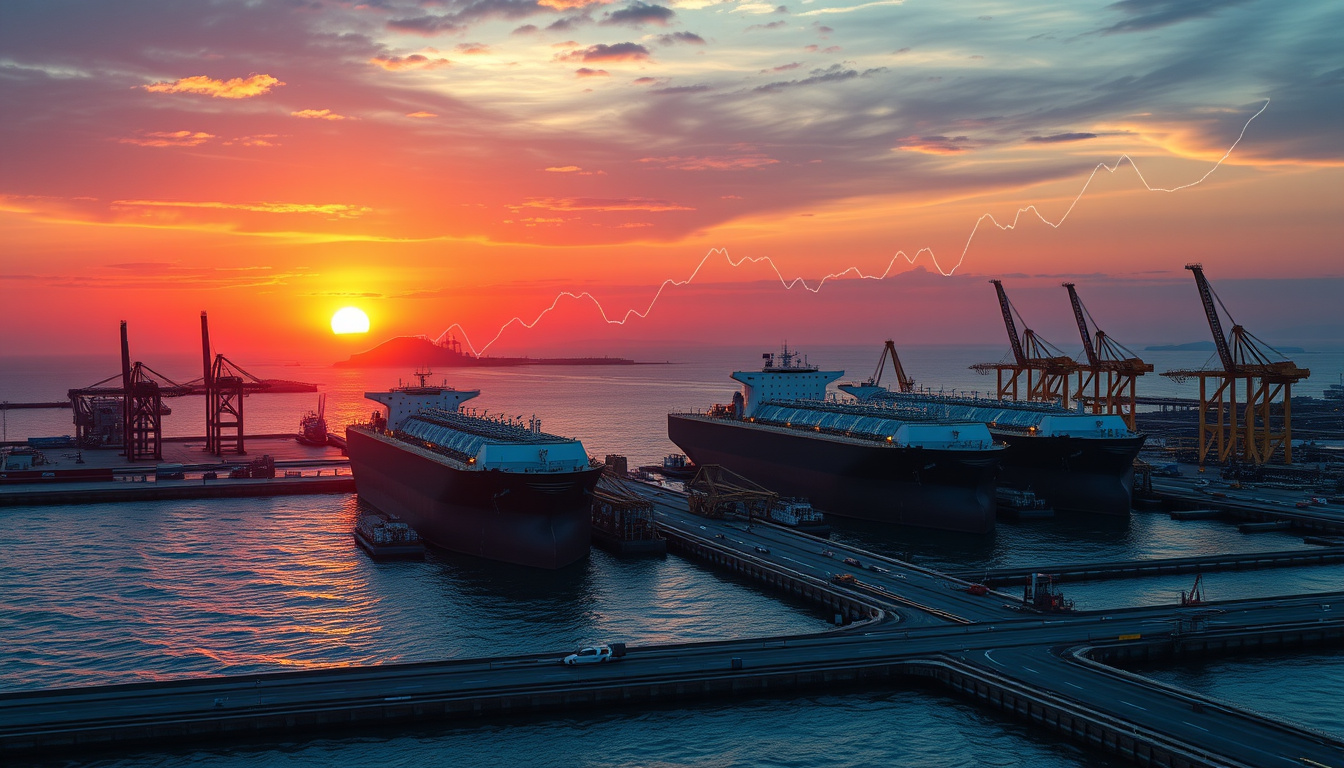
### Current LNG Supply Trends and Projections The global liquefied natural gas (LNG) market is currently experiencing a notable supply wave that has entered its second consecutive year.
According to insights from Samantha Dart, the head of Global Commodities Research at Goldman Sachs, this supply surge is projected to last for approximately seven years, beginning in
2025.
Dart’s analysis indicates that this prolonged supply influx will usher in a bearish phase for natural gas prices in Europe, specifically the Title Transfer Facility (TTF) and Japan-Korea Marker (JKM).
Expectations suggest that by the years 2028-29, these prices could plummet to an average of below $5 per million British thermal units (mmBtu), a dramatic decline from current levels hovering around $41/mmBtu.
In terms of exact figures, Dart highlights that the realized global LNG supply for 2025 is forecasted to reach about 431 million tons per annum (mtpa), slightly shy of earlier projections, largely due to disruptions in production outputs from the U.S.
and other regions.
However, this shortfall has been somewhat counterbalanced by an increase in output from U.S.
LNG facilities.
Looking into the future, global LNG supply is expected to surge by an additional 193 mtpa, outpacing the anticipated demand growth in Asia, which stands at around 144 mtpa.
This imbalance is largely attributed to anticipated price-induced reductions in U.S.
LNG exports as we approach 2028-29.
Such oversupply conditions are likely to exert downward pressure on European gas storage levels and significantly influence market dynamics as we near the end of the decade.
Overall, with the U.S.
leading the charge in LNG supply growth, the global LNG market is poised for a transformative phase.
This evolution in the LNG landscape underscores the importance of strategic planning and adaptability for stakeholders across the energy spectrum.
Impact on European Gas Prices and Market Dynamics
As the global LNG market evolves, the impact on European gas prices and market dynamics is becoming increasingly pronounced.
The significant inflow of liquefied natural gas, driven by U.S.
production expansion, is set against a backdrop of fluctuating demand, particularly in Asia.
With projections indicating a persistent oversupply, European gas markets are likely to face critical adjustments, including potential shifts in storage strategies and long-term contract negotiations.
The anticipated dip in prices, projected to average below $5/mmBtu toward the end of the decade, may compel European utilities to rethink their procurement processes and diversify their energy sources.
Furthermore, as price volatility becomes more pronounced, market participants must prepare for a landscape where competitive pricing and supply security are paramount considerations.
This transformation also poses challenges for renewable energy integration, as stakeholders balance LNG's role in the energy transition against climate objectives.
The coming years will be pivotal in shaping how European markets adapt to these unprecedented supply dynamics.