Poland Revokes Honor to Ukraine's Zelensky: A Diplomatic Rift Amidst Ongoing Support
June 21, 2026
In a significant turn of events, Poland has formally revoked the Order of the White Eagle, the country's highest state honor, previously awarded to Ukrainian President Volodymyr Zelensky.
This controversial decision, announced by President Karol Nawrocki, highlights a growing diplomatic rift between the two nations fueled by historical grievances and current geopolitical dynamics.
The withdrawal of this prestigious award stems from Zelensky's recent endorsement of a Ukrainian military unit named after the Ukrainian Insurgent Army (UPA), a group that holds a contentious legacy in Poland for its brutal actions against Polish civilians during World War II.
While this diplomatic tension escalates, Poland reiterates its commitment to supporting Ukraine's aspirations for European Union membership and continues to play a crucial role in discussions surrounding Ukraine's reconstruction efforts post-conflict.
In response, Ukraine’s Foreign Minister Andrii Sybiha has condemned Poland's decision, framing it as a strategic miscalculation that could inadvertently advantage Moscow.
This article delves into the complexities of Poland-Ukraine relations, examining the implications of the award revocation while underscoring ongoing support despite the strains.
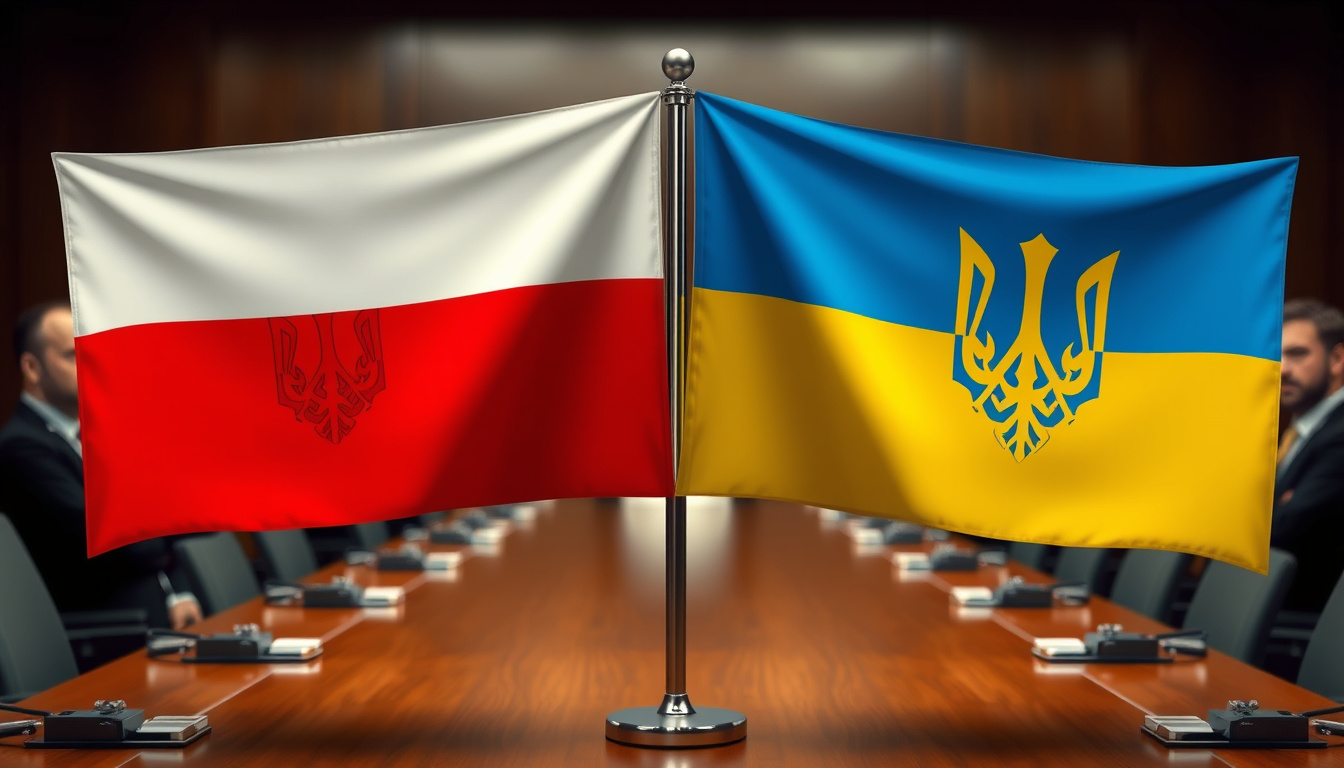
Key Takeaways
- Poland revoked President Zelensky's Order of the White Eagle in response to controversial military unit naming.
- Despite diplomatic tensions, Poland reaffirms its support for Ukraine's EU aspirations and reconstruction plans.
- Ukrainian officials view the revocation as a strategic misstep that could benefit Russia's influence.
Revocation of the Order of the White Eagle: A Symbol of Tension
The recent revocation of the Order of the White Eagle by Poland's President Karol Nawrocki has sparked significant diplomatic tension between Poland and Ukraine.
This esteemed honor, which was awarded to Ukrainian President Volodymyr Zelensky, has been rescinded following Zelensky's endorsement of naming a Ukrainian military unit after the controversial Ukrainian Insurgent Army (UPA).
This group, which operated during World War II, is viewed by Poland as responsible for heinous acts against Polish civilians, making this a sensitive issue.
President Nawrocki has publicly condemned Zelensky's decision as ‘outrageous’ and ‘deeply disappointing,’ indicating the seriousness of the diplomatic fallout.
Despite this rift, Poland maintains a commitment to Ukraine’s aspirations for European Union membership, promising that this controversy will not impede its assessment of Ukraine’s status.
Furthermore, Poland continues to prepare for an essential conference focused on Ukraine’s post-war reconstruction, highlighting that while tensions are escalating, Poland remains steadfast in its overall support for Ukraine amidst the ongoing conflict with Russia.
Ukrainian Foreign Minister Andrii Sybiha described the award revocation as a ‘strategic error’ that could only serve Moscow's interests, emphasizing Ukraine’s desire to preserve its alliance with Poland despite the prevailing diplomatic strains.
Alongside these tensions, Poland faces its own challenges regarding the influx of Ukrainian refugees and the potential economic impacts of Ukraine's EU accession, placing this diplomatic dilemma in an even broader context.
Poland's Ongoing Support for Ukraine Amidst Diplomatic Strain
The intertwining of Poland and Ukraine's destinies is deeply rooted in history, culture, and a shared struggle against aggression.
As both nations navigate the current geopolitical landscape, Poland is actively seeking to balance its historical grievances with a pragmatic approach towards its neighbor.
The recent diplomatic rift indeed casts a shadow over their bilateral relations; however, Poland's government remains focused on recognizing Ukraine's sovereignty and its quest for European integration.
By pledging to support Ukraine's EU aspirations, Poland is not only investing in a stable and democratic neighboring country but also reinforcing its own security interests in a region increasingly threatened by Russian aggression.
The hosting of a crucial reconstruction conference is testament to Poland's intent to reaffirm its role as a steadfast partner for Ukraine, promoting economic recovery as a means to bolster regional stability.
These actions underscore Poland's complex yet committed strategy to maintain its support for Ukraine, navigating the delicate balance between historical grievances and modern-day imperatives.