Pope Leo XIV: A New Era of Global Peacekeeping Amidst Ongoing Conflicts
May 15, 2025
In a world fraught with conflicts and crises, the newly appointed Pope Leo XIV emerges as a beacon of hope, advocating for global peacekeeping efforts in areas torn apart by violence and instability.
With pressing crises unfolding in Ukraine, Gaza, Yemen, and beyond, Pope Leo XIV has taken up the mantle of a peacemaker, echoing the sentiments of his predecessor, Pope Francis.
He acknowledges the complex nature of modern warfare, characterizing it as a ‘third world war in pieces,’ and shows particular concern for the suffering of the Ukrainian populace.
This article explores Pope Leo XIV's vision for global peace, contrasts it with the approaches of other world leaders like former President Trump, and assesses the implications of these developments for conflict resolution worldwide.
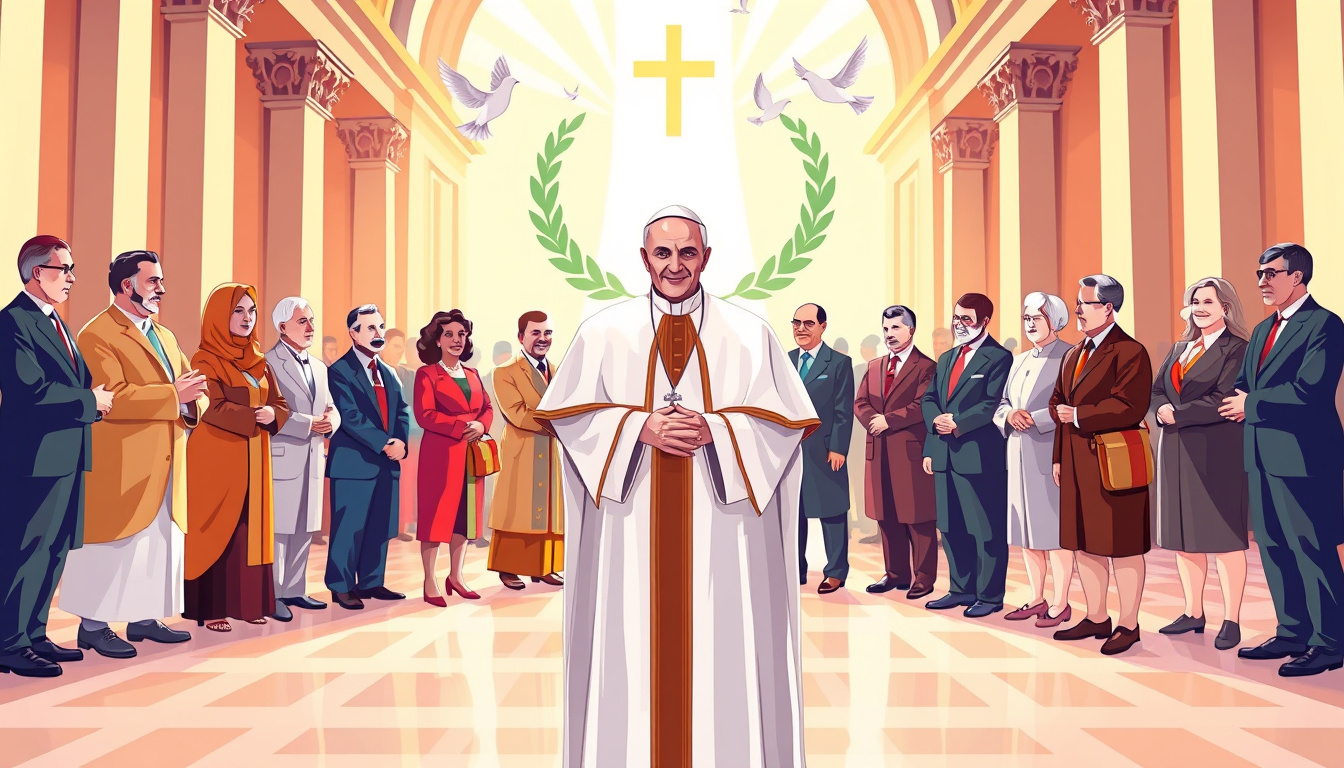
Key Takeaways
- Pope Leo XIV is launching global peacekeeping efforts to address ongoing conflicts worldwide.
- He emphasizes the need for peace in regions like Ukraine, Gaza, and Yemen, calling for the release of prisoners of war.
- There is a notable parallel in peace advocacy between Pope Leo XIV and former President Trump amidst geopolitical tensions.
Pope Leo XIV's Vision for Global Peacekeeping
In a world beset by ongoing conflicts, the recent appointment of Pope Leo XIV heralds a new vision for global peacekeeping.
Addressing the tumultuous landscape that includes crises in Ukraine, Gaza, and Yemen, the Pope has reiterated concerns articulated by his predecessor, Pope Francis, who deemed these crises a 'third world war in pieces.' His emphasis on the suffering endured by the Ukrainian people reflects not only compassion but also an urgent call for substantial and enduring peace.
Remarkably, Pope Leo XIV has recognized the ceasefire brokered between India and Pakistan as a positive step and is advocating for the release of all prisoners of war to foster goodwill.
Furthermore, he has expressed deep concern for Christians experiencing persecution in the Middle East, pledging to step forward as a peacemaker in these historically troubled territories.
In a parallel narrative, former President Trump has similarly branded himself a peacemaker, championing a strategy of 'deal-making, not chaos' regarding the Middle East.
His administration's significant arms sales in the Gulf, coupled with his commentary on pursuing peace with Iran, further strengthen this narrative.
The convergence of messages from Pope Leo XIV and Trump presents a glimmer of hope for conflict resolution across various global hotspots.
Compounding this optimism, President Zelensky of Ukraine has extended a heartfelt invitation to the Pope to visit Ukraine, offering him a firsthand look at the devastation wrought by ongoing hostilities.
Together, these leaders embody a collective aspiration for fostering peace in a world desperately in need of resolution.
Comparative Approaches to Peace by World Leaders
In the context of these developments, it is crucial to examine the contrasting yet complementary approaches taken by these leaders towards establishing peace.
Pope Leo XIV's emphasis on humanitarian concerns showcases his moral and spiritual commitment to resolving conflicts through dialogue and compassion.
His call for ceasefires and the protection of vulnerable populations illustrates a strategy centered on fostering understanding and reconciliation among nations.
Conversely, former President Trump's focus on pragmatic deal-making highlights a more geopolitical approach, prioritizing direct negotiations and strategic alliances.
This duality presents an intriguing dynamic, as both leaders leverage their positions to influence international peace efforts, albeit through different frameworks.
The intricate relationship between moral imperatives and pragmatic strategies underscores the complexity of peacebuilding in today's world, suggesting that collaborative efforts rooted in both empathy and strategic reasoning may provide a pathway towards lasting global stability.