Protests Erupt in Romania After Rejection of Presidential Candidate Călin Georgescu: A Threat to Democracy?
March 11, 2025
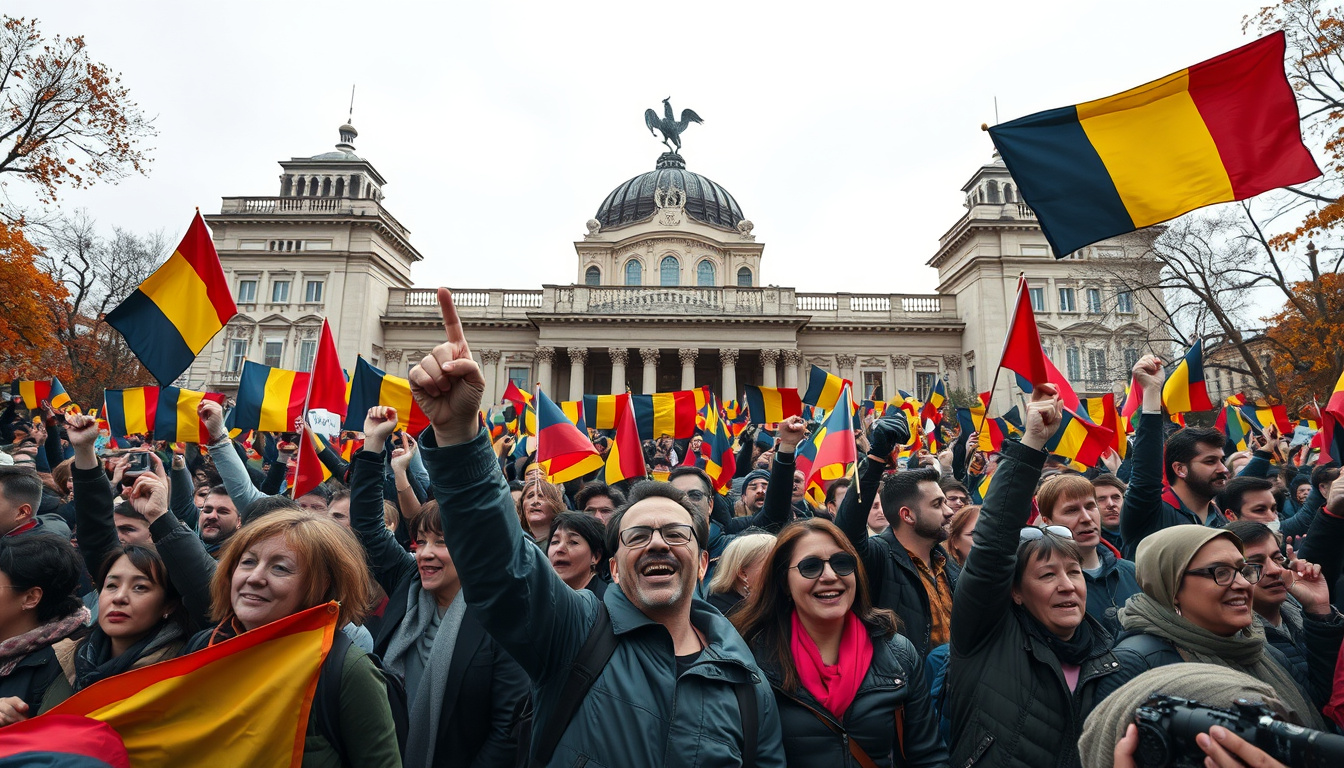
Protests have erupted across Romania following the controversial rejection of Călin Georgescu's presidential candidacy by the Central Electoral Bureau (BEC).
This decision, made on a technicality regarding Georgescu's declaration of wealth, has sparked significant unrest, raising questions about the current state of democracy in Romania.
Amid cries of a ‘theft of democracy’ from his supporters and clashes with law enforcement, both local and international figures are scrutinizing the implications of this political turmoil.
As citizens rally for their voices to be heard, we delve into the background of these protests, the impact on Romania's democratic landscape, and the potential consequences of what many see as a troubling political maneuver.
Key Takeaways
- Călin Georgescu's presidential candidacy rejection sparked mass protests in Romania, highlighting tensions in the democratic process.
- International condemnation suggests the potential for political manipulation within Romania's electoral system.
- Georgescu's ability to appeal the BEC's decision could significantly impact Romania's political landscape and ongoing debates about democracy.
Background of the Rejection and Protests
In recent days, Romania has witnessed a significant upheaval following the Central Electoral Bureau's (BEC) rejection of Călin Georgescu's presidential candidacy—an event that has triggered widespread protests throughout the country and drawn international scrutiny.
The decision, reached by a majority vote of 10 out of 14 BEC members, hinged on a technical oversight: Georgescu's declaration of wealth was missing a critical signature.
This seemingly minor issue escalated into major civil unrest, with demonstrators gathering outside the BEC headquarters in Bucharest to voice their discontent.
The protests quickly turned chaotic, as supporters clashed with police, leading to the deployment of tear gas and several arrests.
Protesters voiced their frustration through chants advocating for a 'revolution' and denounced what they termed a 'theft of democracy.' In the wake of this tumult, Georgescu took to social media, condemning the decision as a detrimental blow to democracy in Romania, warning that such actions could have larger consequences on the global stage.
His candidacy rejection was further complicated by his recent arrest related to an extremism investigation, raising concerns about potential political manipulation behind the scenes.
The situation prompted comments from international figures, including Italian Deputy Prime Minister Matteo Salvini and U.S.
billionaire Elon Musk, who have expressed alarm over the implications of the BEC's ruling, suggesting it pointed to political interference in Romania's electoral process.
Importantly, Georgescu has the opportunity to appeal the BEC's decision within 24 hours to the Constitutional Court, a move that could potentially restore his candidacy.
As such, the upcoming days are critical for Georgescu's political future, and the events unfolding in Romania are refueling broader discussions regarding the health of democracy and the impact of external political influences on national decision-making.
Implications for Democracy and Political Climate in Romania
The recent rejection of Călin Georgescu's presidential candidacy by the Central Electoral Bureau (BEC) has stirred significant debate regarding the robustness of democratic practices within Romania.
The technicality cited by the BEC—notably the absence of a signature on Georgescu's declaration of wealth—has been perceived by many as a superficial excuse that cloaks deeper political undercurrents.
The ensuing protests have illustrated a public increasingly aware of and frustrated by perceived injustices in the electoral process.
Furthermore, Georgescu's prior arrest linked to an extremism investigation amplifies suspicions of political motivations influencing the BEC's decision.
Protesters have rallied around the narrative of a 'theft of democracy,' suggesting that citizens are not only defending a political candidate but are also advocating for the integrity of their democratic rights.
As international figures lend their voices to the discourse, underscoring the potential ramifications of these events beyond Romania, the nation's political climate has become a focal point for evaluating democracy in the contemporary age.