Quarantine on Venezuelan Oil: How U.S. Military Moves Signal a New Era of Gunboat Diplomacy
December 25, 2025
In recent weeks, the geopolitical landscape surrounding Venezuela has undergone a significant transformation as the Trump administration is enforcing a two-month 'quarantine' on Venezuelan oil exports.
This aggressive tactic, rooted in the principles of gunboat diplomacy, signals a new chapter in U.S.
foreign policy aimed at destabilizing the regime led by Nicolás Maduro.
With military assets deployed to exert pressure and economic sanctions tightening, the U.S.
is maneuvering to cut off crucial oil revenues that underpin Venezuela's faltering economy.
This article will explore the implications of U.S.
military actions on Venezuelan oil exports, the intricate landscape of gunboat diplomacy, and the potential consequences for both Venezuela and the broader geopolitical climate.
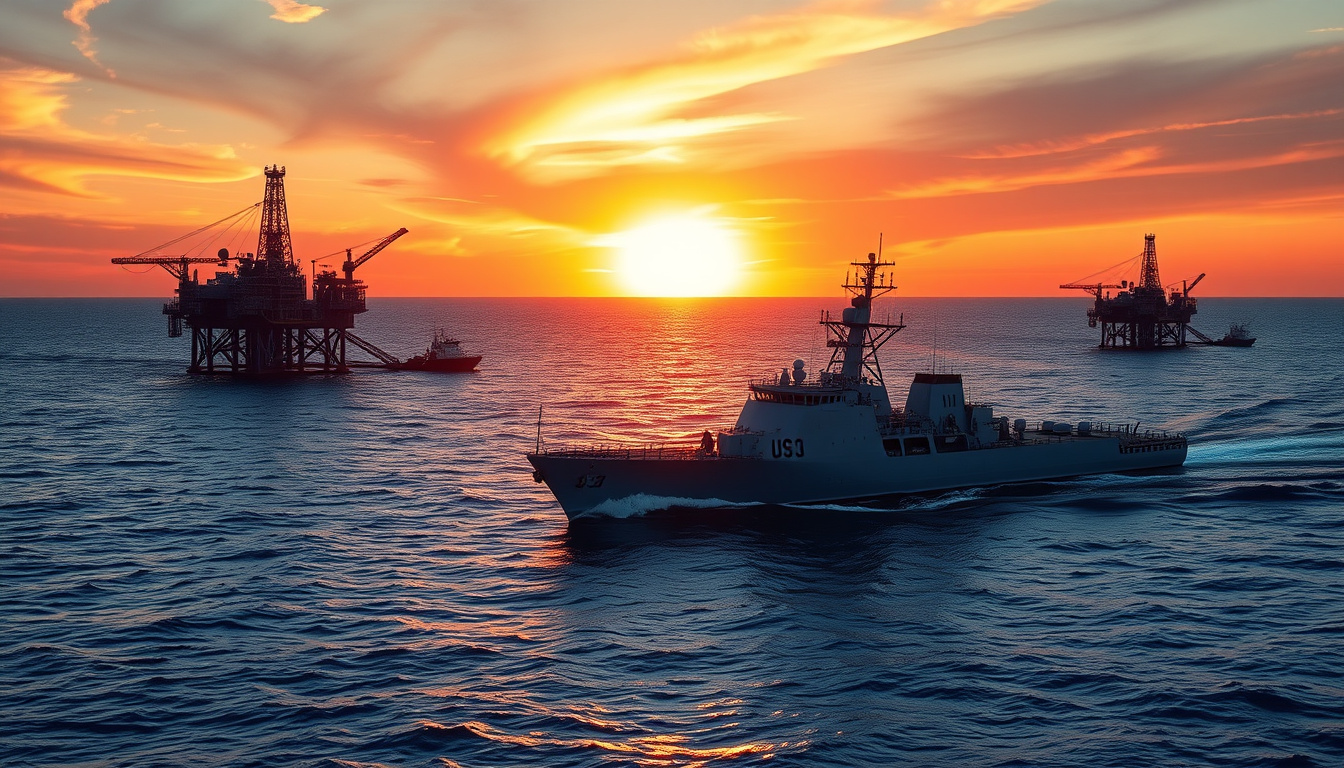
Key Takeaways
- The U.S. military is enforcing a quarantine on Venezuelan oil to increase pressure on the Maduro regime.
- Current U.S. strategies include economic sanctions and military presence to disrupt Venezuela's oil exports.
- The escalating blockade could lead to a severe economic crisis in Venezuela if no concessions are made before January.
The Impact of U.S. Military Actions on Venezuelan Oil Exports
The U.S.
military's recent actions regarding Venezuelan oil exports represent a significant development in the realm of international relations and economic sanctions.
Under the Trump administration, a two-month 'quarantine' on Venezuelan oil has been enforced, marking an aggressive stance aimed at destabilizing Nicolás Maduro's regime.
This approach intertwines military pressure and economic sanctions, signaling a shift in U.S.
policy that seeks compliance without direct military intervention.
Key actions, such as the U.S.
Coast Guard's interception of Venezuelan tankers, underscore the urgency of this blockade aimed at crippling vital oil flows that support Maduro's government, heavily reliant on oil revenues to sustain its faltering economy.
With Venezuela's oil exports having peaked at nearly 900,000 barrels per day, predominantly directed to China and facilitated by dark-fleet tankers, the U.S.
strategy intensifies the financial squeeze on Venezuela.
The blockade’s ramifications are dire; experts predict looming economic collapse unless Caracas makes concessions.
Additionally, the deployment of over 15,000 troops and naval enhancements in the Caribbean illustrates a strategic pivot back to principles reminiscent of the Monroe Doctrine, where U.S.
interests in the region take precedence, reshaping the geopolitical landscape in Latin America.
Analysis of Gunboat Diplomacy and Its Future Implications
Gunboat diplomacy, historical in its application, gains renewed relevance as the U.S.
reasserts its presence in Latin America amidst increasing geopolitical tensions.
This strategy, characterized by the deployment of military force or the threat thereof to influence foreign nations, has been employed with particular vigor in the context of Venezuela.
The current U.S.
administration's insistence on enforcing a rigid blockade against Venezuelan oil not only maintains pressure on the Maduro regime but also engages in a delicate balancing act of increasing military visibility without crossing the threshold into direct confrontation.
Such tactics reflect a calculated approach aimed at exerting influence while minimizing the risk of escalation into outright war.
The implications of this renewed gunboat diplomacy extend beyond immediate military engagements; they encompass global oil markets, regional alliances, and the intricate web of international sanctions designed to undermine authoritarian regimes.
As Venezuela grapples with dwindling revenues and economic instability, the ramifications of this strategy could ripple across the Americas, influencing other countries' policies and their responses to U.S.
interventionist tactics.