Record Breaking Executions: Iran's Alarming Surge in Capital Punishment in 2025
December 7, 2025
As 2025 progresses, the Iranian government's persistent reliance on capital punishment has reached alarming levels, capturing global attention and raising serious concerns about human rights violations.
With over 1,000 executions reported between January and September, this surge marks the highest annual death toll in the country in over 15 years and has exceeded the total executions recorded in
2024.
The statistics provided by Amnesty International not only highlight the staggering numbers but also underscore the troubling lack of transparency from Iranian authorities regarding the implementation of the death penalty.
Amidst the backdrop of the 'Woman, Life, Freedom' movement protests in 2022 and escalating tensions with Israel, the Iranian regime appears to have escalated its use of executions as a tool for political repression.
This article delves into the rising trends in executions, examines the political implications, and highlights the human rights concerns surrounding this distressing phenomenon.
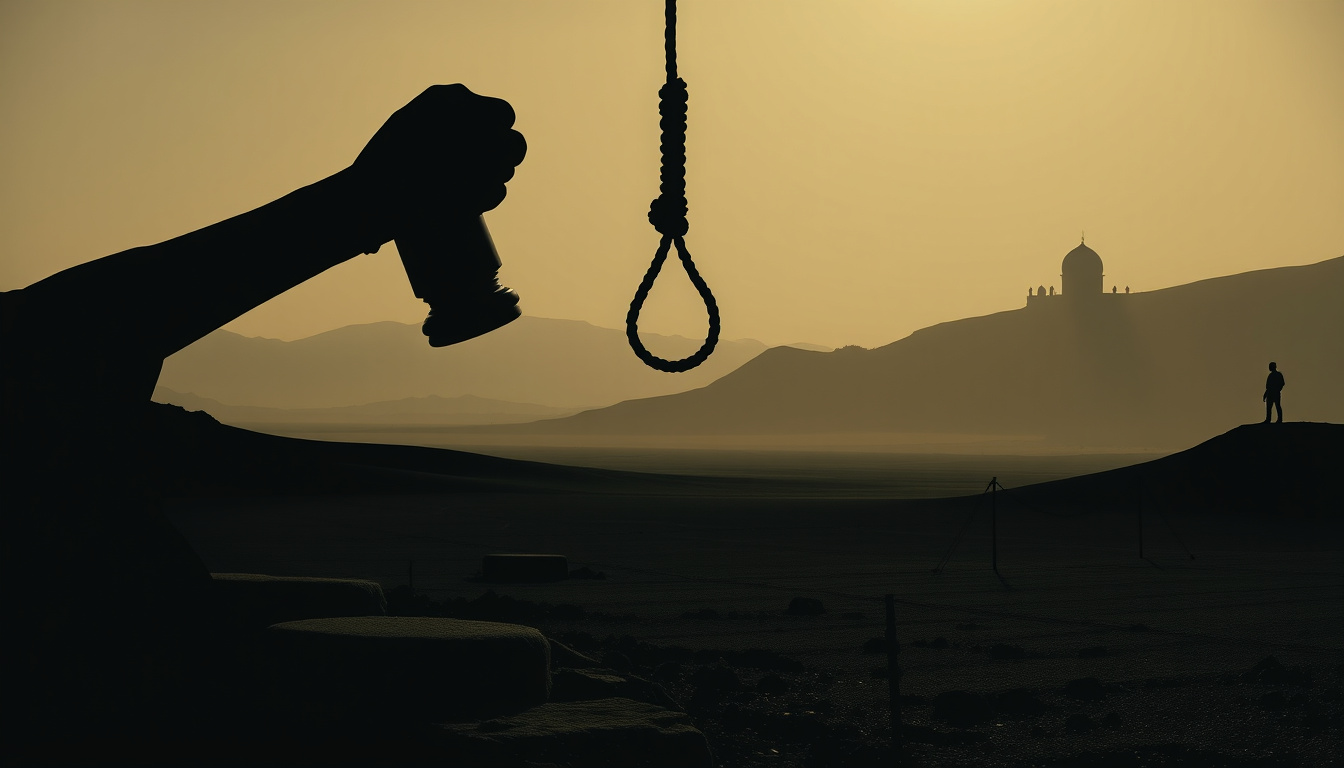
Key Takeaways
- Iran's execution total has surpassed 1,000 in just nine months of 2025, the highest in 15 years.
- The surge in capital punishment is viewed as a state mechanism for repression post-2022 protests.
- Amnesty International warns that the official numbers may underestimate the true scale of executions in Iran.
Rising Trends in Executions: A Statistical Overview
In 2025, Iran is facing a troubling surge in the number of executions, reflecting a concerning trend in human rights practices within the country.
According to Amnesty International, over 1,000 individuals have been executed from January to September, which is a staggering increase that marks the highest annual death toll recorded in the last 15 years.
This number not only surpasses the previous year’s total of 972 executions but also highlights a distressing escalation in the use of the death penalty as a tool for political repression.
Following the widespread protests ignited by the 'Woman, Life, Freedom' movement in 2022, the Iranian regime has intensified its crackdown on dissent, utilizing executions as a method to instill fear and suppress opposition.
Moreover, the increased pace of executions in 2025 appears to be linked to soaring tensions in the region, particularly between Iran and Israel, where the regime claims to be acting in the name of national security.
However, it is important to note that these figures from Amnesty International may only scratch the surface, as many executions go unreported due to a marked lack of transparency from Iranian authorities.
As the international community grapples with this alarming trend, the human rights implications of such a stark increase in executions cannot be understated.
Political Implications and Human Rights Concerns
In light of these developments, the political implications of Iran's surge in executions extend far beyond its borders, impacting regional stability and international relations.
The Iranian government's extensive use of capital punishment serves as a stark reminder of its authoritarian grip and its willingness to silence dissent through fear.
Critics argue that this oppressive tactic not only undermines the rule of law but also contributes to an increasingly volatile geopolitical landscape as neighboring countries observe Iran's heavy-handed response to civil unrest.
Furthermore, the implications of these actions resonate with global human rights advocates urging for accountability.
The international community is compelled to respond to these egregious violations of human rights, particularly as reports of abuses continue to emerge amidst growing tensions with Israel and concerns regarding Iran’s nuclear ambitions.
The intersection of national security and human rights in Iran poses a complex challenge that requires a nuanced approach from international actors, balancing the need for stability in the region with a steadfast commitment to advocating for the rights of those suffering under such oppressive regimes.