Revolutionizing Warfare: How Israel's D9 'RobDozer' Is Changing Military Tactics in Gaza and Lebanon
April 23, 2025
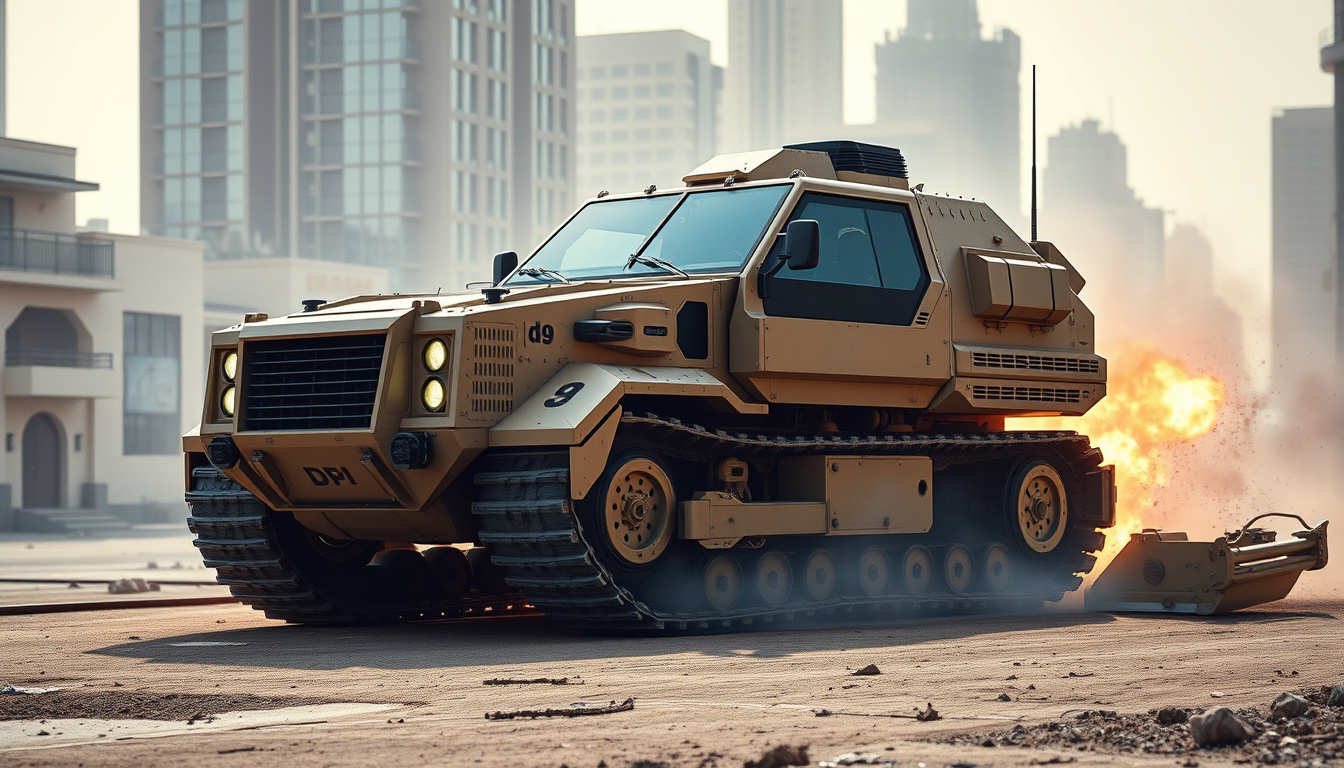
As the landscape of modern warfare continues to evolve, Israel's deployment of the D9 ‘RobDozer’ signifies a transformative change in military tactics utilized in conflict zones such as Gaza and Lebanon.
Since October 2023, the Israel Defense Forces (IDF) have begun employing these unmanned bulldozers developed by Israel Aerospace Industries (IAI) to enhance operational efficiency while prioritizing the safety of soldiers.
This article delves into the deployment and capabilities of the D9 RobDozer, examining its role in reshaping military strategies, the ethical implications that arise from such technology, and the broader context of its use in contemporary warfare.
Key Takeaways
- The D9 RobDozer revolutionizes military tactics by enabling large-scale operations with minimal risk to personnel.
- Despite its efficiency, the use of unmanned bulldozers raises ethical concerns about distinguishing between combatants and civilians.
- The IDF's deployment of the RobDozer has expanded control over significant portions of Gaza, resulting in extensive structural destruction.
Deployment and Capabilities of the D9 RobDozer
The deployment of the D9 RobDozer represents a pivotal moment in the evolution of military operations by the Israel Defense Forces (IDF), especially in complex and urban environments like Gaza and Lebanon.
Launched in October 2023, this unmanned bulldozer, crafted by Israel Aerospace Industries (IAI), is engineered for substantial tasks such as trench digging and obstacle clearance.
While these capabilities are crucial in modern warfare, enabling the IDF to execute large-scale missions with reduced risk to human life, a significant concern persists regarding the RobDozer’s ability to differentiate between combatants and civilians during its autonomous operations—an ethical dilemma that cannot be overlooked.
The effectiveness of the RobDozer is underscored by its deployment amid challenging conditions in Gaza, where the landscape is littered with rubble and unexploded ordnance due to previous bombings.
Moreover, the IDF's strategic alterations, highlighted by the declaration of buffer zones in areas such as Rafah by Defense Minister Israel Katz, indicate a shift towards more aggressive tactics that have inevitably resulted in substantial urban destruction and civilian displacement.
The ongoing military engagements have allowed the IDF to assert control over a significant portion of Gaza, showcasing the strategic advantages and possible ramifications of deploying advanced robotic systems in conflict zones.
Ethical Concerns and Implications in Warfare
As warfare technology continues to advance, the introduction of unmanned systems like the D9 RobDozer raises pressing ethical questions regarding the nature of modern conflict.
The RobDozer, while ostensibly designed to enhance efficiency and reduce soldier casualties, blurs the lines between combat and civilian safety.
The inherent challenge lies in its autonomous capabilities; without the ability to accurately identify non-combatants, there exists a potential risk of collateral damage that complicates military objectives.
Additionally, this reliance on technology invites broader discussions about accountability in warfare—who is responsible for decisions made by machines?
The expansion of buffer zones, as directed by Israeli military leadership, not only amplifies the operational scope of robotic systems but also risks exacerbating humanitarian crises in conflict areas.
As the IDF continues to adapt its strategies, the repercussions of employing such technologies warrant careful consideration, ensuring that advancements do not come at the cost of ethical conduct in warfare.