Romania Proposes Self-Destruct Feature for Drones Amid Maritime Security Concerns in Black Sea
June 13, 2026
In response to growing maritime security concerns in the Black Sea, Romania's Defense Minister Radu Miruta has put forth an innovative proposal to implement self-destruct features in Ukrainian maritime drones.
This measure comes on the heels of a recent incident involving a Magura-type kamikaze drone that exploded in Constanta, sparking alarms among NATO allies about the potential dangers posed by errant drones straying into neighboring territories.
This article delves into the incident that prompted the proposal, the implications for maritime security, the suggested safety solutions, and the international reactions that are shaping the future of aerial warfare and drone technology.
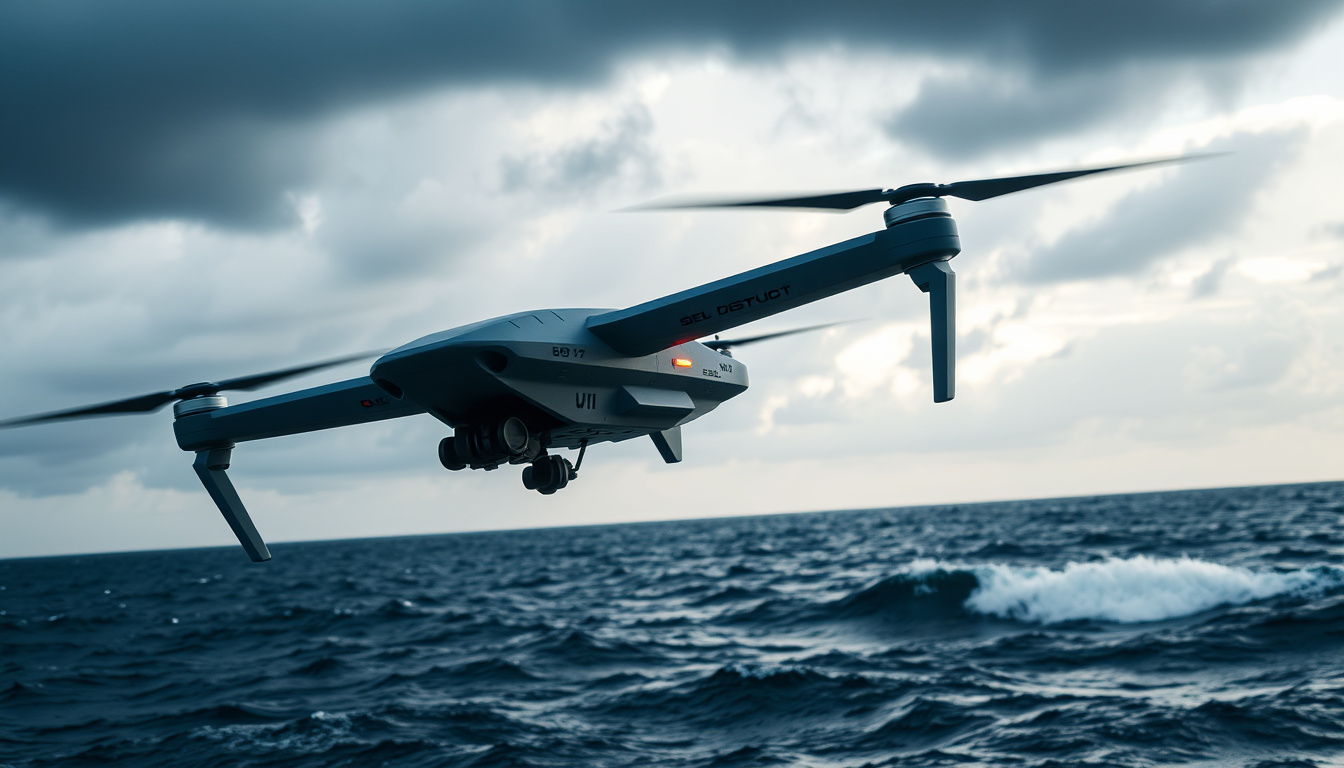
Key Takeaways
- Romania's recent drone incident highlights significant maritime security concerns in the Black Sea.
- The proposed self-destruct feature for Ukrainian drones aims to prevent dangerous accidents within Romanian territorial waters.
- International discussions are underway to enhance safety measures for drones following the alarming incidents.
The Incident and Its Implications for Maritime Security
In light of recent events surrounding maritime security, the proposal by Romania’s Defense Minister, Radu Miruta, to implement a self-destruct feature for Ukrainian maritime drones underscores the growing alarms within NATO's eastern flank.
This call for precautionary measures comes after a Magura-type kamikaze drone exploded at Constanta, Romania’s key Black Sea port, raising significant safety concerns among neighboring countries.
The drone had drifted off course, resulting in an explosion without reported injuries, yet the incident has highlighted vulnerabilities associated with drone technology in conflict zones.
Romanian officials swiftly reached out to their Ukrainian counterparts, revealing that four drones had been rendered uncontrollable.
While two drones self-detonated offshore, another met its end outside the port, sparking urgent discussions on safety protocols.
Miruta's assertion that self-destruct mechanisms should activate if drones stray into a 12 nautical mile exclusion zone from Romania’s coastline reflects an imperative to enhance maritime security.
With Ukrainian authorities attributing the rogue behavior of the drones to Russian signal jamming, the conversation has expanded to consider safety features for aerial drones as well.
The incident not only illustrates the immediate risks posed by errant drones but also signifies a need for collective NATO measures to bolster security and mitigate potential disasters in the region.
Proposed Solutions and International Reactions
The proposed solution by Radu Miruta highlights a critical need for improved safety protocols in drone operations, especially in conflict-affected regions.
As drones are increasingly relied upon for military operations, the potential for accidents—such as the recent unmanned aerial vehicle incident in Constanta—exposes vulnerabilities that can have far-reaching consequences.
The call for a self-destruct feature is particularly pertinent because it offers a preventive measure against unintended intrusions into sovereign airspace and territorial waters, which can escalate tensions among nations.
Moreover, with the complications inflicted by technological interference, like Russian jamming, the necessity for robust operating protocols becomes even more pressing.
By establishing standardized safety measures, such as automated self-destruct functions, NATO members not only enhance their operational security but also foster greater cooperative defense strategies that reaffirm collective safety in a volatile geopolitical landscape.
This approach reflects a proactive stance, aiming to prevent future incidents while paving the way for collaborative technological advancements in unmanned systems.