Saggart Riot: Outrage Over Alleged Assault Sparks Clash at Migrant Hotel in Dublin
October 22, 2025
In recent days, Saggart, a small town in southwest Dublin, has become the epicenter of a heated debate surrounding immigration and public safety.
This followed a violent riot ignited by the alleged sexual assault of a 10-year-old girl by a 26-year-old asylum-seeker at a hotel designated for migrant accommodation.
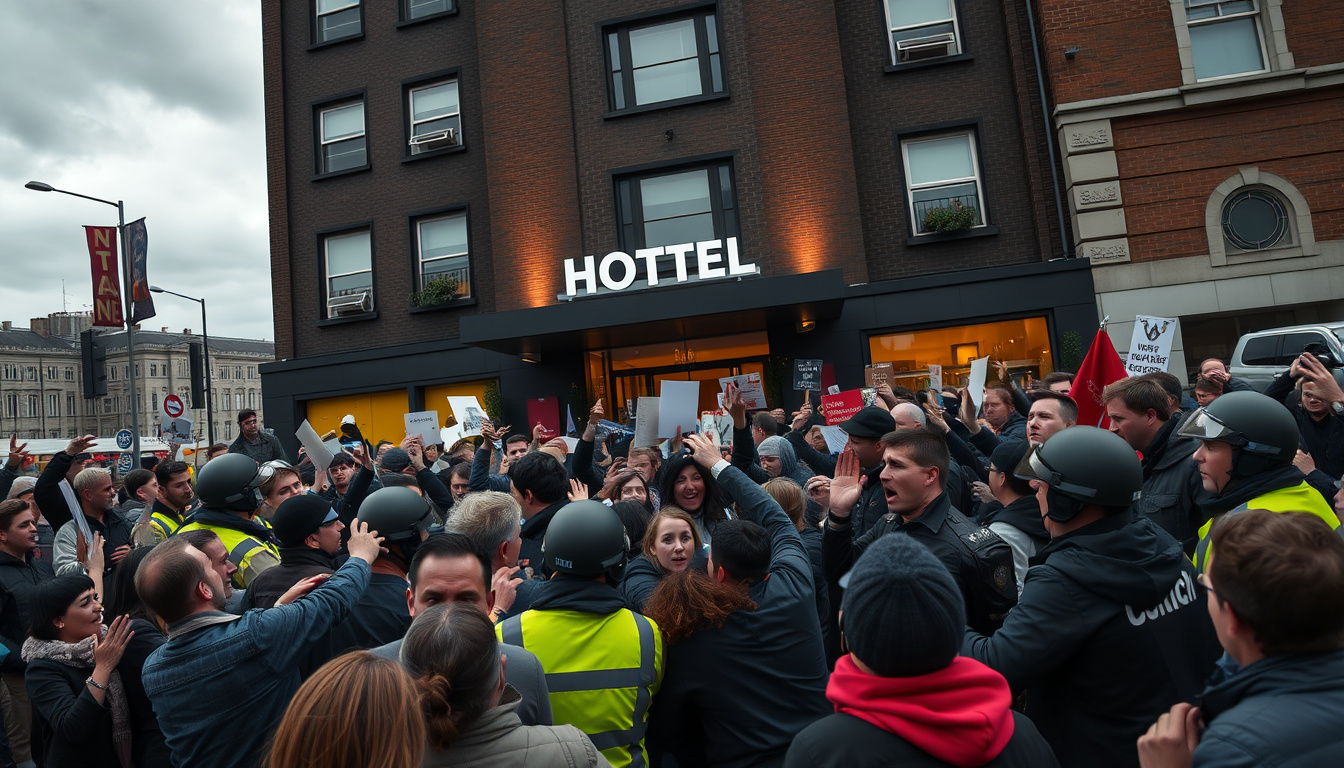
The shocking incident led to a massive protest, numbering around 2,000 local residents, who clashed with police outside the CityWest hotel.
Equipped with pitchforks and fireworks, the enraged crowd expressed their fury against the migrant population, raising fundamental questions about community safety and immigration policies in Ireland.
As tensions rise, this article delves into the background of the incident, the reactions it has sparked, and the broader implications for Ireland's immigration framework.
Key Takeaways
- A violent riot erupted in Saggart after an alleged assault on a young girl by a migrant sparked public outrage.
- Around 2,000 protesters clashed with police, raising concerns over local opposition to migrant accommodations.
- The incident highlights rising tensions in Ireland regarding immigration policies and public safety.
Background of the Incident
### Background of the Incident In Saggart, southwest Dublin, a violent riot erupted outside a migrant hotel in response to the allegation of sexual assault involving a 10-year-old girl and a 26-year-old asylum seeker.
This incident became a flashpoint for local citizens who expressed their outrage with an estimated crowd of 2,000 people gathering outside the CityWest hotel.
Tensions escalated as demonstrators clashed with police, leading to confrontations that required law enforcement to don riot gear for their protection.
Protesters, brandishing pitchforks and igniting fireworks, chanted slogans that targeted the migrant residents, creating an atmosphere of hostility.
As police attempted to manage the situation, they were met with violence, including bottles and bricks being thrown at them, which culminated in multiple arrests and significant property damage, including a police vehicle that was set on fire.
The CityWest hotel, recently acquired by the government for €148 million to serve as a long-term accommodation facility for migrants, had already been a contentious topic among local residents concerned about the implications for their community's safety and stability.
The asylum seeker implicated in the incident has a complex legal history, including a previously denied asylum application and an ignored deportation order, raising serious questions about immigration enforcement and community safety.
This troubling incident not only reflects rising tensions regarding crime associated with migrant populations in Ireland but also mirrors broader societal concerns seen across various European nations regarding the integration of asylum seekers.
Officials, including Justice Minister Jim O'Callaghan, condemned the outbreak of violence, emphasizing that the actions of the rioters do not represent the majority view of the community.
Nevertheless, the intensity of the reaction highlights a growing unrest surrounding immigration policies and public safety, revealing the fragility of social cohesion in the face of such incidents.
As the authorities seek to navigate this complex landscape of public sentiment and policy, the incident serves as a stark reminder of the challenges that come with managing immigration and ensuring the safety of all community members.
Reactions and Implications for Immigration Policy
The violent outbreak in Saggart not only raises urgent concerns about public safety but also places immigration policy under intense scrutiny, shining a light on the broader challenges faced by both local communities and the government.
In light of this incident, there is a pressing need for a comprehensive examination of the measures in place for monitoring the behavior and integration of asylum seekers within host communities.
Community leaders and policymakers are called to engage in open dialogues aimed at addressing residents' fears and ensuring that appropriate safeguards are implemented to prevent future incidents.
Furthermore, as discussions around immigration policy evolve, it becomes essential to strike a balance between compassion for those seeking refuge and the responsibility to protect the welfare of local residents.
Ensuring effective communication about the legal status and rights of migrants, along with faster responses to public safety concerns, could help in rebuilding trust within affected communities and easing the tension surrounding immigration debates in Ireland.