Supreme Court's Bondi v. VanDerStok Ruling: New Life for DIY Ghost Guns with Defense Distributed's 'G80' Kit
May 1, 2025
The legal landscape surrounding firearms, particularly ghost guns, has undergone a significant shift following the Supreme Court's ruling in the case of Bondi v.
VanDerStok.
While the decision seems to bolster gun control measures by enforcing stricter regulations on unserialized firearms, it has also sparked a surprising reaction from the DIY firearm community.
In this article, we delve into the implications of this ruling, particularly focusing on the innovative response from Defense Distributed and their new 'G80' kit.
Readers looking to understand how this ruling may redefine the future of DIY ghost guns will find valuable insights into both legal and practical dimensions of this evolving issue.
Key Takeaways
- The Supreme Court's ruling allows for the continued development of DIY ghost guns despite new regulations.
- Defense Distributed's 'G80' kit exemplifies how the ghost gun industry can adapt to legal challenges.
- The ruling's specific definitions may encourage innovation within the DIY firearm market.
Background on the Supreme Court Ruling in Bondi v. VanDerStok
The Supreme Court's ruling in Bondi v.
VanDerStok marks a significant moment in the ongoing debate over firearms regulation in the United States.
The court upheld a Biden administration rule mandating that ghost guns, which are essentially firearms without serial numbers, must now be serialized and sold following background checks.
This decision has been largely perceived as a victory for gun control advocates, aiming to tighten regulations on the proliferation of unserialized weapons.
However, figures in the gun rights community, notably Cody Wilson of Defense Distributed, have presented a counter-narrative, asserting that rather than stifling the ghost gun industry, the ruling could provide a regulatory framework for its evolution.
Wilson points to specific statements within Justice Neil Gorsuch's opinion, indicating an acknowledgment of the ability to convert basic components into functional firearms using commonly available tools.
Crucially, the ruling sets parameters for what constitutes a 'firearm', suggesting that kits requiring minimal modification with typical tools do not fall under this designation.
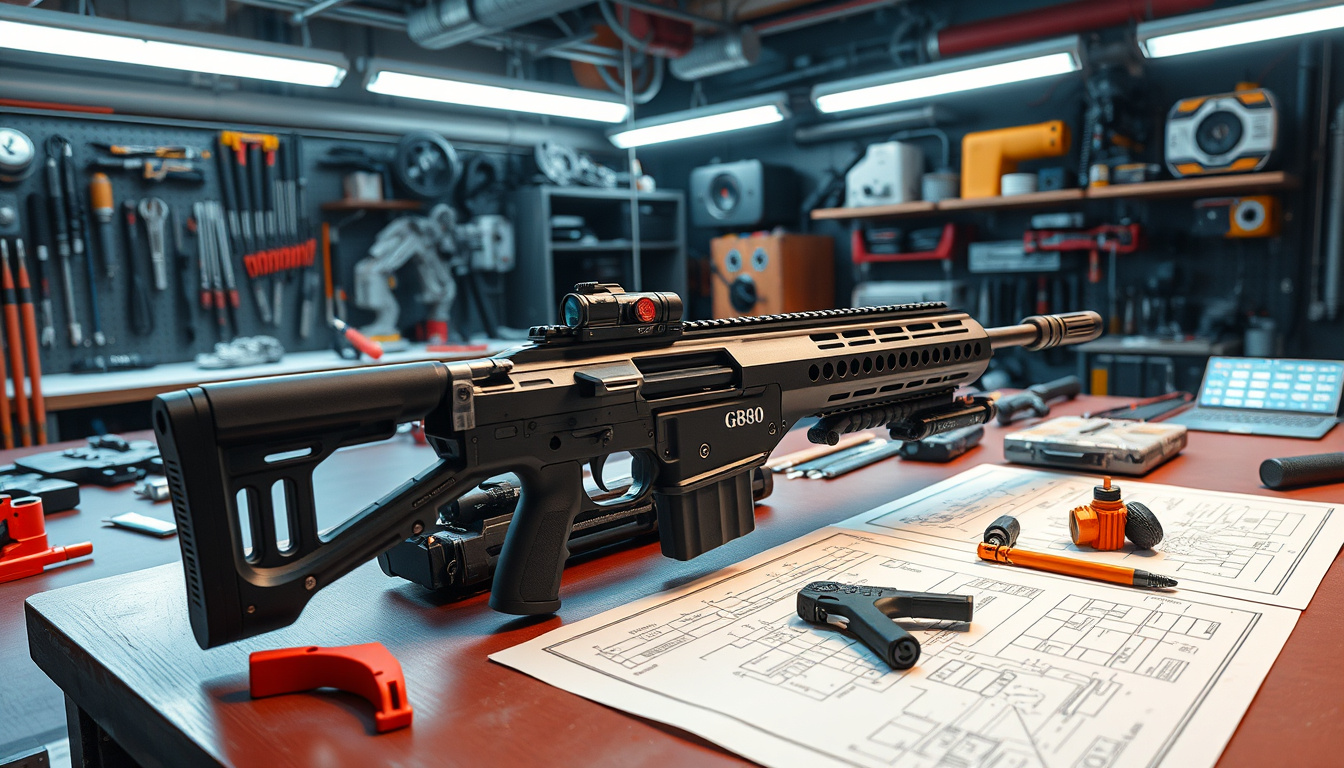
In light of this interpretation, Defense Distributed has responded by introducing their 'G80' DIY firearm kit, which fits within the court’s guidelines.
This innovation highlights how the industry may adapt and persists, despite the perceived restrictions from Supreme Court rulings, leading to unexpected developments in DIY firearm-tools that continue to stir the debate on gun rights.
The Implications of the 'G80' Kit on the Ghost Gun Industry
The launch of the G80 kit represents a pivotal shift for the ghost gun industry, as it not only conforms to the recent legal frameworks but also reinvigorates interest in the DIY firearm movement.
This kit is designed to be user-friendly, enabling enthusiasts to assemble their firearms with relative ease while remaining compliant with new regulations.
As regulations around serialized guns become stricter, the G80 kit's emergence may attract a broader audience, including those who appreciate the craftsmanship and technical skills associated with assembling their own firearms.
Furthermore, it exemplifies a potential growth avenue within the firearm community that leverages inherent gaps in regulatory definitions, allowing manufacturers and hobbyists to sidestep conventional constraints.
This situation raises important questions around future legislation and its ability to effectively regulate new technologies and methods of firearm production.