Switzerland Halts Military Exports to U.S.: A Bold Stand for Neutrality Amid Middle East Tensions
March 21, 2026
Switzerland has long been synonymous with neutrality, a principle deeply embedded in its national identity.
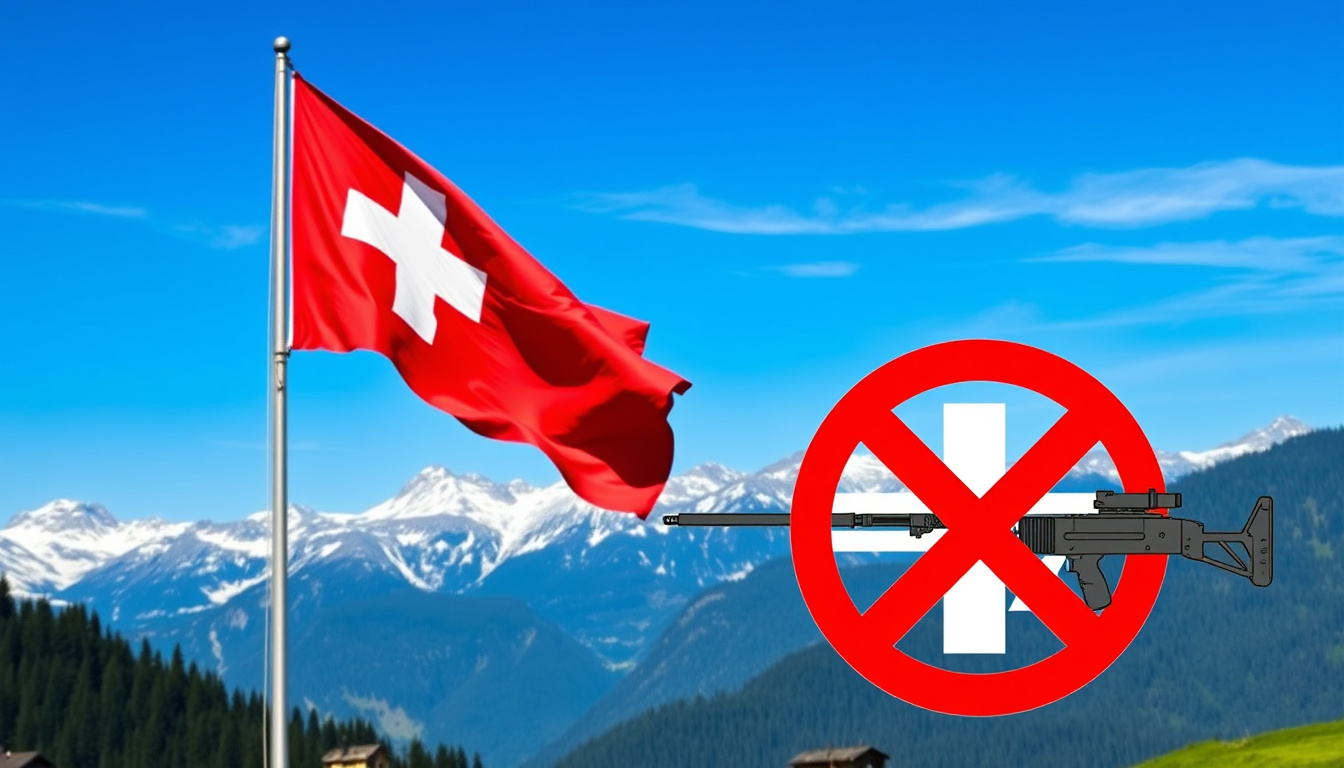
In a striking recent development, the Swiss government has announced a halt to all military and defense exports to the United States, invoking its longstanding policy of neutrality amid escalating tensions in the Middle East, particularly regarding the conflict involving Iran.
This decision underscores not just Switzerland's ethical stance on military engagements but also reflects its commitment to international law and its position on global conflict resolution.
As the implications of this move unfold, it is essential to explore the context and broader impacts on U.S.-Swiss relations.
Key Takeaways
- Switzerland has halted military exports to the U.S. to uphold its longstanding policy of neutrality.
- The Swiss government cites the U.S.'s involvement in international conflicts as a reason for this significant decision.
- This move reflects growing European skepticism towards U.S. military actions in the Middle East.
Switzerland's Commitment to Neutrality and International Law
Switzerland is renowned for its steadfast commitment to neutrality and international law, a principle that has shaped its foreign policy for centuries.
Recently, Switzerland took a significant step by deciding to halt all military and defense exports to the United States, directly correlating this move with the ongoing conflict involving Iran.
The Swiss government has firmly stated that these exports cannot be authorized, citing the U.S.
involvement in what they describe as an 'international armed conflict' in the Middle East.
This decisive announcement aligns with Switzerland's historical neutrality, particularly during crucial global crises.
It also comes at a time when President Trump has expressed frustration regarding Europe's perceived lack of support for U.S.
military operations in the Middle East, highlighting the geopolitical tensions that are increasingly defining transatlantic relations.
Moreover, Switzerland's government recently denied two U.S.
requests for military overflight rights related to operations associated with the Iran conflict, while still approving three other requests, all within the context of maintaining its neutral stance.
This duality in decision-making underscores Switzerland's careful balancing act.
Historically, Switzerland has not been shy about imposing export bans during international conflicts; for example, it enacted similar measures in response to the U.S.
invasion of Iraq in
2003.
While the financial implications of these export bans may seem minor — particularly as military sales to the U.S.
amounted to approximately $46.18 million in 2024 — the symbolic weight of Switzerland's decision cannot be overstated.
It reflects a broader skepticism among several European leaders regarding U.S.
military actions in Iran and reinforces the notion that Europe is not militarily aligned with America's engagements in this region.
As Switzerland continues to uphold its neutrality, the implications of its decisions resonate beyond mere economics, serving as a political rebuff that challenges the interconnectedness of diplomacy and defense in contemporary international relations.
The Broader Implications of Military Export Halts on U.S.-Swiss Relations
The broader implications of Switzerland's decision to halt military exports to the United States extend far beyond immediate economic concerns.
This move reinforces the notion of Swiss neutrality, historically a cornerstone of its foreign policy, and illustrates a notable divergence in the attitudes of European nations toward U.S.
military involvement in conflict zones like Iran.
By invoking its neutrality, Switzerland not only positions itself as a mediator but also challenges the prevailing dynamics of U.S.-European relations, particularly in defense policies.
This decision might encourage other European nations to reevaluate their military collaboration with the U.S., leading to a potential shift in collective security strategies.
Moreover, as European countries voice skepticism over U.S.
actions in the Middle East, the halt in exports signals a growing rift that could reshape future diplomatic and military interactions, prompting a reassessment of alliances and partnerships within NATO and beyond.