Syria's Growing Humanitarian Crisis: Alawite Exodus Amid Escalating Sectarian Violence
March 11, 2025
Syria is once again at the forefront of a humanitarian catastrophe, as a dramatic shift in the landscape has compelled thousands to flee their homes in search of safety.
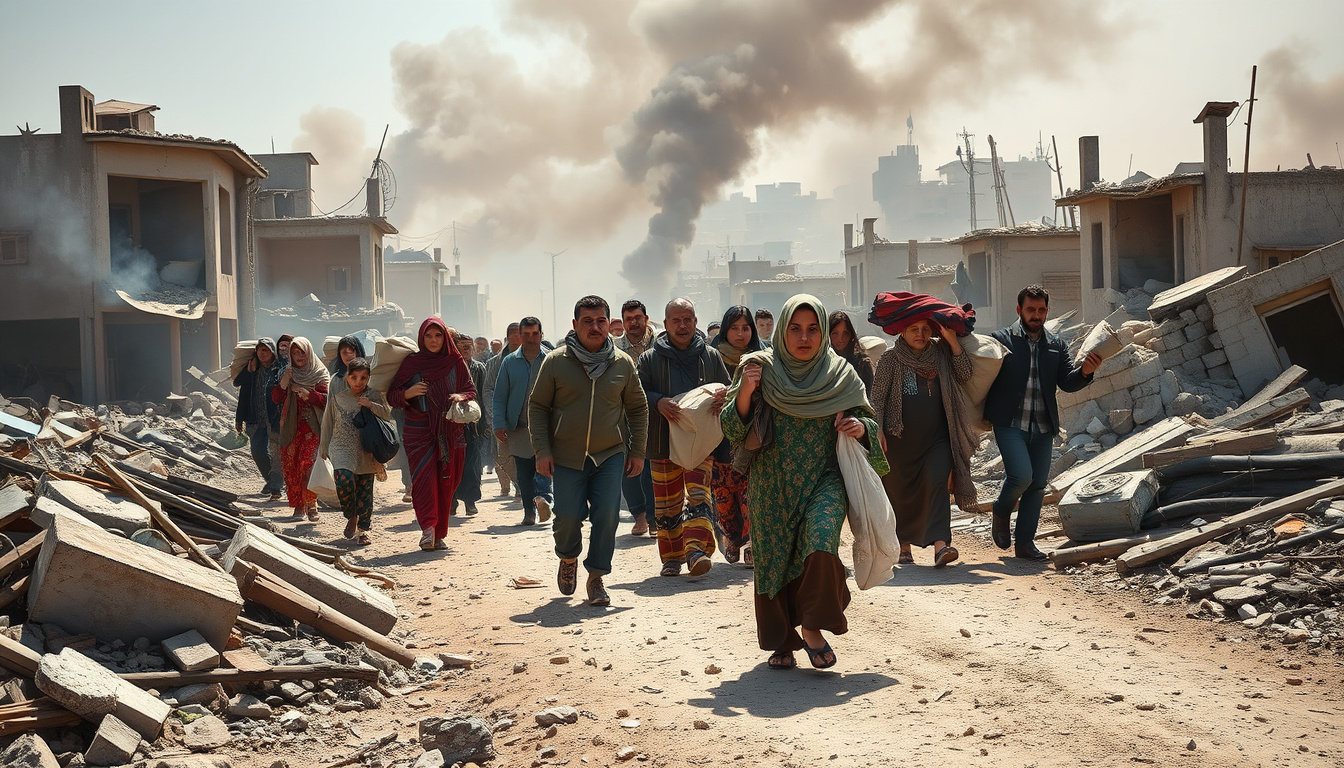
Over 8,000 Alawites have reportedly sought refuge at the Russian airbase in Hmeimim, fleeing escalating sectarian violence that has intensified in recent weeks.
This alarming trend underscores a larger narrative of fear and desperation among Alawite communities, particularly in the coastal provinces of Tartus and Latakia, where the threat posed by Sunni militant attacks has become increasingly dire.
In addition to the Alawite exodus, the conflict's spillover effects are being felt across borders, particularly in Lebanon, where over 10,000 Syrian refugees have entered, triggering new tensions in a country already grappling with profound economic challenges and social divides.
As we explore the causes and consequences of the Alawite exodus, we will also examine the implications for Lebanon amidst rising sectarian tensions and the humanitarian challenges that loom as a result of this crisis.
Key Takeaways
- Over 8,000 Alawites have fled to Russia's Hmeimim airbase due to intensified sectarian violence in Syria.
- The influx of refugees into Lebanon may exacerbate existing sectarian tensions and humanitarian challenges in the region.
- The ongoing violence has resulted in thousands of civilian casualties, highlighting a dire human rights crisis in Syria.
The Alawite Exodus: Causes and Consequences
The Alawite Exodus: Causes and Consequences A significant humanitarian crisis is unfolding in Syria as over 8,000 Alawites flee to Russia's Hmeimim airbase amidst increasing sectarian violence, primarily driven by devastating Sunni militant attacks targeting Alawite communities in the coastal regions of Tartus and Latakia.
Recent reports highlight a surge in these attacks, sparking a wave of fear and desperation that has compelled many to seek refuge at the airbase, illustrating the dire need for immediate humanitarian assistance.
In addition, over 10,000 Syrians have fled to Lebanon’s Akkar region, with many more anticipated to move towards Tripoli—a city marked by a complex sectarian landscape featuring a sizable Sunni population and a notable Alawite presence, particularly in the Jabal Mohsen neighborhood.
This mass influx of refugees risks exacerbating sectarian tensions in Lebanon, a country already grappling with economic challenges and a fraught history concerning Syrian refugees.
To complicate matters further, more jihadist fighters are reportedly amassing along the Syrian coastline, continuing their violent campaign possibly under the implicit approval of Hay'at Tahrir al-Sham (HTS) leadership.
Witness testimonies recount chilling scenes, including roads lined with bodies, as militants attempt to conceal their actions in anticipation of upcoming international inspections.
Tragically, an estimated 1,000 civilians are reported dead, with independent sources suggesting that the true numbers may be significantly higher due to the lack of media representation in these heavily afflicted areas.
The unfolding events underscore a grave human rights crisis, as innocent civilians become collateral damage in the ongoing cycle of sectarian violence in Syria.
Impact on Lebanon: Rising Tensions and Humanitarian Challenges
The humanitarian repercussions of this crisis are profound, not only for those fleeing the violence but also for the neighboring countries bearing the brunt of this displacement.
Lebanon, already hosting over a million Syrian refugees, faces an unprecedented strain on its already fragile economy and social fabric.
The influx of additional Alawite refugees could exacerbate existing sectarian divides, particularly in regions like Akkar and Tripoli, where allegiances and identities are closely tied to historical conflicts.
Furthermore, the Lebanese government's capacity to manage this crisis is severely limited, leading to increased tensions between communities stressed by competition for resources.
The specter of renewed violence looms as individuals from different sectarian backgrounds find themselves encroaching on territory historically claimed by the other, raising the stakes in an already volatile environment.
With humanitarian organizations struggling to meet the needs of the displaced, the urgency for international intervention and support grows more critical by the day.