The Rise of Autonomous Humanoid Robots: Transforming Manufacturing and Military Landscapes
February 9, 2026
As technology hurtles forward, humanoid robots are stepping out of science fiction and into our daily lives, particularly in the realms of manufacturing and military operations.
Companies in countries like China are at the forefront of this transformation, developing advanced robots equipped with artificial intelligence that allows them to perform complex tasks traditionally reserved for humans.
From the labor-intensive assembly lines to dynamic battlefield environments, these robots hold the promise of revolutionizing how industries operate and how nations approach conflict.
Key Takeaways
- Advancements in humanoid robots are leading to increased autonomy and adaptability in manufacturing tasks.
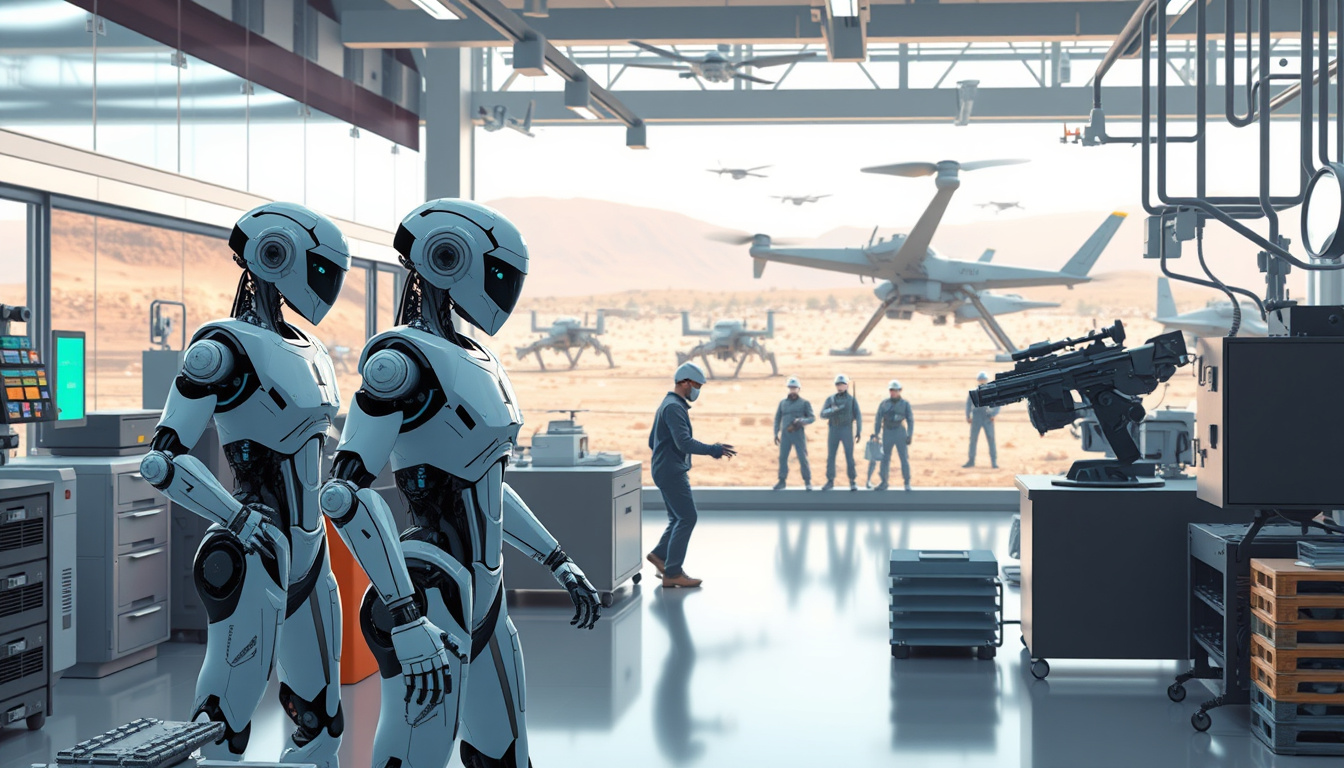
- The dual-use potential of autonomous robots raises ethical concerns regarding their application in military operations.
- The robotics industry is on the verge of a breakthrough that could see these robots deployed in both factories and conflict zones.
Advancements in Humanoid Robot Technology
The landscape of robotics is undergoing a profound transformation, particularly with the rise of humanoid robots that exhibit advanced capabilities thanks to cutting-edge artificial intelligence, often referred to as ‘robot brains.’ Chinese robotics firms are at the forefront of this evolution, producing models such as Dobot’s Atom and UBTech’s Walker S2, which are making significant strides from mechanized actions to autonomous functioning.
These next-generation robots are not only capable of performing sophisticated tasks in controlled environments but are also evolving to adapt to dynamic settings, showcasing their potential to revolutionize various industries.
In manufacturing, for instance, these robots are anticipated to handle complex operations like sorting and material movement, achieving impressive levels of accuracy.
However, the rapid advancement in humanoid robotics is not without its concerns; experts warn of the dual-use nature of these technologies, as they may find applications in both industrial functions and military operations.
This potential deployment of robotics in conflict zones, such as in Ukraine, raises critical ethical questions about their role in warfare.
As the robotics industry approaches this pivotal juncture, the integration of humanoid robots into factory workflows and possibly into military engagements marks a significant breakthrough that could reshape the future of work and conflict alike.
Implications for Manufacturing and Military Applications
The evolution of humanoid robots signals a transformative period not only in manufacturing but also in military applications.
As these robots become increasingly capable of independent decision-making and adaptability, their roles could expand beyond simple industrial tasks to more complex functions in combat scenarios.
For instance, the integration of advanced AI allows for real-time data processing and situational awareness, making them invaluable in tracking and responding to threats in war zones.
Moreover, with the capability to mimic human actions, they could conduct operations that require a human-like presence, potentially reducing risks for human soldiers.
This dual-use potential raises pressing ethical and strategic questions, particularly regarding accountability in warfare and the moral implications of deploying robots in life-and-death situations.
As companies continue to innovate, it becomes imperative for policymakers and industry leaders to engage in conversations about the responsible use of robotics in both manufacturing and military arenas.