The Shifting Landscape of U.S. Retail Clothing: Job Losses, Payroll Growth, and the Rise of E-Commerce
August 14, 2025
The retail clothing industry in the United States is undergoing a dramatic transformation, shaped by shifting consumer behaviors and advancements in technology.
Recent data highlights a significant reduction in jobs within physical clothing stores, alongside a surprising rise in payroll figures and e-commerce employment opportunities.
In this article, we delve into the dual narrative of job losses and growth in payroll in the traditional retail sector, while also exploring the booming e-commerce landscape that is redefining how consumers shop and businesses operate.
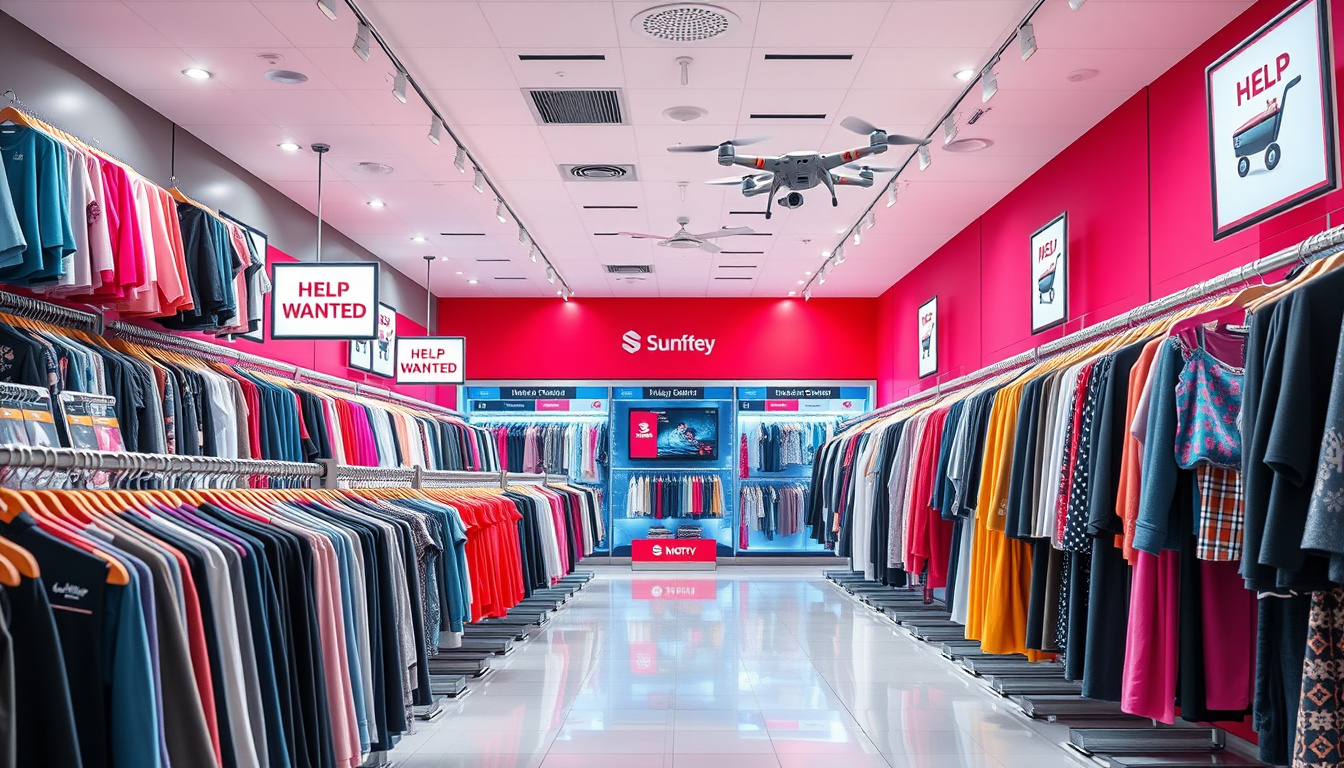
Key Takeaways
- The U.S. retail clothing sector lost around 300,000 jobs from 2017 to 2022 while overall payroll increased, indicating higher earnings for remaining employees.
- Despite a decline in physical clothing stores, e-commerce has surged, leading to significant job creation in nonstore retail.
- Worker mobility is high in retail, with many employees transitioning to different sectors or new retail opportunities.
1. The Decline of Traditional Retail Jobs
The retail industry in the U.S.
faces a profound transformation as traditional retail jobs, particularly in the clothing sector, continue to decline sharply.
Between 2017 and 2022, the U.S.
Census Bureau reported a staggering loss of approximately 300,000 jobs within this sector, with employment in clothing and clothing accessories stores plummeting from
1.8 million to
1.5 million.
This trend has significantly affected small establishments with fewer than 20 employees, leading to a reduction in the overall number of retail firms from 56,731 to 52,909 and a decrease in total store establishments from 143,534 to 121,610.
Interestingly, while traditional retail jobs have dwindled, the total annual payroll for the industry grew from $32.1 billion to $35.0 billion, suggesting that the remaining employees may enjoy higher wages.
In stark contrast, nonstore retailers, including electronic shopping and mail-order firms, have thrived, expanding by 33% to encompass 44,322 establishments during the same period.
This sector has also been a significant job creator, adding 117,379 new positions in 2020 alone.
Notably, new firms in this domain—especially those less than a year old—have emerged as pivotal players in initiating job growth in 2022, marking a shift from the past reliance on older firms for employment stability.
Additionally, retail worker mobility remains pronounced, with about 306,000 individuals switching to different retail roles, while many others have transitioned to sectors such as food services, healthcare, administrative services, and education, reflecting the dynamic nature of the labor market.
2. The Rise of E-Commerce and Its Impact on Employment
The e-commerce boom has undeniably reshaped the landscape of the U.S.
retail clothing sector, leading to notable job losses and significant shifts in employment dynamics.
From 2017 to 2022, approximately 300,000 positions were lost as traditional clothing stores grappled with mounting competition from online retailers.
While this decline translated to a reduction in employment from
1.8 million to
1.5 million in clothing and clothing accessories stores, it also paved the way for substantial changes in wage structures, as evidenced by the rise in total payroll from $32.1 billion to $35.0 billion.
This suggests a shift towards fewer but potentially higher-paid positions within the industry.
The data indicates that the number of brick-and-mortar clothing stores diminished significantly, disrupting the long-standing retail model and driving many small businesses to closure.
However, the rise of nonstore retailers has injected fresh vigor into the labor market; these e-commerce firms saw a remarkable 33% increase, creating a wealth of employment opportunities in the process.
Specific sectors within e-commerce, such as electronic shopping, have not only expanded their market presence but have also become critical to the job recovery narrative, redefining the future of retail employment.