Top 1% Income Requirements by State: Discover How Much You Need to Earn for Elite Status in 2025
November 28, 2025
In the pursuit of financial success and elite status, the top 1% of earners have long been a benchmark of prosperity in the United States.
Whether motivated by ambition or the drive for a higher quality of life, understanding the income thresholds required to join this exclusive group can offer valuable insights.
In 2025, these thresholds vary dramatically across the nation, illustrating the economic diversity and disparity present in different states.
From Connecticut's staggering requirement of over $1 million to West Virginia's considerably lower threshold of around $416,310, the income needed to be deemed part of the elite 1% is influenced by numerous factors including regional economies, cost of living, and dominant industries.
In this article, we will explore the varying income requirements to achieve top 1% status in every state, based on data from SmartAsset and visualized by Visual Capitalist.
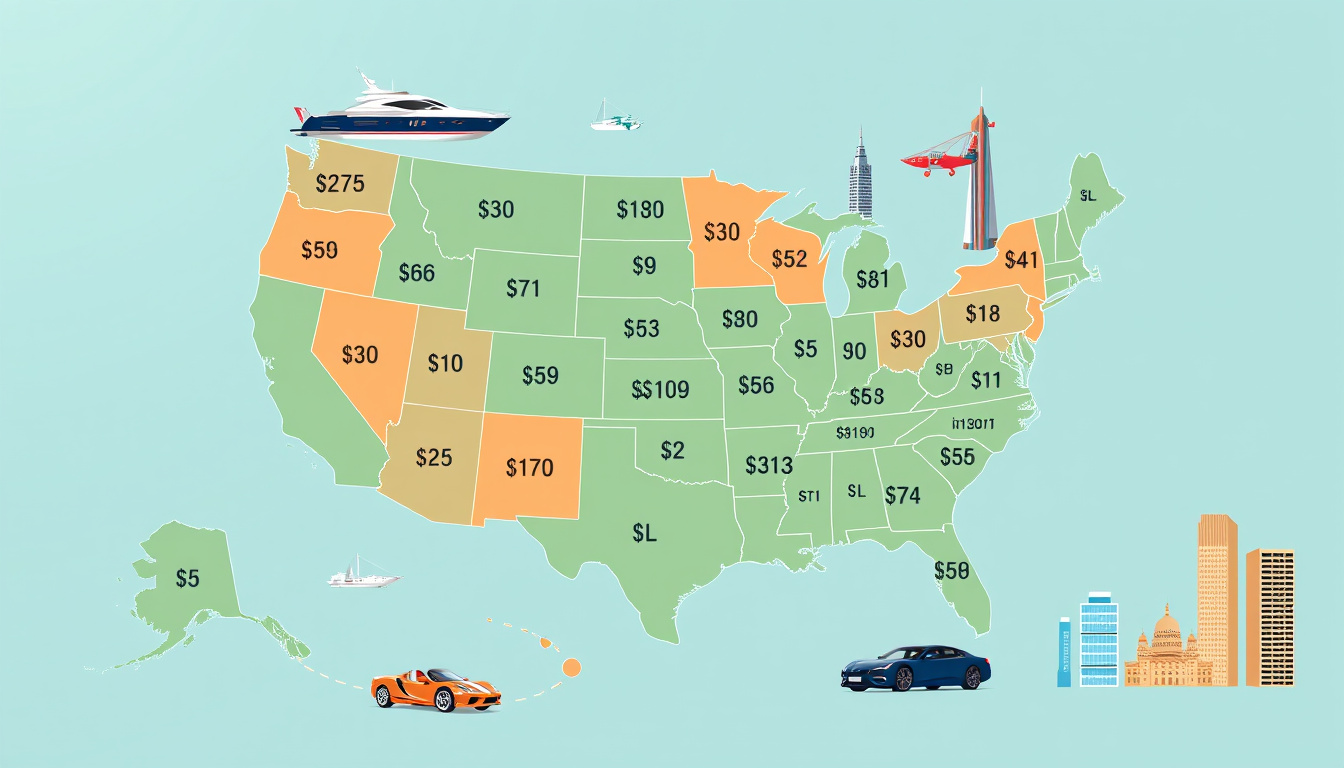
Key Takeaways
- Top 1% income requirements vary dramatically across the U.S., with thresholds as high as $1 million in states like Connecticut.
- Regions with dominant high-paying industries, such as finance in the Northeast and technology on the West Coast, reflect higher income entry points.
- Lower-income states, like West Virginia, show significantly lower thresholds, illustrating disparities in economic opportunities across the country.
Income Thresholds Across States: A Detailed Overview
Understanding the income thresholds required to join the top 1% of earners across the United States reveals significant disparities influenced by geography, industry, and local economic conditions.
In a meticulous analysis provided by SmartAsset, the income floors for achieving elite financial status in 2025 highlight stark contrasts, with Connecticut leading the pack at a formidable $1 million threshold.
This figure underscores the concentration of wealth in states where high-paying sectors such as finance and technology thrive.
Following closely are Massachusetts and California, with income requirements of $965,170 and $905,396 respectively, reflecting their robust economic landscapes.
On the other hand, states like West Virginia, Mississippi, and New Mexico showcase much lower thresholds, around $416,310, indicating a divergence in economic opportunity and wage growth.
The presence of growing metropolitan areas contributes to middle-tier states like Colorado and Virginia, where the necessary income to reach the top 1% hovers between $700,000 and $820,000.
This comprehensive review not only sheds light on the income disparities across states but also emphasizes how factors such as local economies and cost of living play pivotal roles in wealth distribution.
As we observe these trends, the map created by Visual Capitalist serves as a vital tool for visualizing the financial landscape of America, helping aspiring earners understand where they stand in relation to the nation’s elite.
Factors Influencing Top 1% Income Requirements
One of the key factors influencing the income thresholds for the top 1% is the cost of living in various states, which can significantly affect how far an income can stretch.
For instance, residents in high-cost areas such as California or New York City face steep housing prices, transportation costs, and higher prices for everyday goods, thus necessitating a higher income to maintain a similar standard of living compared to those in lower-cost states.
Additionally, the concentration of high-paying industries in certain regions, such as tech in California or finance in New York, creates environments where wages are typically higher, further driving up the income requirement to enter the top 1%.
Conversely, states that lack these industries tend to have lower income thresholds, revealing how structural economic factors contribute directly to financial disparities.
Such insights not only inform potential movers about the financial landscape of the U.S.
but also amplify the reasons behind the income inequality observed across the nation.