Trump's AI Chip Talks with Xi Jinping Boosts Nvidia Stock: What You Need to Know
October 29, 2025
In a rapidly evolving technological landscape, few topics have captured the attention of investors quite like artificial intelligence (AI) and the companies that drive its development.
One such company is Nvidia, known for its powerful graphics and AI chips.
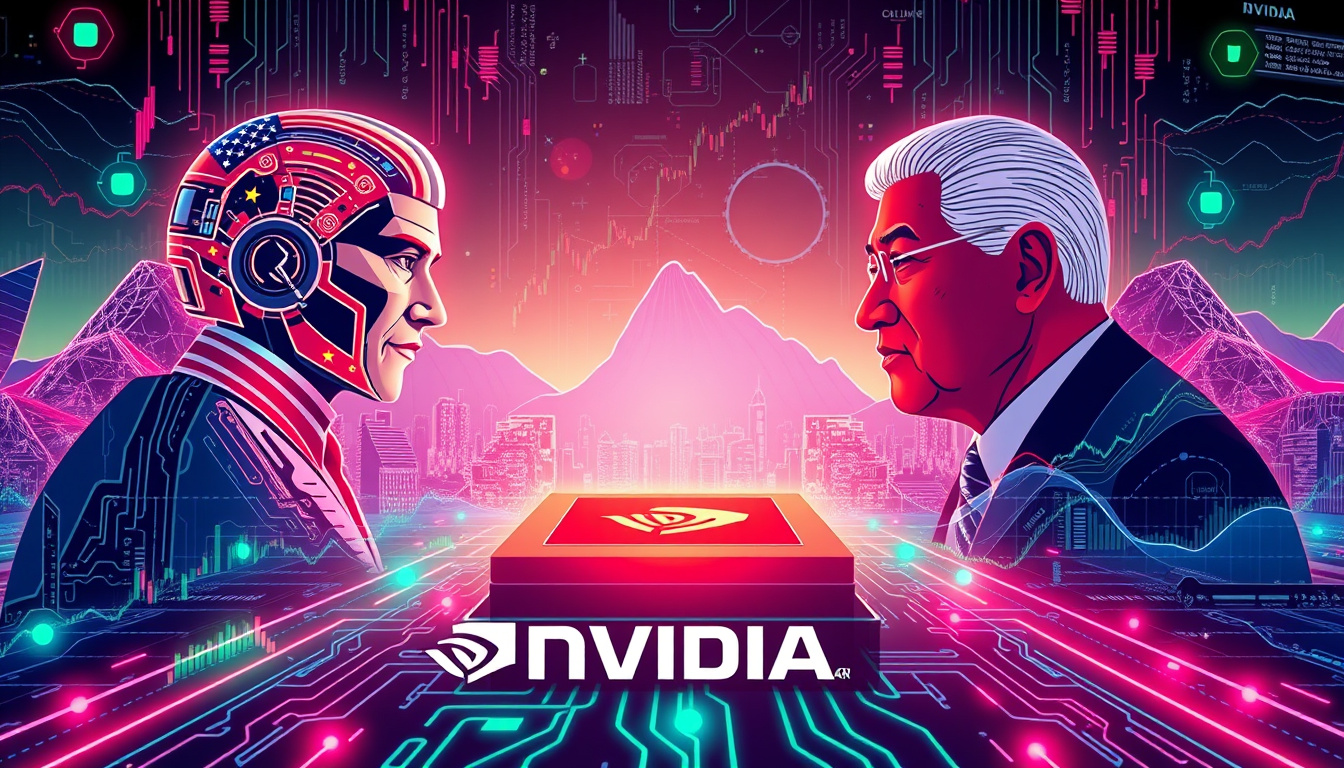
Recently, President Trump announced that he would discuss Nvidia's latest AI technology, the Blackwell chips, in an upcoming meeting with Chinese leader Xi Jinping during the Asia-Pacific Economic Cooperation (APEC) forum.
This decision has sparked renewed interest and optimism among investors, leading to a notable boost in Nvidia's stock.
In this article, we delve into the implications of Trump's discussions on Nvidia's future, particularly against the backdrop of complex U.S.-China trade relations and growing demand for AI infrastructure.
Key Takeaways
- Trump's upcoming talks with Xi Jinping about Nvidia's AI chips could ease export restrictions to China.
- Nvidia's stock rose nearly 3% due to positive investor sentiment regarding AI infrastructure and earnings projections.
- The company is actively pursuing partnerships and innovations, reinforcing analysts' confidence in its growth trajectory.
Impact of Trump's AI Discussions on Nvidia Stock
The recent discussions surrounding President Trump's engagement with Chinese leader Xi Jinping at the Asia-Pacific Economic Cooperation forum have significant implications for Nvidia's stock performance, significantly influenced by Trump's comments regarding Nvidia's Blackwell AI chips.
Trump's enthusiastic reference to the Blackwell chip as 'super duper' has sparked a buoyed sentiment among investors, suggesting a potential softening of the stringent export restrictions that have afflicted Nvidia since
2022.
Historically, these limitations have led to a drastic reduction in Nvidia's market share in China, plummeting from an astronomical 95% to virtually zero.
This has placed considerable pressure on the company, particularly in the face of a recent agreement that enabled the sale of H20 chips to China, albeit with revenue sharing to the U.S.
government.
Moreover, the broader landscape remains complex, as China continues to promote domestic alternatives, dissuading local firms from investing in foreign technology.
Despite this backdrop, Nvidia's stock showcased a notable surge of nearly 3%, buoyed by the relentless demand for AI infrastructure and the optimistic earnings forecasts from CEO Jensen Huang, who believes that cumulative data center revenue could hit $500 billion by 2025-2026—outpacing analyst predictions.
In conjunction with these developments, Nvidia's strategic partnerships and a substantial $1 billion investment in Nokia for AI-focused mobile networks are testimony to its commitment to leading the AI revolution.
New supercomputers developed in collaboration with the U.S.
Department of Energy further cement Nvidia's role in this arena.
As a result, analysts, including Goldman’s James Schneider, have maintained a 'Buy' rating on Nvidia, projecting that the firm’s robust revenue outlook and strategic advancements are likely to drive its stock higher in the coming months.
Future Prospects for Nvidia Amidst International Trade Relations
As the tech landscape continues to evolve, Nvidia stands at a pivotal crossroads, especially given the ongoing international trade dynamics.
The anticipated dialogue between President Trump and Chinese leader Xi Jinping is not just a routine political engagement; it could reshape the future of Nvidia's business operations, particularly regarding its highly-acclaimed Blackwell AI chips.
With the potential for a thawing in U.S.
export restrictions, Nvidia may be poised to reclaim its once-dominant market position in China.
Investors are watching closely, especially after Trump's commendation of the Blackwell chip, which generated renewed enthusiasm in the stock market.
Furthermore, the company's strategic initiatives, including its partnership with Nokia, signal a broader ambition to tap into AI mobile networks, demonstrating that Nvidia is not merely reactive but actively seeking growth avenues.
The integration of new supercomputers in collaboration with governmental entities highlights its commitment to advancing AI technology.
Overall, Nvidia's ability to navigate these complex trade relationships while capitalizing on its innovative capabilities will be crucial in determining its market trajectory.