Ukraine's Drone Warfare: Strikes on Russian Oil Refineries Signal New Offensive Strategy
May 3, 2026
In the evolving landscape of modern warfare, drone technology has emerged as a pivotal asset, particularly in the ongoing conflict between Ukraine and Russia.
Recent drone strikes on Russian oil refineries signify not only a shift in Ukraine's offensive strategy but also a significant escalation in the conflict itself.
This article delves into how Ukraine's enhanced drone capabilities are reshaping military strategy, the implications of these strikes on Russian oil infrastructure, and the accompanying environmental concerns that have arisen as a result.
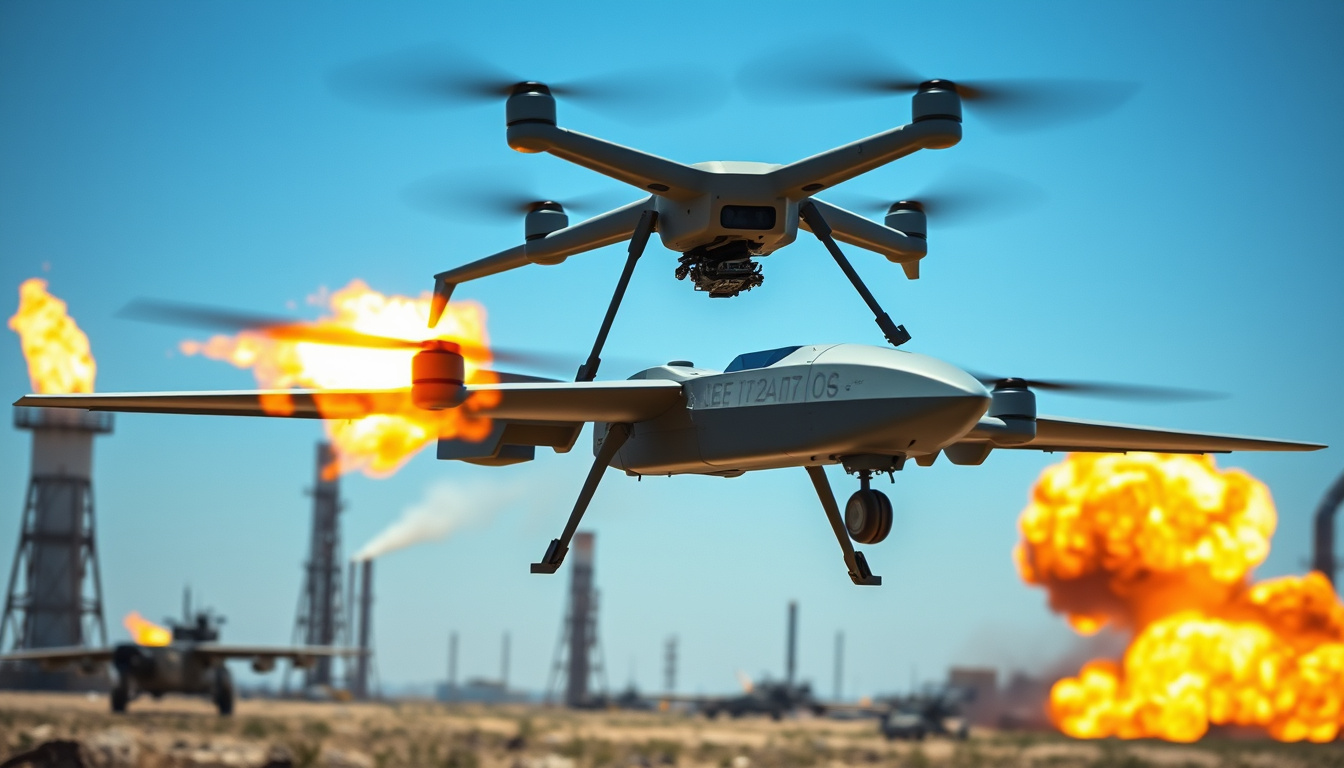
Key Takeaways
- Ukraine's drone strikes mark a significant escalation in its offensive strategy against Russia.
- Attacks on Russian oil refineries aim to weaken Russia's military supply capabilities.
- Environmental damage from these strikes raises serious concerns amid ongoing warfare.
Ukraine's Enhanced Drone Capabilities: A Game Changer in Warfare
In recent months, Ukraine's advancements in drone technology have emerged as a significant development in the ongoing conflict with Russia.
This enhanced capability has enabled Ukraine to launch strategic strikes on critical infrastructure, including key oil refineries well beyond its borders.
President Volodymyr Zelenskyy recently announced a new warfare strategy aimed at diminishing Russia's military capabilities, reflecting a shift in Ukraine's approach to the conflict.
Notably, Ukrainian drone strikes have targeted the Tuapse complex on the Russian Black Sea coast not once, but three times in less than four weeks, resulting in extensive fires that posed challenges for local firefighters.
These operations have demonstrated Ukraine's ability to engage the enemy at unprecedented distances, with attacks reported from nearly 1,000 miles away, including a significant strike on the Transneft oil pumping facility in Perm, deep within Russian territory.
The Ukrainian Security Service (SBU) claimed responsibility for this attack, indicating its strategic importance for the oil transport network, and revealing the toll with reports of near-total destruction of the oil storage tanks.
In response, Russian officials have reported intercepting around 100 drone attempts, denouncing these as terrorist actions, while environmental consequences loom large, particularly around the heavily impacted Tuapse refinery.
Amidst an international landscape increasingly focused on other geopolitical issues, the implications of Ukraine's drone warfare capabilities remain critical to the evolving dynamics of the conflict; meanwhile, recent comments from President Putin regarding a potential ceasefire, with US backing, suggest a complex interplay of military and diplomatic efforts as hostilities continue.
Impact of Strikes on Russian Oil Infrastructure and Environmental Concerns
The ongoing escalation in conflict between Ukraine and Russia has raised significant concerns, particularly regarding the impact of drone strikes on Russian oil infrastructure and the subsequent environmental implications.
As Ukraine intensifies its campaign against Russian military capabilities, the drone strikes have extended to critical facilities that are integral to Russia's oil production and logistics.
Particularly alarming are the repeated attacks on the Tuapse refining complex; these events have not only disrupted operations but also generated substantial fires that have had dire consequences for local ecosystems.
For example, the black smoke and potentially hazardous materials released into the atmosphere present a public health risk to nearby communities, amplifying the tension surrounding the conflict.
The strikes on facilities like Transneft in Perm further illustrate Ukraine's capability to project power across vast distances while simultaneously bringing to light the vulnerability of Russian infrastructure.
As both nations contend with the ramifications of these military actions in an already volatile situation, long-term environmental damage remains a pressing concern, making it crucial for international observers to monitor developments closely.