Ukraine's Largest Drone Strike on Moscow: A Turning Point in the Russia-Ukraine Conflict
June 18, 2026
In a bold move that escalates the ongoing Russia-Ukraine conflict, Ukraine has executed its largest drone strike on Moscow, targeting the Moscow Oil Refinery.
This significant assault not only disrupted operations in the capital but has sent shockwaves throughout the region, prompting immediate responses and implications both locally and geopolitically.
With flights suspended at all four civilian airports in Moscow and major highways closed, this attack marks a decisive moment in the conflict, emphasizing the shifting dynamics of warfare and the increasing desperation on both sides.
As the narrative of the conflict unfolds, it is crucial to examine the impacts on Moscow's infrastructure and civilian life, as well as the broader geopolitical ramifications of this latest development.
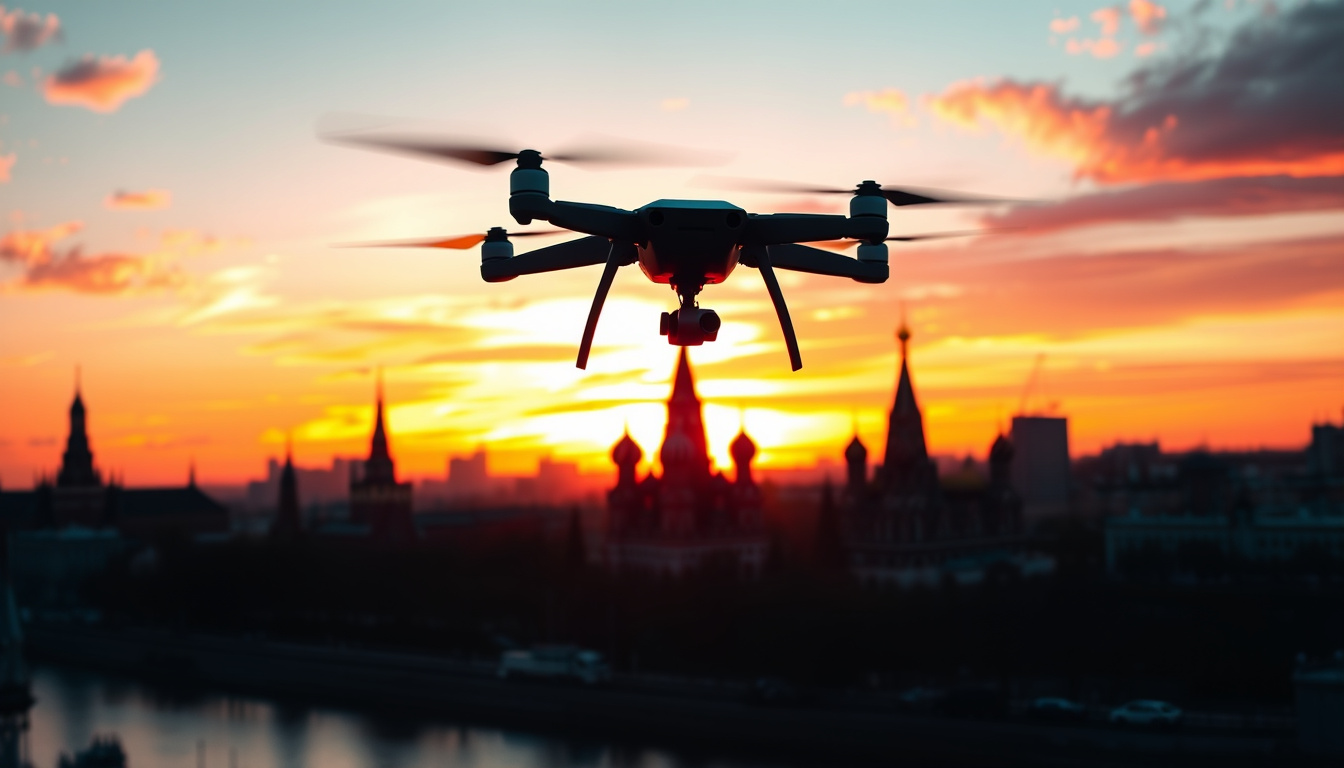
Key Takeaways
- Ukraine's largest drone strike on Moscow marks a significant escalation in the Russia-Ukraine conflict.
- The attack disrupted key infrastructure and civilian operations in Moscow, including flight suspensions and highway closures.
- The incident reflects broader geopolitical tensions, influencing international discussions about negotiations and peace in the region.
Impact on Moscow's Infrastructure and Civilian Life
The recent escalation in the Russia-Ukraine conflict, marked by Ukraine's unprecedented drone strike on Moscow, has had a profound impact on Moscow's infrastructure and civilian life.
Targeting the Moscow Oil Refinery, this attack significantly disrupted operations in the capital, leading to the suspension of flights at all four civilian airports and the closure of key highways, causing widespread inconvenience for residents and travelers alike.
This incident is part of a troubling trend of strikes aimed at crucial energy infrastructure, with reports confirming that the refinery had already sustained damage from previous engagements.
In a show of retaliatory capability, Russia's Defense Ministry reported downing 555 drones across various regions, while Ukrainian forces countered by intercepting several Russian missiles launched in their direction.
This escalation comes at a time when geopolitical dynamics are shifting; U.S.
President Trump recently underscored the necessity for negotiations during discussions at the G7 summit, indicating the urgent need for resolution as both Russia and Ukraine grapple with significant losses.
Additionally, international focus appears to be fluctuating, as recent developments in the Middle East—primarily a peace deal between the U.S.
and Iran—command attention, yet the ongoing conflict remains a critical issue demanding immediate and sustainable solutions.
Broader Geopolitical Implications of the Drone Strike
The implications of the recent drone strike extend far beyond the immediate operational disruptions in Moscow, reflecting a profound escalation in the ongoing Russia-Ukraine conflict.
This incident has not only intensified military engagements but has also drawn the attention of global leaders, prompting a reevaluation of diplomatic strategies in the region.
As both nations grapple with mounting casualties and infrastructural devastation, the ripple effects of the strike are felt across international diplomacy.
The geopolitical landscape is shifting, with analysts noting that the Ukraine conflict intersects with broader global tensions, including the recent thawing of relations between the U.S.
and Iran.
As the world watches closely, the possibility of renewed dialogue becomes crucial in de-escalating hostilities and addressing the pressing humanitarian crisis resulting from the war.
Thus, while immediate military responses are ongoing, the path towards peace necessitates thoughtful engagement and cooperation among global powers.