US-Iran Tensions Escalate: Military Strikes and Diplomatic Dilemmas Amidst Regional Hostilities
June 10, 2026
In recent weeks, tensions between the United States and Iran have escalated dramatically, creating a complex and dangerous geopolitical landscape in the Middle East.
Following Iran's downing of an Apache helicopter near the strategically significant Hormuz region, the U.S.
military responded with targeted strikes on Iranian assets.
These actions come amidst a backdrop of ongoing hostility, where threats and counter-threats have made diplomatic resolutions increasingly tenuous.
In this article, we will delve into the recent military actions taken by the United States, explore the diplomatic challenges facing both nations, and consider the broader implications for regional stability and global energy prices.
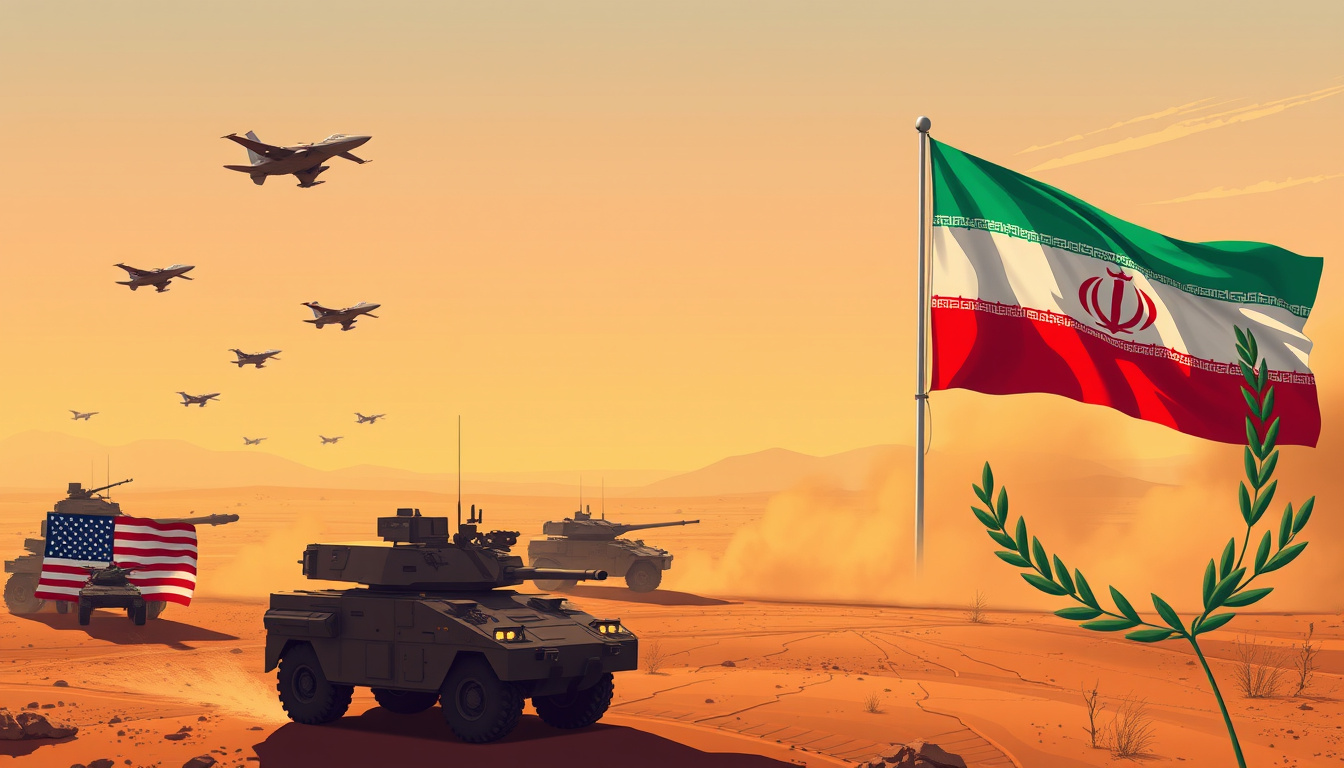
Key Takeaways
- Recent U.S. military strikes on Iranian assets are portrayed as proportional responses to provocations.
- Iran's commitment to retaliate against U.S. interests raises concerns about escalating regional tensions.
- The intertwining of military action and diplomacy complicates efforts to reach a ceasefire and maintain stability.
Recent Military Actions and Their Implications
In a recent escalation of tensions, the United States has taken military action against Iranian assets following the downing of an Apache helicopter in the strategic Hormuz region.
The Pentagon has characterized its strikes as calculated and proportional responses to a series of aggressive actions by Iran that have threatened both U.S.
forces and commercial vessels in the area.
President Trump has been vocal in his criticism of Iran’s military capabilities, dismissing them as a 'total mess,' while Iranian leadership has vowed retaliation against U.S.
interests in neighboring countries like Kuwait, Bahrain, and Jordan, which are home to American troops.
Despite claims from the White House that a ceasefire remains in effect, the situation remains fraught with hostilities.
Iran’s Foreign Ministry has condemned the U.S.
for contradictory demands, further complicating the already tenuous diplomatic landscape.
Recent missile strikes by Iran have specifically targeted locations linked to the U.S.
Navy's Fifth Fleet in Bahrain and Kuwait, signaling a worrying shift in hostilities.
Analysts are increasingly concerned that these measured escalations could lead to a much broader conflict, particularly if either side crosses critical red lines.
This situation highlights the intricate web of geopolitical tensions in the region, where both nations are attempting to assert their dominance without triggering a full-scale war, a situation that has the potential to significantly impact global energy prices and regional stability.
Diplomatic Challenges Amid Escalating Hostilities
As tensions mount between the U.S.
and Iran, the challenges of diplomacy in the face of escalating hostilities are becoming increasingly evident.
The U.S.
military's targeted actions against Iranian assets serve as a stark reminder of the delicate balance at play, as both nations navigate a landscape fraught with potential pitfalls.
Iran's assertion of its commitment to retaliate and the purposeful avoidance of crossing thresholds that could open the floodgates to war illustrate the precariousness of the current situation.
Diplomatic efforts are jeopardized further by mutual accusations and demonstrated military might, making it critical for international observers to monitor developments closely.
Experts warn that the intersection of military and diplomatic channels may need to shift substantially if any hope of de-escalation can be achieved; otherwise, the risk of severe consequences—including disruptions to energy markets—could increase significantly in the coming weeks.