Venezuelans Celebrate Maduro's Arrest: A Turning Point Against Oppression and Imperialism
January 5, 2026
In a historic turn of events, the arrest of Nicolás Maduro has sparked celebrations among Venezuelans both locally and internationally, who view this moment as a significant victory against a regime long criticized for its oppressive tactics and election fraud.
Maduro's capture, orchestrated with support from the United States, has been met with overwhelming joy in places like Caracas, shining a light on the desperate need for political change among Venezuelans who have suffered under the weight of his communist rule.
Despite this jubilation, the contrast between the celebratory sentiments of Venezuelans and the skepticism of liberal activists in the U.S.
raises profound questions about the implications of foreign intervention.
This article explores the jubilant reception of Maduro's arrest and the starkly divergent narratives that accompany this pivotal moment in Venezuelan history.
Key Takeaways
- Maduro's arrest is celebrated by many Venezuelans as a significant step towards political freedom.
- The joy in Caracas contrasts sharply with fears of political reprisals limiting public gatherings.
- U.S. liberal activists' criticism of the arrest highlights a disconnect with Venezuelans yearning for change.
The Celebration of Maduro's Arrest and Its Symbolism
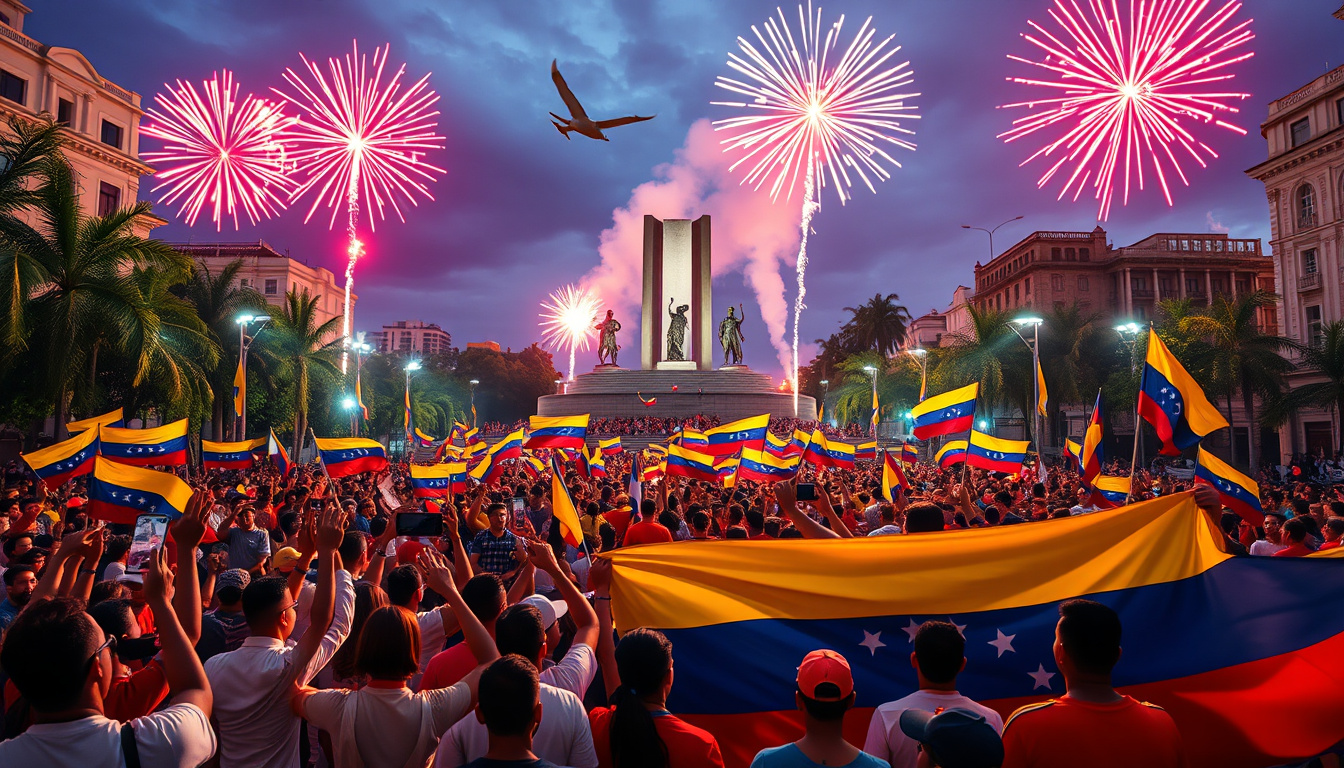
The recent arrest of Nicolás Maduro has unleashed waves of celebration among Venezuelans both at home and abroad, as they perceive this moment as a pivotal turning point in their struggle against a regime notorious for its election fraud and political oppression.
In the heart of Caracas, jubilant supporters have taken to the streets, thanking the United States for facilitating an operation that many hope will herald an end to years of despair under Maduro’s communist rule.
This public display of hope starkly contrasts with previous narratives portraying Venezuela as a potential next Iraq or Afghanistan, where intervention might lead to further chaos.
Despite the jubilant atmosphere, public gatherings in Venezuela remain cautious, with citizens fearing potential reprisals from a government that has historically suppressed dissent.
Meanwhile, in the United States, some liberal activists have condemned the arrest, labeling it as an imperialistic action, despite the backing of the Biden Administration's arrest warrant.
This criticism underscores a significant disconnect; while US activists advocate for non-intervention, many Venezuelans are vociferously in favor of outside intervention—desperate for relief from the hardships inflicted by Maduro’s regime.
Their celebrations signify not only a moment of potential political change but also highlight the complex dynamics of external versus internal perceptions, revealing how the voices of those directly affected often clash with broader ideological narratives.
Contrasting Perspectives: Venezuelan Citizens vs. U.S. Liberal Activists
The situation in Venezuela brings to light the complexities of international intervention, particularly as contrasting views emerge from Venezuelan citizens and U.S.
liberal activists.
For Venezuelans, the arrest of Nicolás Maduro symbolizes hope and a potential end to the repressive regime that has deeply impacted their daily lives, causing widespread economic hardship and social unrest.
This perspective is shaped by their lived experiences under a government that has systematically infringed upon human rights.
Conversely, U.S.
liberal activists often approach such situations with caution, prioritizing principles of sovereignty and non-intervention, viewing the U.S.
involvement as a form of neo-imperialism rather than an act of support.
This ideological divide illustrates the difficulty in finding common ground; for Venezuelans yearning for change, U.S.
actions are not interpreted through the lens of imperialistic motives, but rather as necessary support in their fight for democracy and basic freedoms.
Understanding these contrasting perspectives is vital for fostering a more nuanced dialogue about foreign intervention and the realities faced by those at the center of political upheaval.